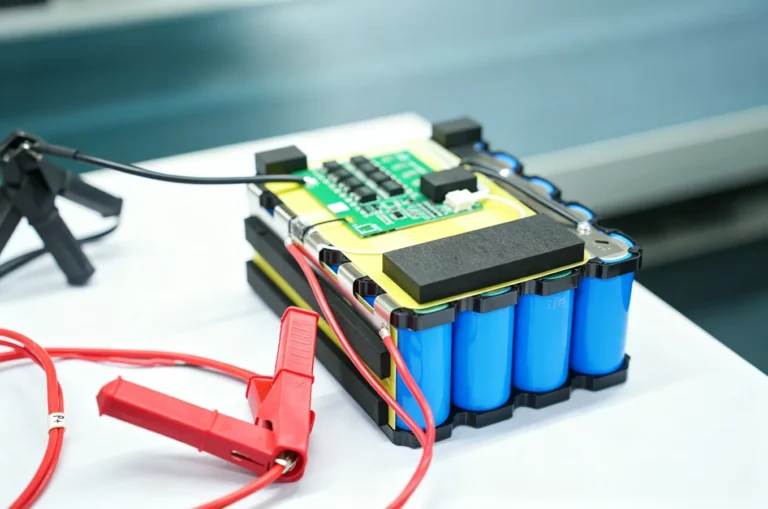
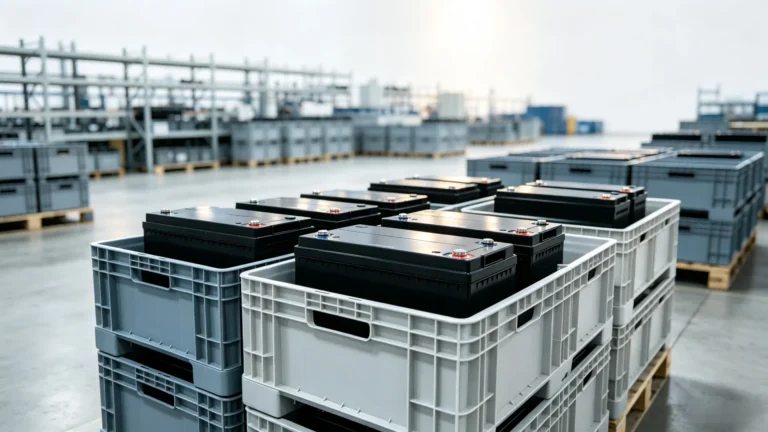
Let's Shape The Future Of Your Investments!
Natoque iaculis cursus augue urna commodo aptent morbi tortor porttitor quis ornare.
![Lithium-ion Battery Manufacturer | BAKTH Battery [Official]](https://bakth-battery.com/wp-content/uploads/2026/05/hideLogo.png)
![Lithium-ion Battery Manufacturer | BAKTH Battery [Official]](https://bakth-battery.com/wp-content/uploads/2026/05/logo.png)
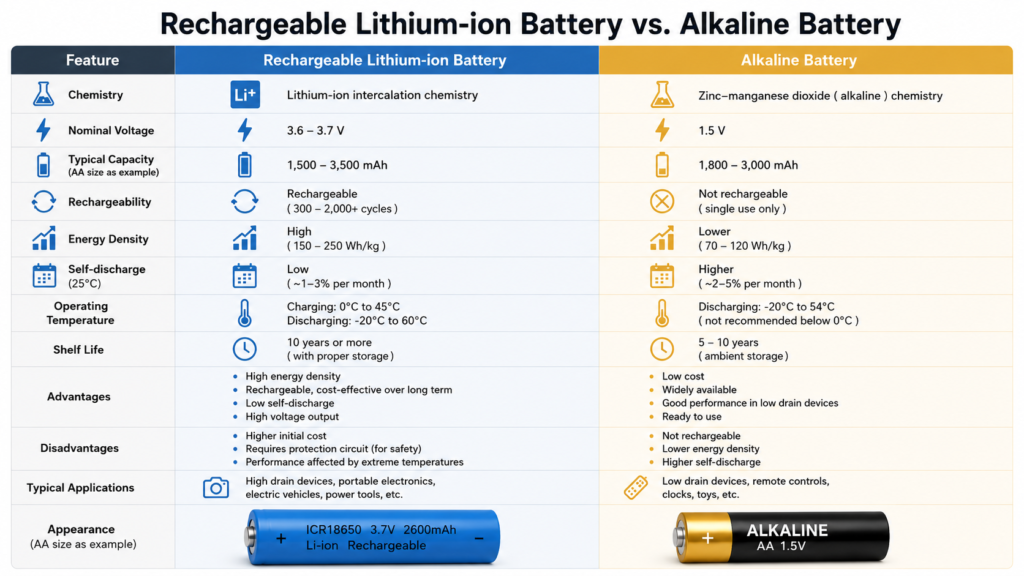
Batteries power nearly every portable household, commercial and industrial device. While lithium-ion and alkaline cells may share identical cylindrical outer sizes (AA, AAA, 9V), their internal chemistry, power output and service life create massive real-world performance gaps. This guide breaks down every critical difference for DIY users, OEM buyers, facility managers and retail consumers.
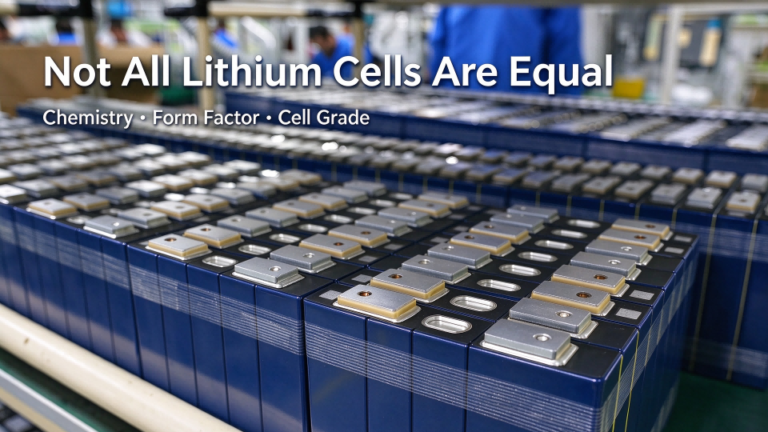
Lithium-ion (Li-ion) cells are secondary, rechargeable power sources built around lithium electrode materials. Standard commercial lithium cells support 500–1,000 full charge cycles, with premium LFP variants hitting 3,000+ cycles. They deliver far higher energy density and stable voltage under heavy loads.
Alkaline batteries are primary disposable cells using zinc-manganese dioxide chemistry with potassium hydroxide electrolyte. They cannot be safely recharged and are designed for minimal, intermittent power draw.
This table summarizes all key metrics buyers care about, optimized for quick scanning and Google featured snippet capture.
| Comparison Metric | Rechargeable Lithium-Ion | Disposable Alkaline |
|---|---|---|
| Rechargeability | 500–1000+ full cycles | Single-use only |
| Nominal Cell Voltage | 3.7V (1.5V regulated Li-ion AA available) | Constant 1.5V |
| Energy Density | Up to 4x higher than alkaline | Low, steep voltage drop under load |
| Discharge Curve | Flat, stable output most of runtime | Gradual voltage sag during use |
| Service Lifespan (device runtime) | 2–3x longer on high-drain gear | Short runtime for power-hungry devices |
| Upfront Cost Per Cell | Higher initial price tag | Cheap single-unit cost |
| Long-Term TCO | Very low, minimal repeat purchases | High cumulative replacement cost |
| Self-Discharge Rate | Low (~3% monthly) | Moderate (~8–12% monthly) |
| Eco Footprint | Reusable, highly recyclable | Single-use, high landfill waste volume |
| Operating Temperature Range | -20°C to 60°C | 0°C to 40°C, poor cold performance |
Lithium-ion batteries withstand hundreds of recharges. A single lithium pack replaces hundreds of disposable alkaline cells over its lifespan. Alkaline cells risk leakage, swelling or rupture if forced to recharge, making them unsafe for repeated use.
Lithium’s high energy density packs more watt-hours into the same physical size. Most importantly, lithium maintains a flat discharge voltage curve; alkaline slowly loses voltage as it depletes, causing dim lights, laggy camera autofocus and weak tool torque halfway through use. Lab testing shows lithium delivers up 290% longer runtime in high-drain devices like 1000-lumen flashlights.
Quality lithium cells retain over 80% capacity after hundreds of cycles. Alkaline cells fully exhaust once discharged and cannot be revived. In storage, lithium loses only ~3% charge monthly, while alkalines self-discharge rapidly and die within 12–18 months even unused.
Devices that pull continuous or burst high current demand lithium’s stable power delivery:
Alkaline batteries suffer severe voltage sag under heavy draw. A fresh alkaline pack will cut camera shooting capacity by over 60% compared to an equivalent lithium setup.
For devices that draw tiny, sporadic power over months:
Alkaline’s low upfront cost makes them budget-friendly for gear you rarely replace batteries in. For commercial facilities with thousands of low-power sensors, bulk alkaline orders deliver short-term cost savings.
A common misconception: alkaline batteries are cheaper overall. This only holds true for 1–2 month temporary use. Over 1–3 years, lithium drastically cuts total spending.
Example calculation: A contractor using power tools daily will go through 8–10 packs of alkaline per month, while one lithium pack lasts 10+ months with recharging.
Global waste data shows billions of alkaline batteries end up in landfills annually. Each disposable cell contains zinc, manganese and trace heavy metals that leach into soil without proper recycling.
For brands, rental fleets and eco-focused businesses, rechargeable lithium aligns with green procurement standards in North America, EU and Australia.
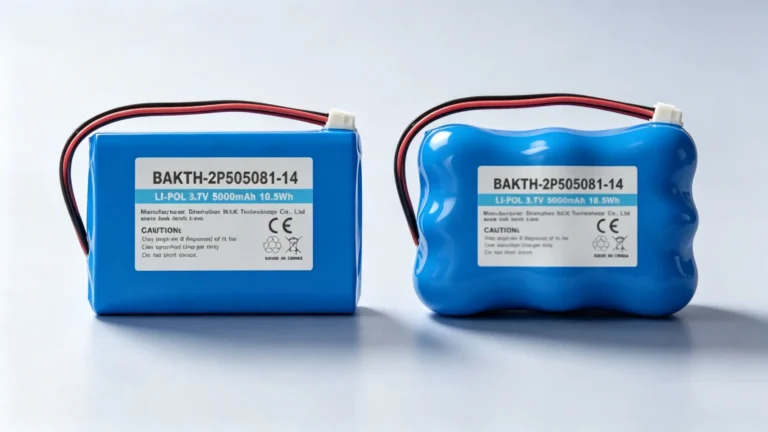
A: Not universally compatible. Standard 3.7V lithium cells exceed 1.5V alkaline device limits and can burn out circuit boards. Regulated 1.5V lithium AA/AAA cells work for most small household gear, but always check your device’s user manual voltage rating before swapping.
A: Check printed labeling and voltage: Alkaline = marked 1.5V, “Alkaline”. Lithium-ion = labeled “Li-ion / Lithium”, nominal 3.7V (or regulated 1.5V for AA-sized lithium cells). Packaging will also state rechargeable for lithium variants.
A: Yes for all high-drain, frequent-use devices and commercial equipment. If you only use the device a few times yearly (e.g., emergency flashlights), disposable alkaline may be the better budget pick.
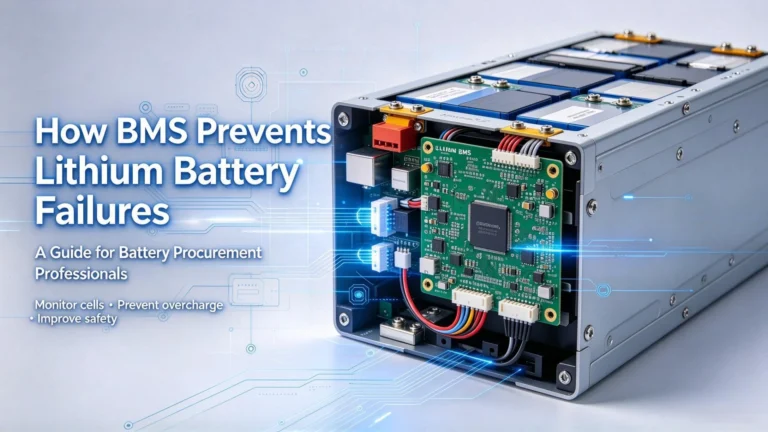
A: Yes. Never use alkaline battery chargers on lithium cells. Certified lithium chargers include voltage and temperature control to prevent overcharging and swelling. Many modern lithium packs integrate built-in USB charging ports for convenience.
A: They contain non-mercury heavy metals that contaminate soil and water if sent to regular landfill waste. Always locate local battery recycling stations to dispose of alkaline and lithium cells responsibly.
– Choose rechargeable lithium-ion batteries if you own power tools, cameras, drones power tools, cameras, drones, portable power gear or use portable devices daily. They deliver longer runtime, stable power, lower long-term costs and a smaller environmental footprint.
– Choose disposable alkaline batteries only for low-drain, rarely-used household items like remotes and wall clocks where battery replacement happens once or twice a year at most.
For commercial buyers, OEMs and fleet managers, mixing lithium for high-power equipment and alkaline for low-power sensors balances short-term budget and long-term operational efficiency. Reach out to our technical team for bulk lithium pack quotes customized for industrial and retail applications.