Let's Shape The Future Of Your Investments!
Natoque iaculis cursus augue urna commodo aptent morbi tortor porttitor quis ornare.
![Lithium-ion Battery Manufacturer | BAKTH Battery [Official]](https://bakth-battery.com/wp-content/uploads/2026/05/hideLogo.png)
![Lithium-ion Battery Manufacturer | BAKTH Battery [Official]](https://bakth-battery.com/wp-content/uploads/2026/05/logo.png)
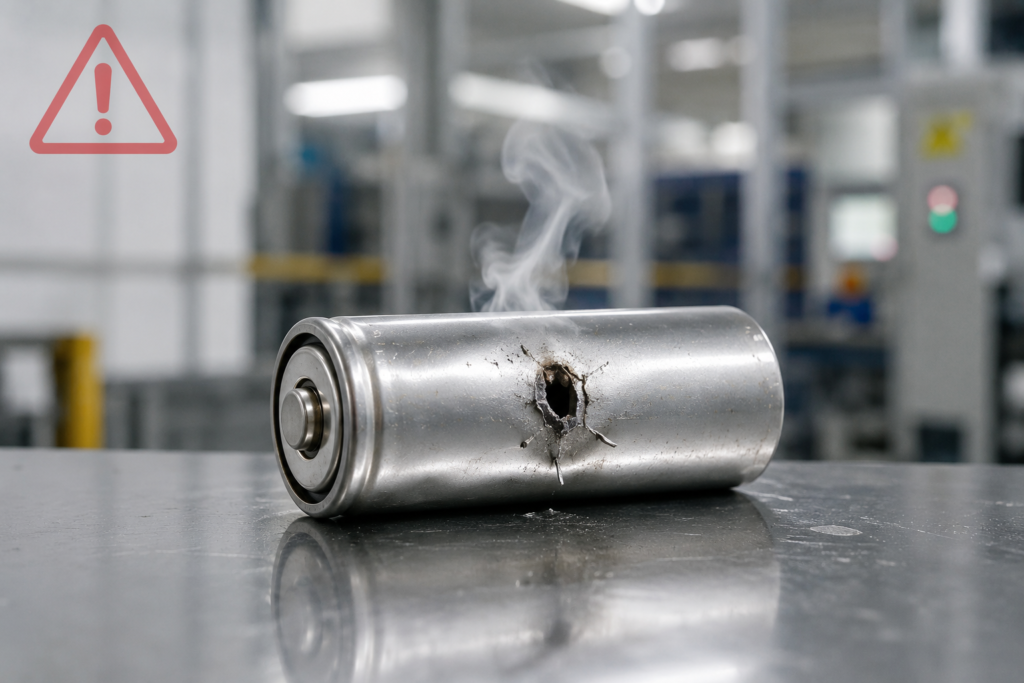
Lightweight, high-capacity lithium-ion batteries power RVs, boats, power tools, solar storage, EVs and industrial machinery across North America, Europe and Australia. But their core chemical makeup creates hidden life-threatening hazards once punctured by sharp metal, crash debris, construction tools or shipping damage. Most DIY operators, warehouse managers and fleet owners lack clear emergency protocols for punctured lithium packs, leading to avoidable fires, chemical burns and hazardous waste violations.
This complete safety guide breaks down every danger of punctured lithium batteries, compares puncture resistance across all mainstream cell formats and chemistries, delivers step-by-step emergency response rules, covers proper fire suppression and compliant hazardous waste disposal aligned with EPA, EU REACH and Australian waste regulations.
A puncture tears the airtight sealed casing of a lithium cell, exposing flammable electrolyte and reactive electrode materials directly to oxygen. Two simultaneous dangerous reactions take place, posing immediate and delayed threats to personnel and property.
Lithium electrolyte is highly flammable. When a hole breaks the cell seal, the liquid chemical reacts violently with air, generating massive heat in an exothermic reaction. This self-feeding heating cycle is known as thermal runaway.
If multiple cells are packed tightly inside a battery module, heat from one punctured unit rapidly spreads to neighboring intact cells, triggering a domino cascading fire. Even tiny pinholes may not spark flames right away; internal gas builds slowly and can ignite hours after the initial puncture, creating hidden overnight fire risks for garages, warehouse racks and vehicle battery bays.
Beyond visible flames, punctured lithium batteries release invisible airborne toxins that cause permanent respiratory and skin damage:
These fumes fill enclosed spaces quickly, making evacuation the top priority after any battery puncture incident.
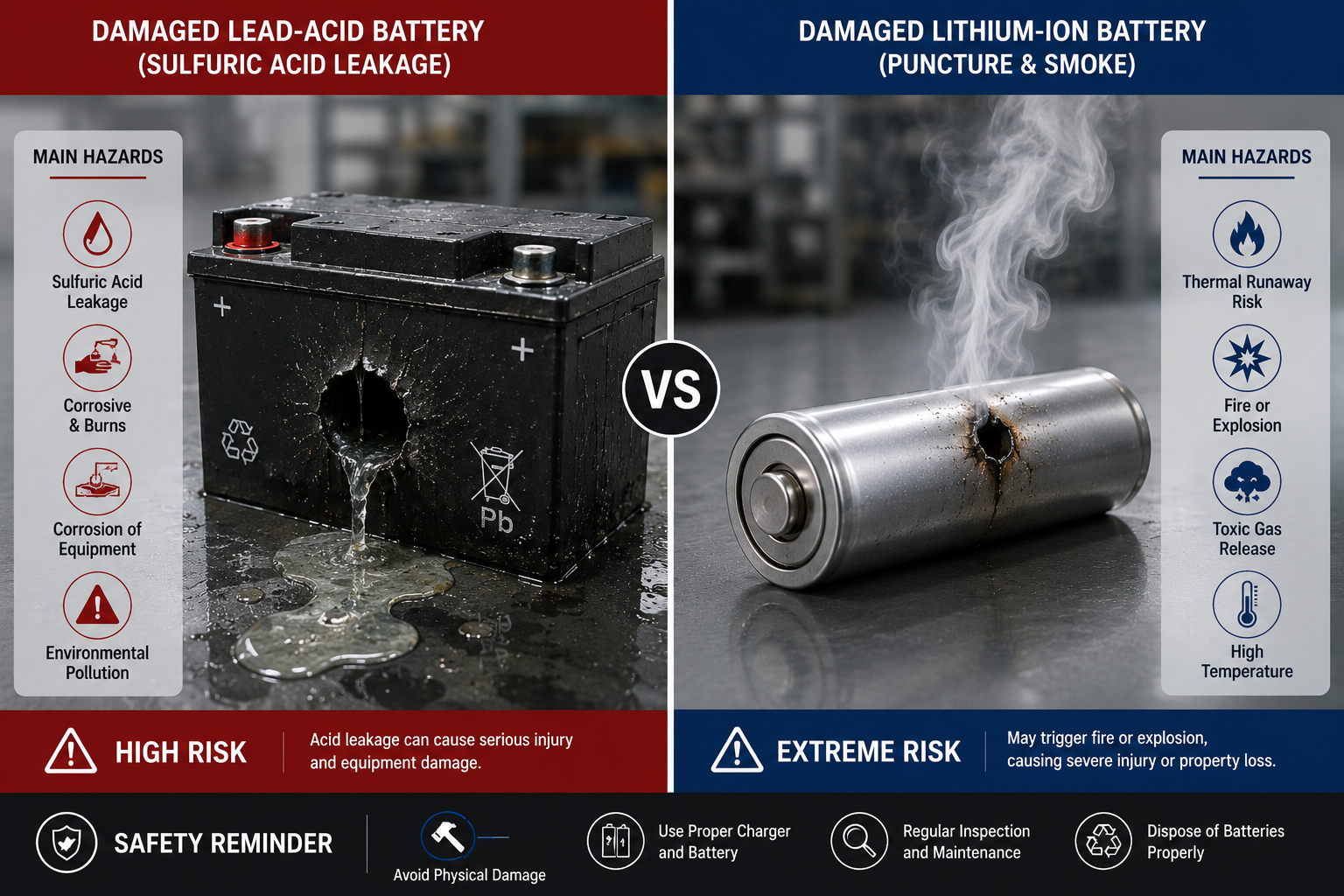
Many business operators mistakenly believe lead-acid batteries are safer after physical damage, yet both technologies carry unique severe risks once pierced:
No matter which battery type you use, all puncture damage must be treated as a critical safety emergency requiring immediate isolation.
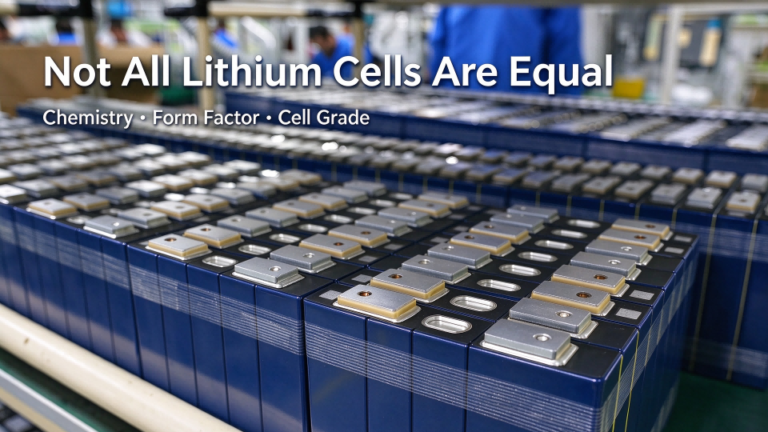
Two core factors determine how well a lithium battery resists piercing damage: internal chemical chemistry and physical cell housing construction.
Six primary lithium chemistries are available on the market, and lithium iron phosphate (LiFePO4) stands out as the safest puncture-resistant option. LFP features a stable crystal structure with a very high thermal runaway threshold, producing far less heat after puncture compared to NMC/NCA lithium cells. Nickel-manganese-cobalt batteries undergo violent, rapid combustion once their casing is breached, with much higher explosion risks during collisions or puncture accidents.
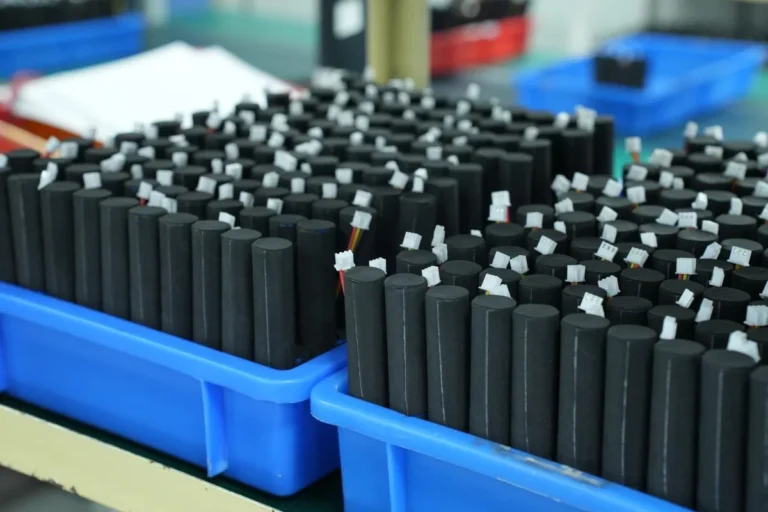
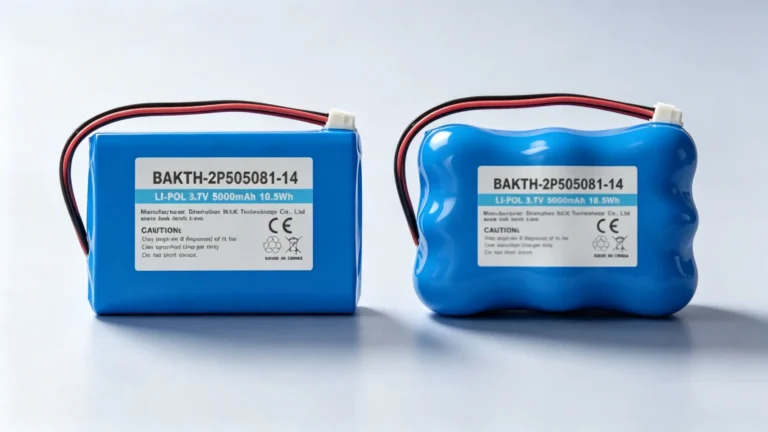
Even with safe LFP chemistry, housing design drastically changes puncture risk levels:
Critical note: There is no fully puncture-proof lithium battery. Severe heavy impact can damage all three cell formats regardless of construction.
Follow tiered response rules based on your cell format to minimize fire and chemical hazard exposure:
Universal rule for all punctured lithium batteries: Never charge, discharge or operate damaged cells under any circumstances.
A widespread dangerous misconception is using water to put out lithium battery blazes. Water reacts violently with exposed lithium materials, creating extra toxic flammable gas and worsening the fire. Follow these official suppression guidelines:
Punctured lithium batteries are classified hazardous waste under US EPA, EU REACH and Australian environmental laws. Strict disposal regulations apply across all regions:
Reduce accident risks for warehouse inventory, vehicle fleets and field equipment with simple protective measures:
A: Yes. Even micro-sized holes break the cell’s sealed barrier, triggering slow internal gas buildup that can ignite several hours after the initial damage.
A: LFP has superior thermal stability compared to NMC cells, but it still produces toxic fumes and can catch fire under sustained high temperatures post-puncture.
A: Rinse exposed skin with cold running water for 15+ minutes immediately and seek emergency medical care. Hydrofluoric acid causes delayed deep tissue burns. Avoid all eye contact with leaked fluid.
A: No. The internal chemical seal is permanently compromised, with invisible micro-shorts forming inside the cell. No repair method eliminates latent fire risks; full replacement is mandatory.
A: Thermal runaway risk can persist for 24–48 hours after the initial damage. Extended uninterrupted monitoring is required before safe handling.
Punctured lithium-ion batteries carry dual critical risks: self-sustaining thermal runaway fires and corrosive toxic chemical fumes. Cylindrical LiFePO4 cells deliver the highest puncture resistance, while thin pouch lithium packs create the most urgent safety emergencies after impact damage.
If a puncture accident occurs, evacuate enclosed areas first, follow format-specific emergency response steps, use only ABC fire extinguishers for small blazes and arrange certified hazardous waste recycling. Proactive protective housing and proper inventory handling drastically cut puncture incidents for commercial fleets and warehouse stock.
With careful cell selection, protective enclosures and clear staff safety training, lithium batteries remain a reliable, high-performance power solution for residential and industrial global applications.