Let's Shape The Future Of Your Investments!
Natoque iaculis cursus augue urna commodo aptent morbi tortor porttitor quis ornare.
![Lithium-ion Battery Manufacturer | BAKTH Battery [Official]](https://bakth-battery.com/wp-content/uploads/2026/05/hideLogo.png)
![Lithium-ion Battery Manufacturer | BAKTH Battery [Official]](https://bakth-battery.com/wp-content/uploads/2026/05/logo.png)
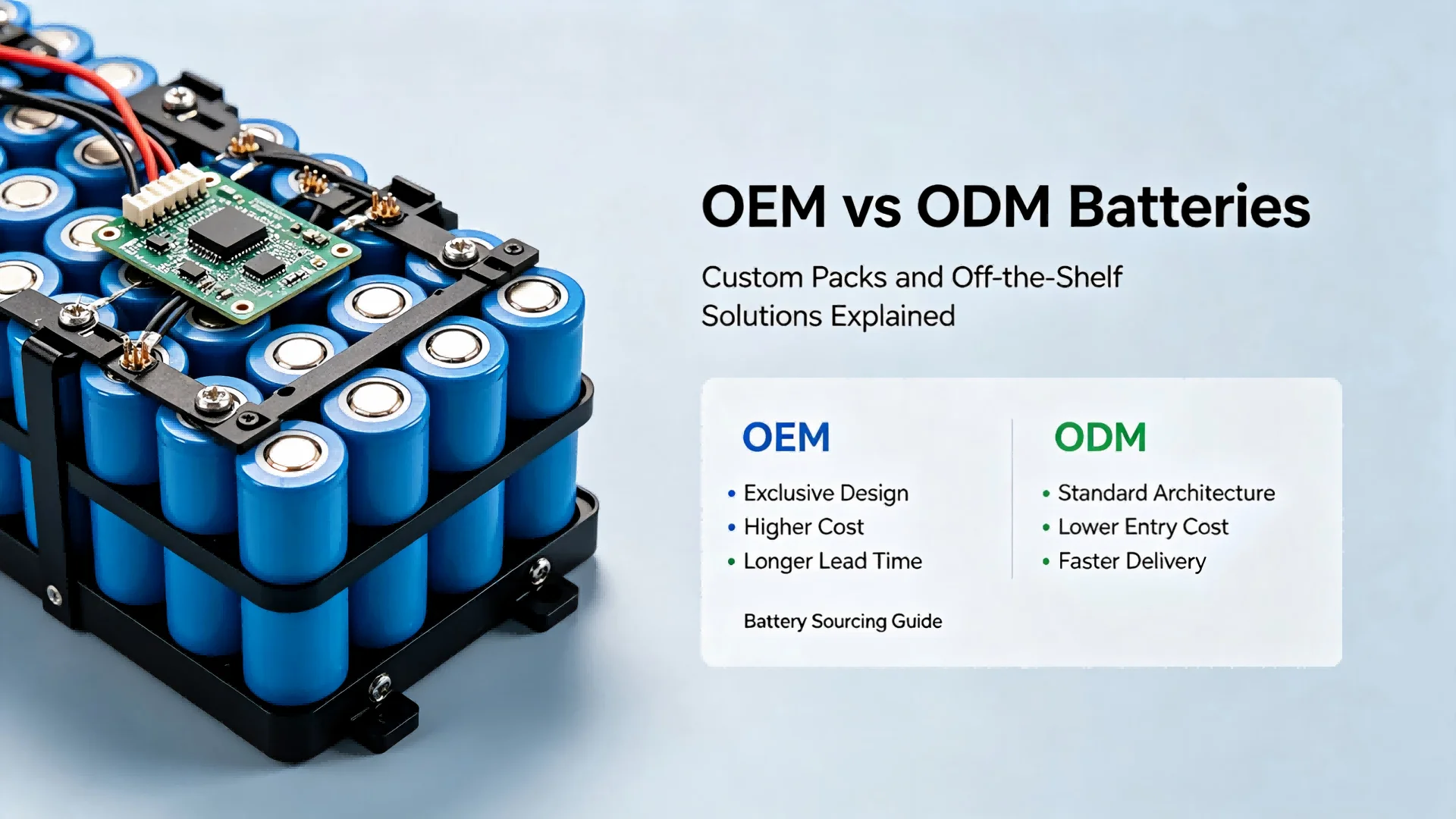
When sourcing rechargeable battery packs for consumer electronics, e-mobility or industrial equipment, you will frequently encounter OEM and ODM battery options. Many buyers mix up these two terms and risk picking the wrong battery solution for their project. This guide clearly defines OEM and ODM batteries, breaks down their core distinctions, and helps you decide which manufacturing model aligns with your budget, design requirements and quality targets.
OEM stands for Original Equipment Manufacturer. An OEM battery is built by the device brand itself or its designated contracted producer strictly to match the brand’s finished product specifications. The battery is engineered exclusively to integrate into that specific piece of hardware, matching its dimensions, BMS parameters, form factor and safety requirements.
OEM batteries are created as an original component of the end product. They carry the brand logo and follow the brand’s internal quality standards, designed to deliver perfect fit and plug-and-play compatibility with the host device.
ODM means Original Design Manufacturer. An ODM battery is fully designed, tested and mass-produced by a specialized battery factory. The factory already develops standard or semi-custom battery pack models ready for purchase.
Brands purchase these pre-designed battery products, apply their own logo and labeling, and resell them under their company name. The core battery design belongs to the battery manufacturer, not the purchasing brand. ODM battery lines are built to serve multiple clients with similar application demands.
Choose OEM battery development if your project requires unique mechanical sizes, special performance parameters or strict industry certifications. It works best for specialized industrial equipment, custom medical devices, premium e-mobility products or proprietary hardware where perfect integration and exclusive design are top priorities.
The main tradeoff is higher investment and longer development cycles, which works better for large-batch long-term production plans.
Select ODM batteries for fast product launches, standard applications and tight budget projects. It is ideal for small to mid-volume orders, prototypes, and products that fit standard battery form factors such as common portable power supplies, standard backup power units and general consumer gadgets.
Keep in mind you will share the base battery design with other buyers. For high-risk applications, always verify the factory’s test reports and certification documents before ordering.
The OEM and ODM battery models serve completely different business goals. OEM delivers fully custom, exclusive battery packs with premium integration at a higher cost. ODM provides ready-made battery solutions with quick turnaround and lower entry costs, but with limited design flexibility.
Understanding these two manufacturing approaches helps hardware developers, product managers and procurement teams make smarter sourcing decisions for their battery-powered products.
A: Not automatically. OEM batteries follow the buyer’s quality specs, while reputable ODM factories can also produce high-grade certified packs. Poorly selected ODM suppliers may cut corners, however.
A: OEM batteries are built to your own specifications, so you control the branding and labeling.
A: ODM batteries usually have lower MOQs, while OEM custom projects often require larger minimum batches to cover tooling costs.