Let's Shape The Future Of Your Investments!
Natoque iaculis cursus augue urna commodo aptent morbi tortor porttitor quis ornare.
![Lithium-ion Battery Manufacturer | BAKTH Battery [Official]](https://bakth-battery.com/wp-content/uploads/2026/05/hideLogo.png)
![Lithium-ion Battery Manufacturer | BAKTH Battery [Official]](https://bakth-battery.com/wp-content/uploads/2026/05/logo.png)
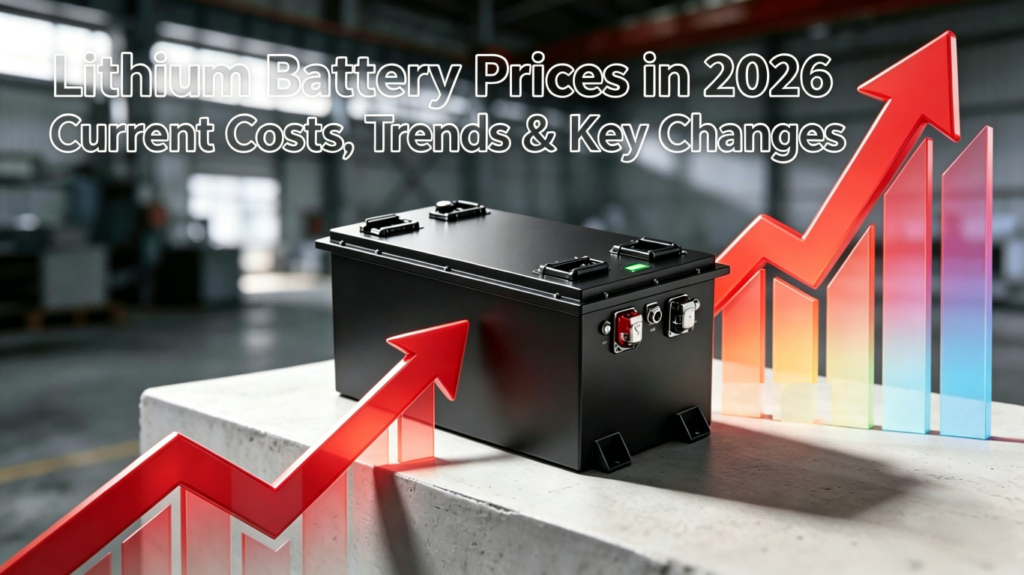
2026 marks a critical turning point for the global lithium battery market. After hitting an all-time low of $108/kWh in 2025, finished lithium battery pack prices have stabilized with mild upward pressure this year. Meanwhile, upstream raw material costs have rebounded sharply from the historic lows seen in mid-2025, creating a clear divergence between raw material prices and end-product pricing.
Based on the latest data from BloombergNEF and TrendForce as of June 2026, here are the core market figures:
This cost-price divergence is the defining feature of the 2026 market. Manufacturers are absorbing higher raw material costs to keep end prices competitive, but profit margins are continuously squeezed. This trend will directly influence procurement strategies for B2B wholesalers, OEMs and project developers over the next 12 to 24 months.
Lithium battery prices have fallen by more than 90% since 2010 thanks to expanding production scale and technological upgrades. However, the years of steep price declines have slowed significantly in 2026 amid raw material inflation.
The following table tracks global, China and BESS pack prices from 2022 to the full-year 2026 forecast:
| Year | Global Avg Pack Price (USD/kWh) | China Pack Price | BESS Pack Price | Key Notes |
|---|---|---|---|---|
| 2022 | $155 | $112 | $130 | Lithium price hit peak at $70,000/ton |
| 2023 | $139 | $105 | $118 | Market oversupply, weak downstream demand |
| 2024 | $115 | $99 | $125 | 20% year-on-year drop, rapid LFP adoption |
| 2025 | $108 (Record Low) | $84 | $70 (Record Low) | Raw material prices bottomed in June 2025 |
| 2026 (YTD) | $110–$115 | $88–$92 | $75–$82 | Lithium price rebound, strong storage demand |
| 2026 (EoY Forecast) | $112–$118 | $90–$95 | $78–$85 | Tight supply likely to trigger Q4 price hikes |
In the Chinese market, which holds the largest production capacity worldwide, LFP cell costs range from $55–$65/kWh, while NMC cells average $85–$95/kWh. NMC cells carry a 30% to 40% cost premium over mainstream LFP products.
Lithium battery prices vary greatly by application scenario, capacity and product configuration. Below is the latest 2026 pricing for mainstream commercial and consumer segments.
LFP batteries dominate entry-level and mid-range electric vehicles, while high-energy-density NMC batteries remain the first choice for long-range premium EV models.
LFP products now occupy 90% of newly launched energy storage projects, driven by low cost and ultra-long cycle life of 6,000 to 8,000 cycles.
Lithium batteries for material handling equipment deliver a clear return on investment within 3 to 4 years when replacing traditional lead-acid batteries, with a cycle life of 2,000 to 4,000 cycles.
Pricing in this segment remains stable. Manufacturers mainly focus on improving energy density and safety performance rather than cutting costs.
Four major factors are shaping lithium battery prices across the global market in 2026: raw material costs, manufacturing optimization, regional policies and market demand.
Raw materials account for over 70% of total lithium battery cell costs. After hitting rock bottom in mid-2025, key battery materials have risen continuously:
The price surge is mainly caused by three factors: the suspension of CATL’s Jianxiawo mine cutting 6% of global lithium supply, depleted lithium inventory in China, and explosive growth in energy storage demand. Goldman Sachs forecasts lithium carbonate will climb to $200,000–$250,000/ton in Q4 2026.
Leading manufacturers including CATL and BYD rely on full industrial vertical integration and large-scale automated production, pushing LFP cell costs down to $44–$50/kWh. The widespread adoption of LFP technology has reduced the overall blended cost of battery packs by 15% to 20%.
Global lithium battery demand reaches 2,629 GWh in 2026, a 28% year-on-year increase:
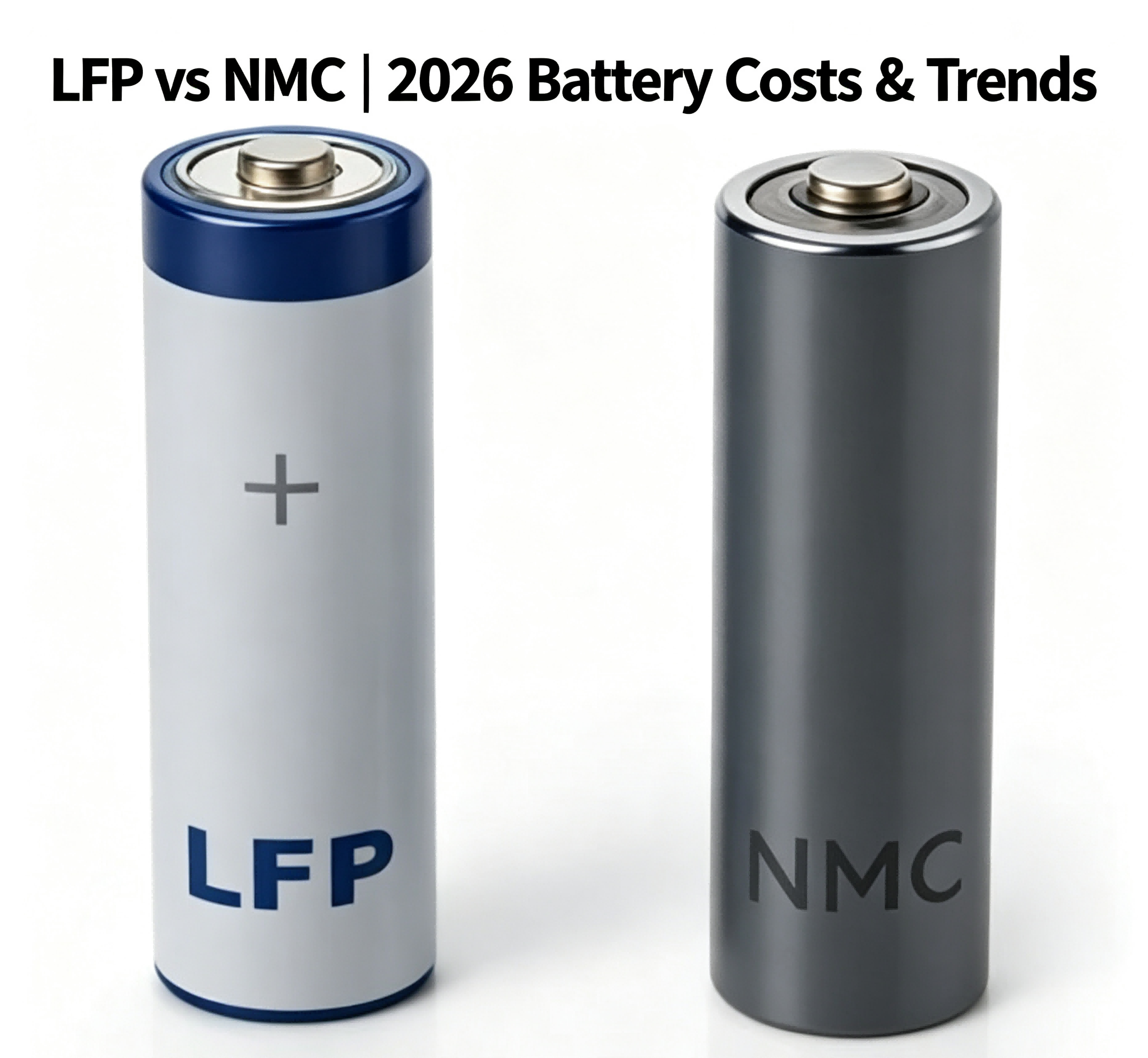
LFP and NMC are the two mainstream lithium battery chemistries worldwide. Their cost, performance and applicable scenarios differ significantly.
| Feature | LFP (LiFePO4) | NMC (Nickel-Manganese-Cobalt) |
|---|---|---|
| 2026 Average Pack Price | $80–$100/kWh | $100–$130/kWh |
| Cell Cost (China Market) | $55–$65/kWh | $85–$95/kWh |
| Energy Density | 180 Wh/kg | 240 Wh/kg |
| Cycle Life (80% DoD) | 6,000–8,000 cycles | 3,000–5,000 cycles |
| Safety Performance | Excellent | Moderate |
| Raw Material Price Risk | Low | High |
| Best Application Scenarios | Energy storage, regular EVs, industrial equipment | Long-range EVs, premium portable electronics |
For over 80% of commercial applications in 2026, LFP is the most economical choice. For energy storage and ordinary electric vehicles with a range below 375 miles, LFP can reduce total cost of ownership (TCO) by 25% to 40% within a 5-year service cycle.
Differences in production scale, labor cost, energy cost and local policies lead to obvious regional price gaps across the globe.
China occupies more than 70% of global lithium battery production capacity. Complete industrial chains, low operating costs and policy support keep its prices the lowest worldwide.
Average pack price: $88–$92/kWh
High labor costs, strict environmental regulations and incomplete local supply chains push up battery prices.
Average pack price: $130–$140/kWh (48% higher than China)
Driven by local manufacturing incentives and import tariffs, regional prices sit between Asia and Europe.
A: Yes. Supply tightness and booming energy storage demand will keep lithium prices climbing. Goldman Sachs expects lithium carbonate to reach $200,000–$250,000/ton in Q4 2026.
A: Definitely. LFP battery packs cost 20% to 30% less than NMC products. Meanwhile, LFP features longer cycle life and lower raw material price volatility.
A: We recommend placing orders in Q2 and Q3 2026. Market supply will become tighter in Q4 and trigger price hikes, so waiting until 2027 will not bring obvious cost benefits.
A: Class I/II forklift batteries are priced at $7,200–$15,800. Pallet jack lithium batteries cost $2,100–$4,800 on average.
2026 is a year of stable finished battery prices with upward cost pressure. Although raw material costs keep increasing, large-scale production and the dominance of LFP technology prevent end prices from skyrocketing. For global B2B buyers, prioritizing LFP products for cost-sensitive projects and signing long-term supply contracts before the Q4 price surge will effectively control procurement costs and avoid market risks.