



Lithium-ion batteries power smartphones, power banks, e-bikes, laptops and many other devices used every day. Although they are generally safe when properly designed and handled, small mistakes in daily use can increase the risk of overheating, battery swelling and, in severe cases, thermal runaway.
Some battery hazards are not immediately visible. This guide explains common risks that users often overlook and shares practical safety habits to help protect your devices, home and family.
Excessive heat is one of the main factors affecting lithium battery performance, lifespan and safety. Lithium-ion cells contain flammable electrolyte sealed inside their casings. Under normal operating conditions, the internal components remain stable. However, prolonged exposure to high temperatures can accelerate unwanted chemical reactions, increase internal pressure and damage the separator that keeps the positive and negative electrodes apart.
If the separator becomes damaged, an internal short circuit may occur. In severe cases, this can trigger thermal runaway — a self-sustaining reaction that causes temperatures to rise rapidly and may result in smoke, fire or cell rupture.
Common situations that can expose batteries to excessive heat include:
- Leaving phones, tablets or power banks on a car dashboard in direct sunlight.
- Charging devices on pillows, blankets or cushioned sofas that restrict airflow.
- Operating high-power devices in hot, poorly ventilated environments.
- Leaving battery-powered equipment near heaters or other heat sources.
Practical safety tip: If a device becomes unusually hot during charging or normal operation, stop using it and disconnect the charger if it is safe to do so. Allow it to cool in a safe, well-ventilated location away from flammable materials.
Do not rely on a single temperature threshold for every battery. Safe operating limits vary by cell chemistry, device design and manufacturer specifications. If a battery becomes excessively hot, emits an unusual smell or shows signs of swelling, stop using it and seek professional assistance.
A battery does not need visible cracks to have suffered internal damage. Dropping a phone, crushing a power bank or bending a battery pack can damage internal components even when the outer casing appears intact.
Severe mechanical stress may damage the separator or other internal layers, potentially causing an internal short circuit. This can generate localised heat and increase the risk of thermal runaway.
Some damage may not produce immediate symptoms. However, warning signs can appear later, including abnormal heating, unusual odours, reduced performance or battery swelling.
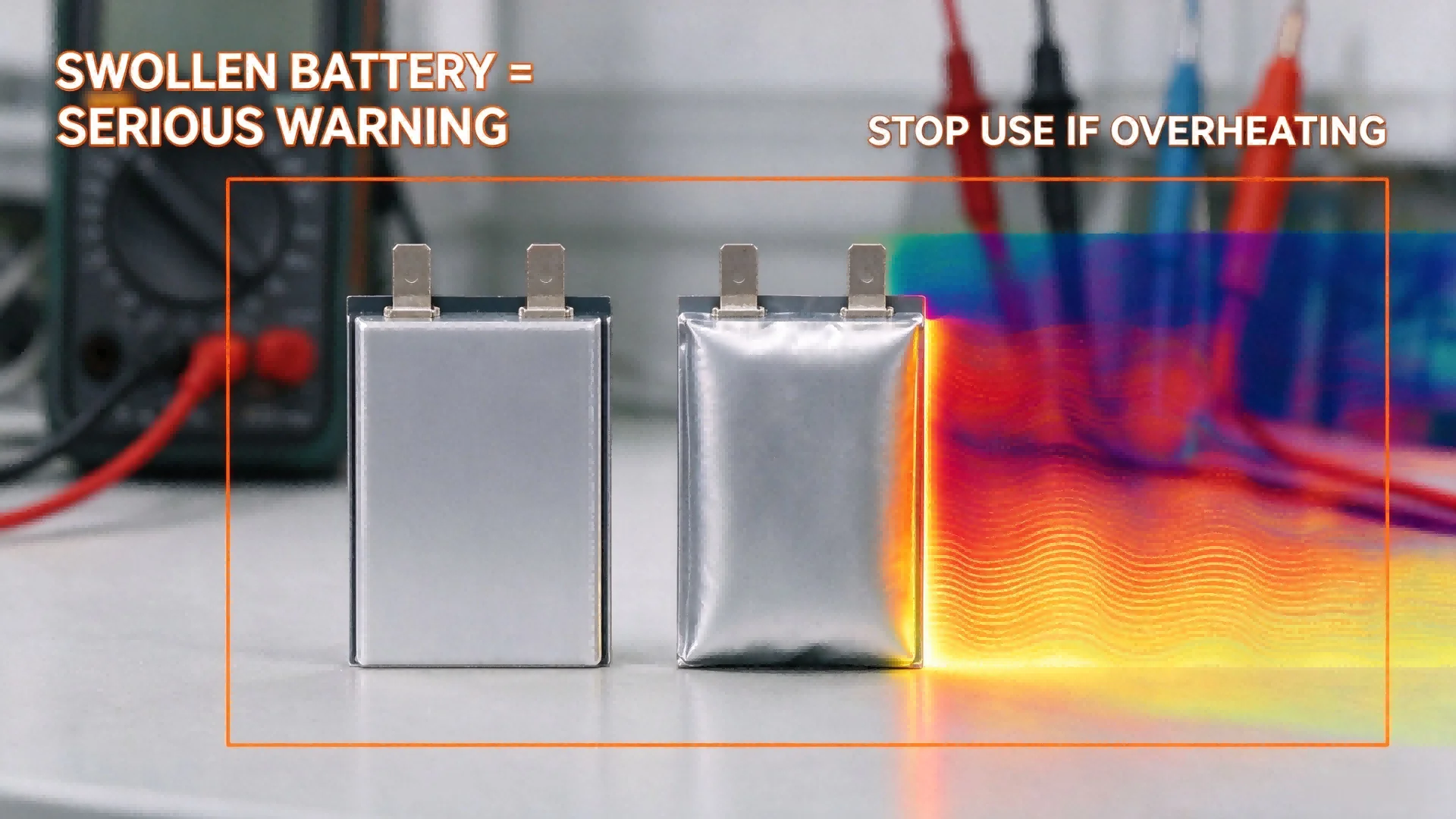
A swollen battery is a serious warning sign. Gas buildup caused by internal chemical reactions can increase pressure inside the cell and deform its casing.
Never puncture, squeeze, bend or continue using a swollen battery. Do not charge it or attempt to remove it by force. Keep people away from the device and contact a qualified battery service provider or local hazardous-waste facility for safe handling instructions.
Do not place a damaged or swollen battery in an ordinary sealed metal container. If it becomes hot, smokes or makes unusual noises, move away, avoid inhaling fumes and contact emergency services when necessary.
3. Charging Risks: A Common Source of Battery Safety Problems
Charging involves electrochemical reactions inside lithium-ion cells. Using incompatible equipment, charging in unsuitable environments or ignoring warning signs can increase the risk of battery damage.
- Use compatible chargers. Uncertified or poorly designed chargers may provide unstable voltage or current, increasing the risk of overheating and charging faults. Use the original charger or a compatible replacement that meets the device manufacturer’s requirements.
- Choose a suitable charging location. Beds, carpets and sofas can restrict airflow and trap heat. Whenever possible, charge devices on a stable, hard surface in a well-ventilated area, away from combustible materials.
- Avoid excessive heat during charging. Running demanding applications, gaming or intensive video processing while charging can increase the device’s overall temperature. If the device becomes unusually hot, stop the activity and allow it to cool.
- Manage charging time appropriately. Modern devices generally include charging control systems that help prevent overcharging. However, keeping a lithium-ion battery at a high state of charge for extended periods can accelerate battery ageing. Where available, use optimised charging or battery protection features to reduce the time spent at 100% state of charge.
| Charging Habit | Potential Risk | Safer Practice |
|---|---|---|
| Using incompatible or low-quality chargers | Unstable charging and overheating | Use manufacturer-approved or compatible certified chargers |
| Charging on beds or sofas | Restricted airflow and heat buildup | Charge on a hard, stable surface |
| Charging in direct sunlight | Excessive external heat | Choose a cool, shaded and ventilated location |
| Heavy device use while charging | Additional heat generation | Reduce demanding activities if the device becomes hot |
| Ignoring abnormal heating or swelling | Continued operation under unsafe conditions | Stop charging and seek professional assistance |
4. Long-Term Storage Mistakes That Compromise Battery Safety
Spare drone batteries, camera packs and laptop batteries that are rarely used are often forgotten in drawers, garages or storage rooms. Improper storage can accelerate battery ageing and, in some cases, create safety risks.
Storing lithium-ion batteries at a very high state of charge for extended periods can accelerate capacity degradation. On the other hand, leaving a battery fully discharged for too long may cause its voltage to fall below the manufacturer’s specified minimum level. This can result in permanent damage and may make subsequent charging unsafe.
For many rechargeable lithium-ion batteries, a partial state of charge is recommended for long-term storage. A range of approximately 40–60% is a useful general reference, but the exact storage recommendation depends on the battery chemistry and manufacturer.
Choose a cool, dry location with a stable temperature. Avoid leaving spare batteries in vehicles, attics or garages where temperatures can fluctuate significantly.
For loose cylindrical cells, such as 18650 batteries, use individual protective cases or the original packaging. Never store unprotected cells together with coins, keys or other metal objects, as accidental contact between terminals can cause a short circuit.
| Storage Factor | Recommended Practice | What to Avoid |
|---|---|---|
| State of charge | Follow the manufacturer’s recommended storage SOC; around 40–60% is a general reference for many lithium-ion batteries | Long-term storage at 0% or 100% SOC |
| Temperature | Store in a cool, dry and stable environment | Hot vehicles, direct sunlight and extreme temperature changes |
| Physical protection | Use suitable battery cases or original packaging | Loose cells rubbing against hard objects |
| Terminal protection | Keep battery terminals insulated | Contact with coins, keys or metal hardware |
| Periodic inspection | Check for swelling, leakage or physical damage | Leaving damaged batteries unattended |
5. Safe Buying and Responsible Disposal
Battery safety begins before purchase and continues through the end of a battery’s service life.
Low-quality power banks and replacement batteries from unknown suppliers may lack adequate electrical protection, quality control or reliable manufacturing processes. Some products may also make misleading claims about capacity, performance or safety certifications.
When purchasing lithium battery products, choose reputable manufacturers and suppliers. Check product specifications, compatibility, protection features and relevant test documentation. For custom battery packs, confirm that the design includes appropriate protection against overcharge, over-discharge, overcurrent and short circuits.
At the end of their service life, lithium-ion batteries should be handled through appropriate collection and recycling channels rather than placed in ordinary household rubbish.
Damaged batteries can be particularly hazardous if crushed, punctured or exposed to heat during waste collection and processing. They may cause fires in rubbish trucks and recycling facilities.
Use designated battery collection points, electronics retailers or local hazardous-waste programmes. Follow local recycling instructions, especially for damaged or swollen batteries, which may require special handling.
Proper recycling also helps recover valuable materials and reduces the environmental impact of battery waste.
6. Final Takeaway
Lithium-ion batteries are reliable power sources for everyday devices, but their safety depends on proper use, charging, storage and handling.
Common risks often come from seemingly harmless habits, such as leaving devices in hot vehicles, using incompatible chargers, ignoring physical damage or storing batteries incorrectly.
Watch for warning signs such as unusual heating, swelling, leakage and abnormal odours. Use compatible charging equipment, follow manufacturer storage recommendations and dispose of used batteries through appropriate recycling channels.
These simple precautions can help reduce battery-related risks, protect your devices and extend their usable service life.
7. Frequently Asked Questions
A: Yes. Internal damage caused by a previous impact, manufacturing defects or prolonged exposure to excessive heat may not be immediately visible. A damaged cell can develop problems later, particularly during charging or high-load operation.
A: Modern devices generally include charging control systems to prevent overcharging. However, keeping a battery at 100% state of charge for extended periods can accelerate ageing. Use optimised charging features where available and follow the manufacturer’s recommendations.
A: Stop using and charging it immediately. Do not puncture, squeeze or attempt to repair the battery. Keep it away from combustible materials and contact a qualified service provider or local hazardous-waste facility for safe handling instructions. If it becomes hot, smokes or catches fire, move away and contact emergency services.
A: Store spare batteries in a cool, dry place at the manufacturer’s recommended storage state of charge. A partial charge, often around 40–60%, is a general reference for many lithium-ion batteries. Keep individual cells in protective cases and away from metal objects that could cause short circuits.