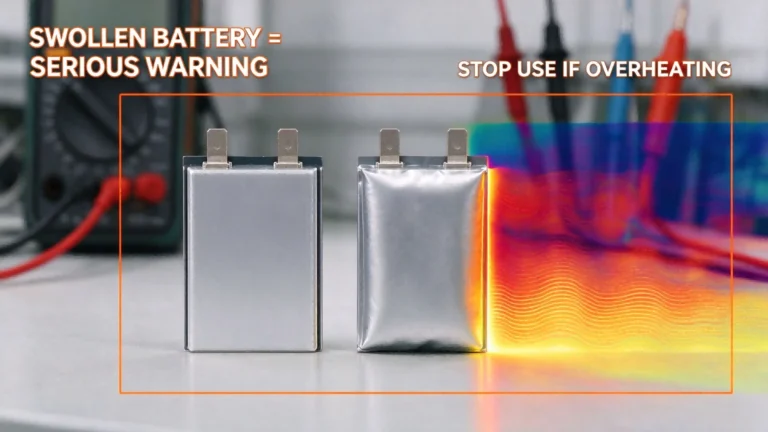




Temperature plays a critical role in the performance, safety, and service life of lithium iron phosphate (LiFePO4) batteries. Whether used in residential solar systems, off-grid installations, or commercial energy storage systems (ESS), these batteries have different temperature requirements for charging, discharging, and storage.
Operating outside the recommended temperature range can reduce available capacity, accelerate battery degradation, and potentially trigger the battery management system (BMS) protection mechanisms. This guide explains the typical temperature limits of LiFePO4 batteries, the risks of low-temperature charging, and practical thermal management strategies for different applications.
Key Takeaways
- A temperature range of approximately 15°C to 35°C is generally favorable for LiFePO4 battery operation and long-term performance.
- Charging has a narrower temperature window than discharging. Most standard LiFePO4 batteries prohibit charging below 0°C to reduce the risk of lithium plating.
- Discharging is commonly permitted between -20°C and 50–60°C, depending on the battery model, although available capacity and power may decrease at temperature extremes.
- Long-term storage generally benefits from a moderate state of charge (SOC), often around 30%–50%, in a cool and dry environment.
- Large commercial and industrial ESS installations require effective thermal management and consistent cell temperatures. Liquid cooling can offer advantages in high-density, high-power systems.
1. What Is the Safe Operating Temperature for LiFePO4 Batteries?
There is no single temperature range that applies to every lithium battery. LiFePO4, NMC, and other lithium-ion chemistries have different thermal characteristics, while individual battery models may also have different operating limits.
The BMS and cell manufacturer’s specifications determine the actual protection thresholds. Always check the product datasheet before installation or operation rather than relying solely on general industry recommendations.The BMS and cell manufacturer’s specifications determine the actual protection thresholds. Always check the product datasheet before installation or operation rather than relying solely on general industry recommendations.
For many stationary LiFePO4 battery systems, the following ranges are useful references:
- Preferred operating temperature: Approximately 15°C–35°C
- Typical charging temperature: 0°C–45°C or 0°C–55°C
- Typical discharging temperature: -20°C–50°C or -20°C–60°C
These are indicative ranges, not universal specifications. Some batteries have narrower limits, while specially designed models may support a wider operating window.
A battery may be capable of discharging at -20°C or operating near 55°C, but this does not mean these conditions are ideal for continuous use. Low temperatures can reduce available capacity and power, while prolonged exposure to high temperatures accelerates aging and increases thermal stress.
2. LiFePO4 Charging Temperature Limits and Cold-Charging Risks
Most standard LiFePO4 battery packs allow charging at temperatures starting from 0°C, while some manufacturers specify a higher minimum charging temperature, such as 5°C.
This restriction is important because charging lithium-ion cells at excessively low temperatures can cause lithium plating on the graphite anode. Instead of being properly stored within the anode structure, some lithium may deposit on its surface as metallic lithium. This process can consume active lithium, reduce capacity, and increase internal safety risks.
A properly configured BMS monitors cell temperature and can automatically suspend charging when the temperature falls below the permitted threshold. The battery may still be able to supply power to connected equipment even when charging is temporarily disabled.
For cold-climate applications, specially engineered LiFePO4 battery packs can incorporate:
- Integrated heating pads or heating films
- Cell-level temperature sensors
- BMS-controlled heating systems
- Low-temperature charging protection
- Automatic charging recovery after the cells reach a suitable temperature
These systems warm the cells before allowing charging to begin. However, the heating function and its operating limits must be specifically designed and approved by the battery manufacturer.
A standard LiFePO4 battery should never be charged below its specified minimum temperature simply because LFP chemistry has better thermal stability than some other lithium-ion chemistries.
3. LiFePO4 Discharge Temperature Range
LiFePO4 batteries generally tolerate a wider temperature range during discharge than during charging. Many stationary energy storage models support discharge between -20°C and 50–60°C, although the exact limits depend on cell design and manufacturer specifications.
Battery performance changes significantly near these temperature extremes.
In cold environments:
- Internal resistance increases.
- Voltage drops more noticeably under heavy loads.
- Available capacity and discharge power decrease.
- Battery runtime may become shorter.
These performance changes are often partially reversible once the battery returns to a suitable temperature, provided that no permanent damage has occurred.
In hot environments:
- Chemical aging accelerates.
- Internal resistance and capacity degradation may change over time.
- Thermal management becomes more important under continuous high loads.
- Prolonged exposure to excessive heat can reduce service life and safety margins.
For residential solar systems in cold climates, it is normal for a LiFePO4 battery to continue supplying household loads while temporarily refusing solar charging on freezing mornings. This is often the BMS operating as designed rather than an indication of a system malfunction.
4. Lithium Battery Storage Temperature and SOC Guidelines
Storage conditions are different from active operating conditions. Even when a lithium battery is not being used, calendar aging continues gradually. High storage temperatures combined with a high state of charge can accelerate this process.
For long-term storage, LiFePO4 batteries are generally best kept in a cool, dry environment with a moderate SOC. The exact storage temperature and inspection intervals should follow the manufacturer’s instructions.
The following ranges can serve as general warehouse planning references, but they should not be treated as universal storage specifications:
- Short-term storage (around 1 month): Keep within the manufacturer’s permitted storage temperature range, preferably in a cool, dry environment.
- Medium-term storage (around 3 months): Avoid prolonged exposure to high temperatures and maintain the recommended storage SOC.
- Long-term storage (6 months or longer): Follow the manufacturer’s specified temperature, SOC, and periodic inspection requirements.
For many LiFePO4 battery products, a storage SOC of approximately 30%–50% is a practical reference. Avoid leaving batteries fully charged for extended periods, particularly in hot warehouses.
Distributors and installers should also maintain appropriate storage records, including:
- Battery arrival dates and serial numbers
- Initial and current SOC levels
- Storage temperature and humidity
- Scheduled voltage and SOC inspections
- Manufacturer-recommended maintenance charging intervals
Proper warehouse management helps reduce unnecessary degradation and improves battery traceability throughout the supply chain.
5. Thermal Management: Air Cooling vs. Liquid Cooling
Thermal management is essential for maintaining consistent battery performance and extending service life.
For smaller residential wall-mounted battery systems, natural ventilation or forced-air cooling is often sufficient when the installation environment is properly controlled.
Large commercial and industrial energy storage systems have more demanding thermal management requirements. Uneven temperatures between cells can cause differences in aging rates, internal resistance, and available capacity. Over time, these variations may contribute to cell imbalance and reduced system performance.
Air cooling
Air cooling generally has lower initial costs, a simpler system structure, and relatively straightforward maintenance. It is suitable for many residential and lower-density energy storage applications.
However, maintaining uniform temperatures can become more difficult in large, densely packed battery racks, especially under high ambient temperatures or continuous heavy loads.
Liquid cooling
Liquid cooling provides more precise thermal management and can improve temperature uniformity in high-power, high-density battery installations. It is particularly useful for commercial and industrial ESS applications with demanding operating profiles.
Its disadvantages include higher initial investment, more complex system design, and additional maintenance requirements.
The actual temperature difference between cells depends on system architecture, cooling design, airflow or coolant distribution, and operating conditions. A temperature difference below 3°C may be a design target for certain systems, but it should not be assumed for every liquid-cooled installation.
The right cooling solution depends on continuous power demand, battery cabinet density, ambient temperature, installation conditions, and expected service life.
6. Climate-Specific Tips for LiFePO4 Installations
Cold Weather Installations
For installations in regions where winter temperatures frequently fall below freezing, battery placement and low-temperature protection are especially important.
Recommended practices include:
- Install batteries indoors whenever practical.
- Use insulated battery enclosures where appropriate.
- Select manufacturer-approved self-heating battery packs for cold-climate applications.
- Confirm that the BMS supports low-temperature charging protection and automatic recovery.
- Check inverter and BMS communication to ensure temperature protection settings work correctly.
Never manually disable the BMS low-temperature charging cutoff to force a battery to charge in freezing conditions. Doing so can expose the cells to lithium plating and permanent damage.
Hot Climate Installations
In hot regions, excessive ambient temperature and poor ventilation can accelerate battery aging.
Recommended practices include:
- Install battery cabinets in shaded areas away from direct sunlight.
- Keep batteries away from heat-producing equipment, including inverters and charge controllers.
- Maintain adequate ventilation and clearance around battery cabinets.
- Consider active cooling for high-density commercial and industrial installations.
- Review BMS temperature records regularly to identify abnormal heating.
High-IP-rated enclosures can provide better protection against dust and water, but they may also restrict natural airflow. Sealed battery cabinets therefore require an appropriate thermal management design rather than relying on passive ventilation alone.
7. Quick Decision Reference Table
| Temperature or Condition | Recommended Action |
|---|---|
| 15°C–35°C | Generally favorable operating conditions for normal charging and discharging |
| 5°C–15°C | Check the datasheet for charging current limits and possible derating |
| 0°C–5°C | Follow the manufacturer’s minimum charging temperature and current restrictions |
| Below 0°C | Charging is generally prohibited for standard packs; discharge may be permitted within specified limits |
| Near the upper temperature limit | Reduce load if necessary and improve ventilation or activate cooling |
| Long-term storage | Maintain the recommended storage SOC and temperature; follow inspection schedules |
| Large commercial and industrial ESS | Prioritize cell temperature uniformity and an appropriately engineered cooling system |
8. Final Thoughts
LiFePO4 batteries generally offer better thermal stability than many nickel-rich lithium-ion chemistries, but they are not immune to temperature-related degradation or safety risks.
One of the most important distinctions is that the permitted discharge temperature range is usually wider than the charging temperature range. A battery may continue supplying power in freezing conditions while its BMS blocks charging to protect the cells.
Matching the battery’s temperature specifications to the local climate, maintaining proper BMS protection, and selecting suitable heating or cooling equipment can help extend service life and maintain reliable performance.
For residential solar, off-grid installations, and commercial energy storage projects, temperature management should be considered an essential part of battery system design rather than an optional accessory.
9. Frequently Asked Questions
A: Many stationary LiFePO4 batteries support charging between 0°C and 45–55°C and discharging between -20°C and 50–60°C. A temperature range of approximately 15°C–35°C is generally favorable for everyday operation. Always check the manufacturer’s specifications for exact limits.
A: Moderate temperatures are generally best for long-term battery health. Around 20°C–25°C is often favorable for minimizing temperature-related aging, while prolonged exposure to high temperatures should be avoided.
A: Many LiFePO4 batteries can discharge at temperatures as low as -20°C, although available capacity and power may decrease. Standard battery packs generally prohibit charging below 0°C unless they have a manufacturer-approved low-temperature heating system.
A: Charging at excessively low temperatures can cause lithium plating on the anode. This may lead to irreversible capacity loss, increased internal resistance, and potential internal safety risks.
A: No. For many models, a moderate SOC of approximately 30%–50% is suitable for long-term storage. Keep batteries in a cool, dry environment and follow the manufacturer’s recommended inspection and maintenance schedule.
A: No. Residential wall-mounted batteries often operate effectively with natural ventilation or conventional air cooling. Liquid cooling is more beneficial for large, high-power, and high-density commercial energy storage systems where precise temperature control is required.
A: LiFePO4 generally has better thermal stability than NMC, which can provide an advantage in demanding operating environments. However, sustained high temperatures accelerate aging in both chemistries, so proper ventilation and thermal management remain essential.