Let's Shape The Future Of Your Investments!
Natoque iaculis cursus augue urna commodo aptent morbi tortor porttitor quis ornare.
![Lithium-ion Battery Manufacturer | BAKTH Battery [Official]](https://bakth-battery.com/wp-content/uploads/2026/05/hideLogo.png)
![Lithium-ion Battery Manufacturer | BAKTH Battery [Official]](https://bakth-battery.com/wp-content/uploads/2026/05/logo.png)
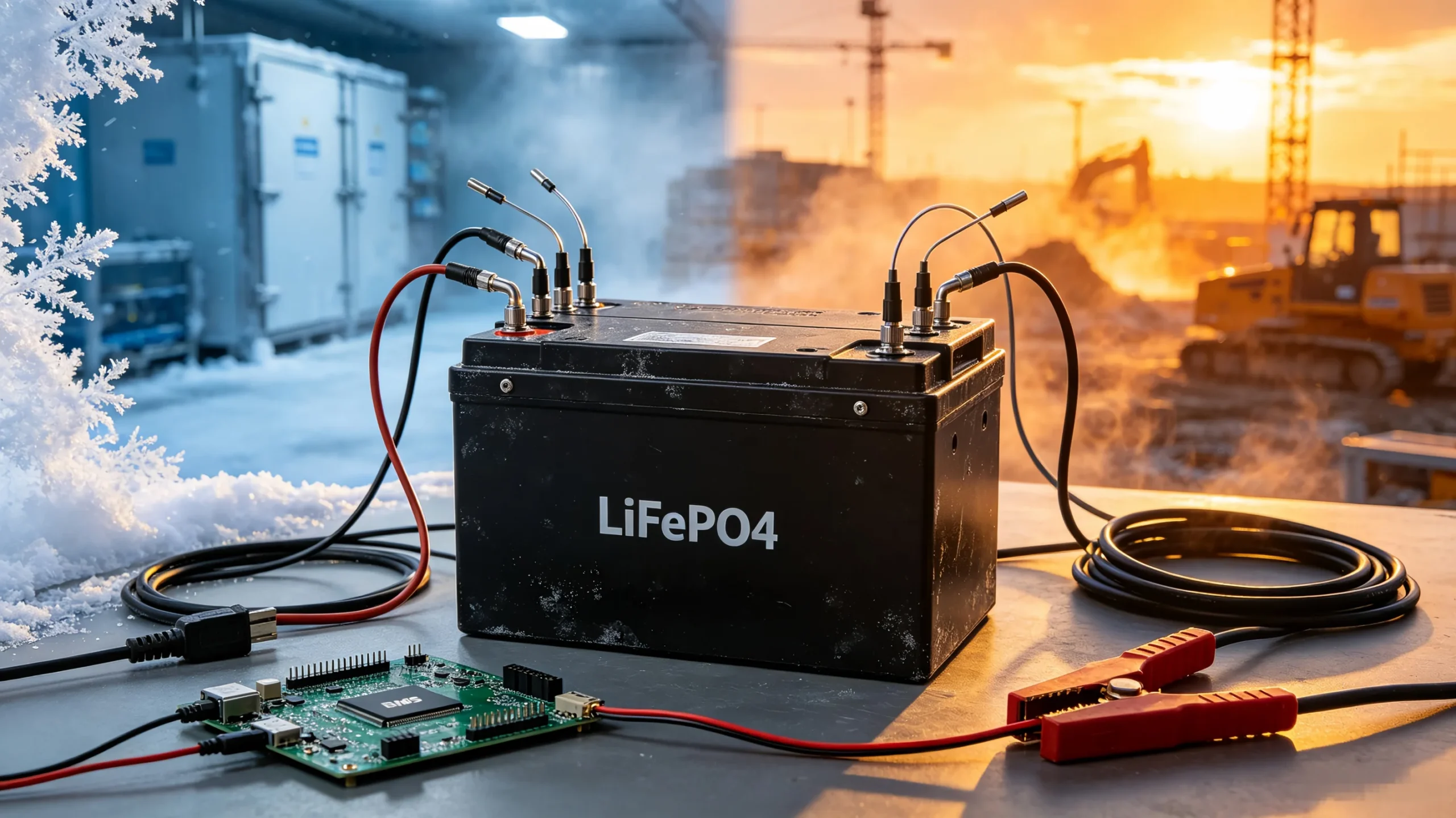
Lithium-ion batteries widely support industrial & commercial hardware, including agricultural UAVs, EVs, off-grid solar storage, power tools, medical devices and robots. Though they feature high energy density and light weight, lithium cells’ electrochemical reactions are highly sensitive to ambient temperature shifts. Many OEMs and fleet operators only identify thermal degradation after on-site failures such as capacity attenuation, swollen battery packs or safety accidents.
Both extreme heat and cold cause permanent internal chemical damage. Low temperatures hinder lithium ion movement and induce hazardous lithium plating during charging; sustained high heat accelerates parasitic side reactions, shortening cycle life and increasing fire risks. This technical guide analyzes temperature-triggered battery degradation, compares thermal tolerance of mainstream lithium chemistries, presents industrial temperature monitoring hardware and factory thermal management standards for OEM mass orders and global fleets. It also covers BAKTH’s exclusive thermal protection solutions for extreme working environments.
A lithium cell’s real-world runtime and deliverable capacity shift drastically with temperature fluctuations, driven by changes in electrolyte ionic mobility and internal resistance values.
As temperatures drop, electrolyte viscosity rises sharply, slowing lithium ion movement between anode and cathode layers and boosting overall pack internal resistance:
This temporary capacity drop partially recovers once cells warm up, but cold charging creates permanent chemical harm that cannot be reversed by heating alone.
Mild ambient warmth ranging from 20–30°C improves ion flow and delivers near-full rated capacity for short discharge cycles. However, prolonged operation above 35°C creates unseen lasting damage:
Continuous heat accelerates unregulated side reactions between electrodes and electrolyte, thickening the Solid Electrolyte Interphase (SEI) protective film on the anode. Over time, this process locks usable lithium ions away, leading to steady, irreversible capacity fade even after the battery returns to room-temperature environments. Industry testing confirms every 10°C sustained temperature increase above 25°C doubles the battery’s natural aging rate.
A battery cycle refers to one full round of discharging a battery to its safe cut-off voltage and fully recharging back to 100% nominal capacity. The most critical detail for commercial fleets: cycles are calculated by cumulative discharge volume, not single takeoff-land flight sessions.
This is one of the most overlooked failure modes for commercial lithium fleets operating in cold climate zones. When charging lithium cells below freezing (32°F / 0°C):
Electrolyte thickening slows ion migration significantly, so lithium ions cannot fully embed into graphite anode structures. Instead, metallic lithium deposits accumulate on the anode surface and form sharp needle-like dendrite crystals.
Lithium plating susceptibility varies by chemistry: LiFePO4 carries moderate risk, while high-energy NMC and silicon-anode cells face drastically higher plating rates under subzero charging conditions.
BAKTH Factory Advantage: For cold-region OEM projects including northern agricultural drones and mountain electric vehicles, we customize LiFePO4 packs equipped with built-in PTC preheating BMS. The intelligent system automatically warms cell temperature above 5°C before activating charge circuits to fully eliminate lithium plating risks.
Prolonged exposure above 45°C weakens internal cell structures. Once cell temperatures hit 130°C–150°C, separator plastic melts, creating massive internal short circuits that spark a self-feeding exothermic chain reaction defined as thermal runaway.
Silicon-anode EV lithium and high-rate drone LiPo packs feature far lower thermal runaway onset thresholds than LiFePO4 cells, making them substantially more vulnerable to summer heat abuse.
Each lithium variant features distinct safe operating windows for charging, discharge and long-term inventory storage, directly impacting OEM product design for global hot/cold markets:
| Battery Chemistry | Optimal Temp For Max Cycle Life | Safe Charging Range | Safe Discharge Range | High-Temp Stability | Cold Charging Plating Risk |
|---|---|---|---|---|---|
| LiFePO4 (LFP) | 20–25°C | 0–45°C | -20–60°C | Excellent | Medium |
| NMC Ternary Lithium | 20–25°C | 0–40°C | -10–50°C | Poor | High |
| Silicon-Anode EV Li-ion | 20–25°C | 5–40°C | -5–45°C | Very Poor | Very High |
| Lithium Polymer (LiPo) | 18–24°C | 5–38°C | 0–48°C | Medium | High |
BAKTH Factory Advantage: For tropical high-temperature market orders, we deploy customized heat-resistant electrolyte and multi-layer ceramic separators to slow thermal aging by more than 30% compared to standard industry cells.
Continuous thermal monitoring forms the foundation of reliable lithium battery safety management for manufacturing aging lines, warehouse inventory storage and field-operating vehicle fleets. Below are widely deployed industrial monitoring solutions for OEM projects:
Industry best practice: Combine automatic BMS protection with regular manual thermal inspections to catch hidden cell hotspots before permanent irreversible damage develops.
Target a consistent 10°C–25°C ambient environment for all lithium charging, operation and storage workflows. Deploy tiered thermal control strategies matched to your application scenarios:
Ambient temperature directly modulates two core battery performance metrics: total usable cycle lifespan and real-time output voltage stability.
Different lithium chemistries display distinct voltage-temperature curves, so BAKTH tailors BMS firmware to match each cell type’s voltage compensation requirements during OEM customization.
Operating temperature functions as an invisible control switch governing all lithium-ion battery performance and safety metrics. Cold charging triggers irreversible lithium plating and latent short-circuit hazards, while prolonged high heat accelerates electrolyte breakdown, cell swelling and potentially catastrophic thermal runaway.
LiFePO4 chemistry delivers superior thermal stability for extreme climate deployments compared to NMC and silicon-anode lithium cells. A complete thermal management system combining temperature-sensing BMS, matched cooling/insulation hardware and standardized operational SOPs can eliminate nearly all temperature-induced battery failures.
As a full-process lithium battery manufacturer, BAKTH integrates multi-point thermal monitoring, optional preheating modules and climate-adapted electrolyte formulas into all OEM custom packs, drastically reducing fleet after-sales failures in both tropical hot and frigid cold deployment regions. Our engineering team offers tailored thermal design support for solar storage, UAV, EV and industrial power tool battery projects worldwide.
A: Temporary capacity loss occurs during low-temperature discharge, but permanent irreversible harm only takes place when charging cells below 0°C due to lithium dendrite plating.
A: NMC/LiPo cells trigger thermal runaway around 130°C–150°C; LiFePO4’s stable cathode structure raises the onset threshold above 190°C for vastly improved heat safety.
A: Constant 15°C–22°C with a 40–60% state of charge minimizes self-discharge and thermal aging over months of idle storage.
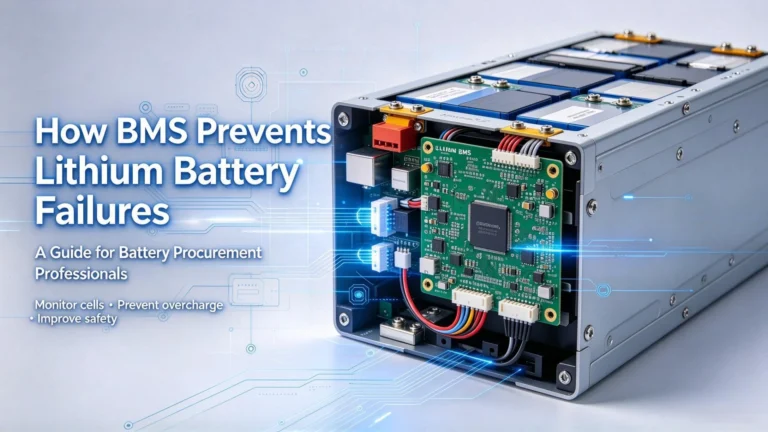
A: Built-in thermistors continuously track cell temperature; the BMS automatically limits charging current or fully disconnects charge/discharge loads once crossing pre-set high/low temperature safety thresholds.
A: Not recommended without a preheating BMS. Allow the pack to warm fully above 5°C before initiating charging to avoid lithium plating and shortened cycle life.