Let's Shape The Future Of Your Investments!
Natoque iaculis cursus augue urna commodo aptent morbi tortor porttitor quis ornare.
![Lithium-ion Battery Manufacturer | BAKTH Battery [Official]](https://bakth-battery.com/wp-content/uploads/2026/05/hideLogo.png)
![Lithium-ion Battery Manufacturer | BAKTH Battery [Official]](https://bakth-battery.com/wp-content/uploads/2026/05/logo.png)
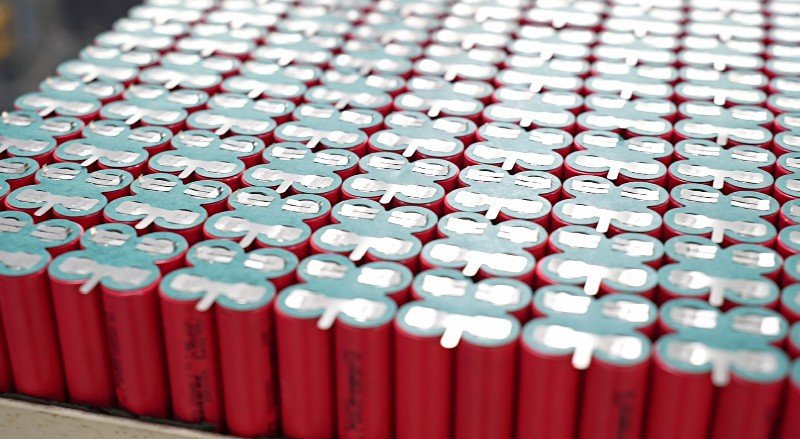
All lithium-ion packs gradually lose usable capacity with use and idle storage, frustrating commercial fleet operators and product OEMs. This permanent performance drop stems from irreversible internal chemical reactions amplified by improper charging, extreme temperatures and low-quality cell balancing.
This guide breaks down all aging mechanisms and shares factory-grade strategies to slow capacity loss.
Every charge-discharge cycle triggers tiny, cumulative chemical degradation inside cells, creating permanent runtime reduction over time.
A thin, protective Solid Electrolyte Interphase (SEI) naturally forms on graphite anodes during initial charging to block direct electrolyte-electrode contact. However, repeated cycling fractures the fragile film, triggering continuous regrowth:
Practical Operation Tip: Avoid storing packs at 100% SOC; maintain 40%–60% charge for long idle periods to suppress excess SEI growth.
Free lithium ions shuttle between cathode and anode to generate electricity, yet multiple pathways permanently consume usable lithium:
Industry balancing technologies to cut lithium waste:
| Balancing Tech | Core Function | Applicable Scenarios |
|---|---|---|
| Active Cell Balancing | Redistributes charge across uneven cells to eliminate single-cell overcharge/overdischarge | Energy storage, heavy industrial packs, EV batteries |
| Inductive Dynamic Balancing | Transfers excess energy between cells during discharge to equalize voltage | Drone fleets, portable high-power equipment |
Daily rule: Recharge packs before SOC drops below 20% to minimize lithium plating risks.
Anode and cathode materials repeatedly expand and contract during cycling, generating microcracks and surface material shedding:
Capacity loss occurs even when batteries sit unused, driven by idle-state chemical reactions.
Disconnected lithium packs still lose stored energy slowly over months:
Maintenance tip: For batteries stored over 3 months, top up charge to 50% SOC every 90 days to offset self-discharge loss.
Organic electrolyte acts as the medium for lithium ion movement, yet heat, overvoltage and long-term aging break down its core components:
BAKTH Factory Advantage: We add specialized anti-decomposition additives to electrolyte formulas, slowing solvent breakdown and HF generation by over 35% compared to generic standard cells.
Poor daily operation habits are the top man-made factor speeding up capacity attenuation.
Charging past a cell’s rated maximum safe voltage triggers irreversible harm:
BMS protection value: Intelligent management systems automatically cut charging current once single-cell voltage hits safety thresholds to eliminate overcharge risks.
Draining cells below the manufacturer’s minimum voltage cutoff creates permanent structural damage:
Standard rule of thumb: Never allow regular-use lithium packs to drop below 20% SOC; avoid complete 0V depletion entirely.
All internal parasitic chemical side reactions speed up exponentially under heat. SEI growth, electrolyte decomposition and electrode cracking all accelerate rapidly, cutting total cycle life in half.
Cold thickens electrolyte, drastically slowing ion mobility and temporarily reducing usable capacity. More critically, charging below freezing creates lithium dendrite plating, leaving latent internal short-circuit hazards that trigger late-stage capacity loss.
Optimal operating & storage temperature window: Stable 20°C–25°C.
Most commercial power packs combine dozens of series-connected cells, introducing unique aging risks single cells do not face.
Minor manufacturing differences cause individual cells within a pack to age at mismatched rates over cycles:
Two mainstream cell balancing solution comparison:
| Balancing Type | Core Advantages | Drawbacks |
|---|---|---|
| Active Balancing | High energy utilization, extends full pack service life, fast voltage equalization | Higher production cost, more complex PCB circuit design |
| Passive Balancing | Low cost, simple circuit layout | Wastes surplus cell energy as heat, weak full-range balancing performance |
Industry recommendation: Large-scale energy storage, EV and industrial drone packs require active balancing BMS for long-term consistent capacity retention.
Thin polymer separators physically isolate anode and cathode to prevent direct short circuits:
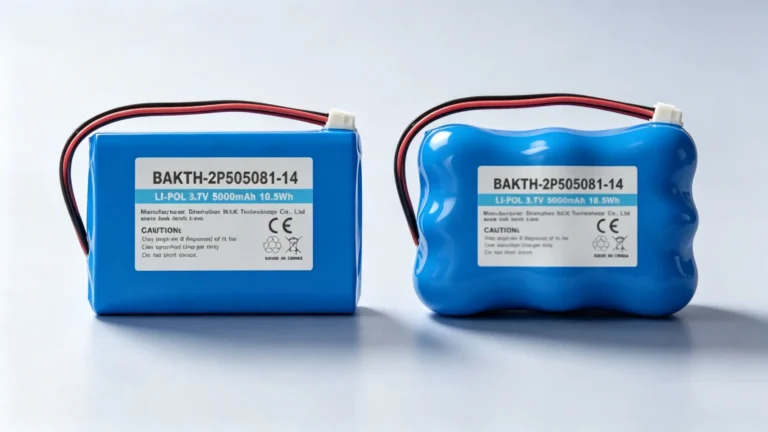
Routine inspection tip: Check packs regularly for abnormal casing swelling or persistent surface heat as early warning signs of separator failure.
Lost active lithium and degraded electrode structures cannot be restored, but operators and OEM designers can drastically slow attenuation with standardized workflows:
Lithium-ion capacity attenuation arises from unavoidable internal chemical aging, while improper charging, extreme temperature exposure, long-term full/empty storage and unbalanced multi-cell structures drastically speed permanent performance loss. Once active lithium is consumed or electrodes degrade, lost capacity cannot be recovered.
By adopting standardized charge/storage rules and selecting high-quality factory packs with active balancing BMS, commercial operators and OEM brands can extend battery service life and cut long-term replacement costs. For custom long-cycle lithium pack projects for drones, energy storage, EVs and portable industrial equipment, contact BAKTH’s lithium engineering team for high-consistency, anti-aging power solutions with complete international safety certifications.
A: Mild attenuation over hundreds of cycles is inherent to lithium cell chemistry, but proper maintenance and premium factory pack design can slow capacity loss by over 40%.
A: Subzero charging causes irreversible lithium dendrite plating on anodes, permanently consuming active lithium and creating hidden internal short-circuit risks that worsen fade over cycles.
A: 40%–60% mid-state charge minimizes SEI side reactions and self-discharge, the optimal range for months-long idle inventory storage.
A: Active balancing transfers surplus energy between cells without waste, extending overall pack capacity retention; passive balancing burns excess energy as heat and cannot fully equalize severely mismatched cells.
A: No. Swelling signals severe electrolyte decomposition and permanent lithium loss; such packs must be retired to avoid thermal safety hazards.