Let's Shape The Future Of Your Investments!
Natoque iaculis cursus augue urna commodo aptent morbi tortor porttitor quis ornare.
![Lithium-ion Battery Manufacturer | BAKTH Battery [Official]](https://bakth-battery.com/wp-content/uploads/2026/05/hideLogo.png)
![Lithium-ion Battery Manufacturer | BAKTH Battery [Official]](https://bakth-battery.com/wp-content/uploads/2026/05/logo.png)
Lithium-ion pouch cells have emerged as a mainstream battery solution in 2026, driven by their ultra-light weight, customizable flexible design and industry-leading high energy density. Widely deployed across consumer electronics, electric vehicles (EVs), drones and portable energy storage systems, soft-pack pouch batteries stand out from traditional hard-shell prismatic and cylindrical cells with unique structural strengths.
However, pouch cells also face inherent bottlenecks including cycling swelling, poor mechanical toughness and shorter cycle lifespan that restrict their large-scale adoption in high-vibration industrial scenarios.
This in-depth 2026 performance analysis covers all core specifications, pros and cons, head-to-head cell comparison, cutting-edge technical upgrades, manufacturing pain points and global market dynamics, helping battery engineers, procurement teams and product designers select optimal lithium cell formats accurately.
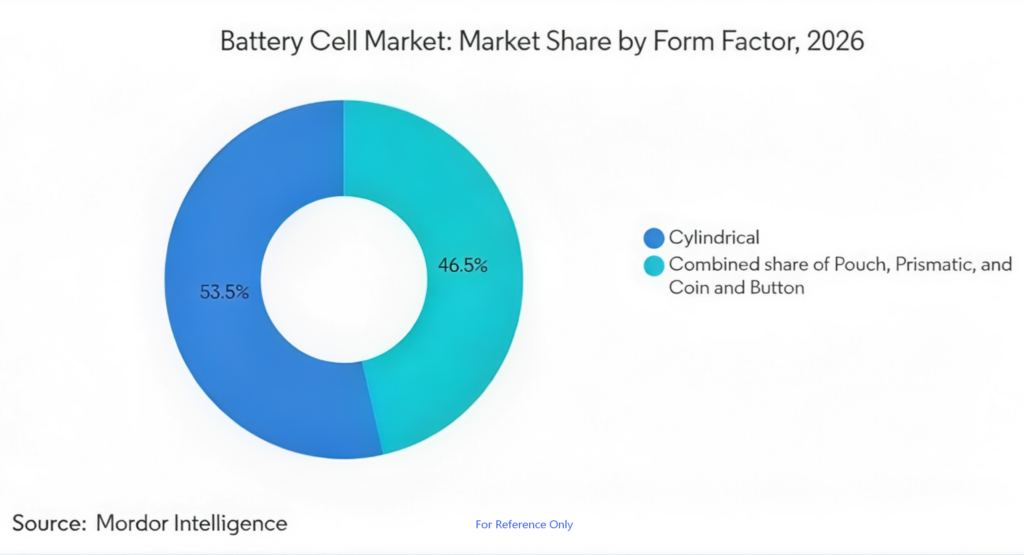
| Battery Cell Format | 2026 Global Market Share |
|---|---|
| Prismatic Cell | 48% |
| Cylindrical Cell | 31% |
| Pouch Cell | 21% |
Although pouch cells currently hold the smallest market share, they maintain the fastest year-on-year growth thanks to booming demand for lightweight EVs and slim wearable devices.
Different from rigid metal-cased batteries, pouch cells adopt multi-layer aluminum-plastic laminated film as outer packaging, bringing five unmatched core competitive advantages.
Pouch cells eliminate heavy steel or aluminum rigid shells used by hard-shell batteries. Relying on stacked internal electrode structures and soft composite film packaging, they achieve remarkable weight reduction:
The lightweight design effectively cuts overall battery pack weight, extending cruising range for EVs and improving portability for handheld electronic devices. Extra supporting structures are required inside equipment compartments to compensate for the lack of rigid casing protection.
Pouch cells support unlimited shape customization, including ultra-thin, curved, triangular and hexagonal specifications, perfectly fitting irregular and narrow internal spaces of drones, smart wearables and new energy vehicles.
| Specification Aspect | Detailed Performance Data |
|---|---|
| Packaging Material | Multi-layer aluminum-plastic laminated soft film |
| Design Flexibility | Customizable thickness, outline and size for personalized OEM demands |
| Space Adaptability | Compatible with complex and irregular equipment inner cavities |
| Weight Advantage | 20%-40% weight reduction vs hard-shell lithium batteries |
| Passive Safety Performance | Visible swelling instead of violent explosion under overpressure |
| Electrical Performance | Low internal resistance, lower self-discharge rate and less heat generation |
| Energy Density Gap | 240-250 Wh/kg, higher than 210-230 Wh/kg of prismatic cells |
Energy density is the biggest technical highlight of 2026 upgraded pouch cells. Thanks to high space utilization without redundant shell structures, pouch cells break energy density limits of traditional lithium batteries:
Higher energy density means more power stored in limited volume and weight, which is critical for long-range electric vehicles and ultra-thin flagship smartphones.
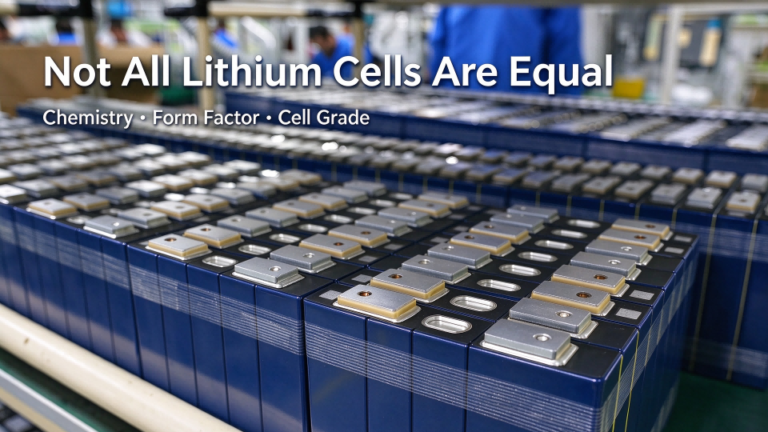
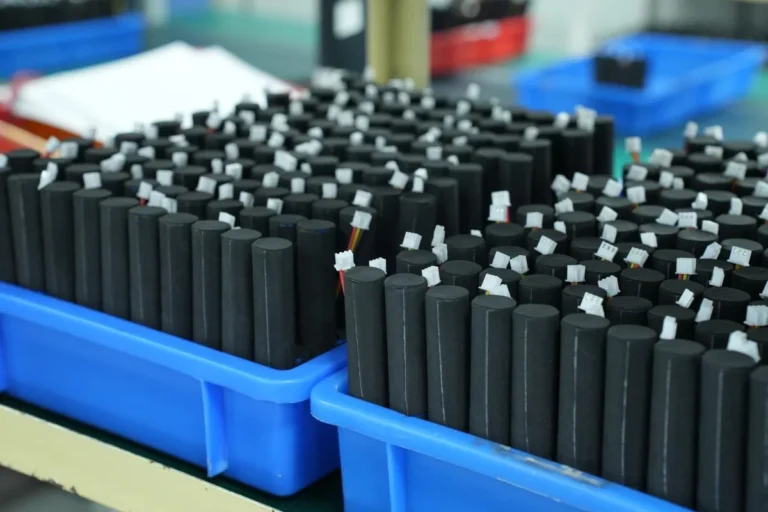
Cylindrical cells inevitably produce gaps between round individual units during grouping, wasting valuable internal space. Prismatic cells have thick rigid walls that occupy extra space.
Pouch cells can be closely stacked without redundant gaps, maximizing pack-level volumetric energy density. The detailed space utilization comparison is shown below:
| Cell Type | Packaging Structure | Space Utilization Performance | Existing Defects |
|---|---|---|---|
| Pouch Cell | Soft laminated film casing | Highest packing efficiency, compact dense stacking | 8%-10% volume swelling after 500 cycles; needs constant stack pressure |
| Cylindrical Cell | Sealed rigid metal can | Large voids between cells, low overall space utilization | Excellent mechanical stability and heat dissipation |
| Prismatic Cell | Thick rectangular metal shell | Medium-high stacking efficiency | Heavy casing, poor thermal dissipation during close stacking |
Note: Extra pressure components and cooling plates will partially offset pouch cells’ space advantages, but they still maintain obvious space utilization superiority compared with the other two cell formats.
Overall, pouch cells still have shorter cycle life than prismatic and cylindrical cells due to soft casing swelling. 2026 upgraded silicon-carbon anode materials effectively improve cycle stability under lean electrolyte test conditions:
| Pouch Cell Sample | Total Cycle Life | Test Performance Notes |
|---|---|---|
| Bare Si-C Anode | 237 cycles | Sharp capacity attenuation; 64.2% capacity retention |
| Si-C/PD1 Coated Anode | 402 cycles | 40% lower electrolyte decomposition rate |
| Si-C/PD2 Coated Anode | 583 cycles | Best cycle stability among all tested samples |
Cycle life ranking of three cell formats: Prismatic Cell > Cylindrical Cell > Pouch Cell
2026 material and structural upgrades solve pouch cells’ long-standing fast charging pain points such as lithium precipitation and thermal runaway risk. Core technical iterations include carbon nanotube cathode modification, laser anode polishing and dual-gradient electrode design.
Top-tier commercial pouch cells support 4C-10C ultra-fast charging:
2026 new-generation pouch cells are equipped with built-in Safety Reinforced Layer (SRL) between cathode and current collector, greatly improving intrinsic safety:
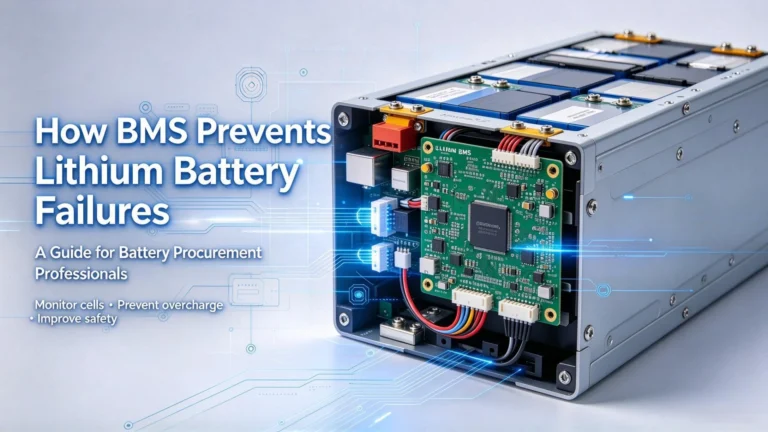
Different from cylindrical cells with built-in pressure relief valves, pouch cells rely on internal functional materials and external BMS protection systems. The most common safety failure modes are mild swelling and gas venting, with almost no violent explosion risks.
Poor heat dissipation is a core weakness of stacked pouch cells. Three mainstream thermal management solutions are widely adopted in 2026 pouch battery packs:
| Cooling Solution | Practical Effect & Data Improvement |
|---|---|
| Tab Ceramic Cooling | 8%-13% cycle life improvement under 5C high-rate discharge |
| Liquid Indirect Cooling | 9 times higher cooling efficiency than traditional air cooling |
| PCM Phase Change Material Cooling | Stable temperature control without extra energy consumption |
Tab targeted cooling and hybrid cooling systems have become standard configurations for high-power EV pouch battery packs to eliminate local hotspots.
| Comparison Item | Cylindrical Cell | Prismatic Cell | Pouch Cell |
|---|---|---|---|
| Outer Casing | Rigid steel/aluminum can | Thick aluminum hard shell | Soft aluminum-plastic film |
| Energy Density | Low | Medium | Highest |
| Weight | Heaviest | Medium | Lightest |
| Mechanical Toughness | Excellent | Good | Poor |
| Cycle Life | Medium (800-1400 cycles) | Longest (2000 cycles) | Shortest (~500 cycles) |
| Safety Failure Mode | Pressure relief / risk of explosion | Corner deformation | Controlled swelling, no explosion |
| Thermal Dissipation | Best | Poor | Medium (needs extra cooling design) |
| Manufacturing Cost | Lowest | Medium | Highest |
| Best Application Scenarios | Power tools, high-vibration equipment | Energy storage, commercial vehicles | Consumer electronics, lightweight EVs, drones |
Global battery suppliers launch targeted upgrades to fix pouch cell defects:
| Region | Core Market Trends | Development Advantages |
|---|---|---|
| Asia-Pacific | Dominates global production (60% market share) | Complete battery industrial chain, government policy support |
| Europe | Accelerated local battery factory construction | Reduce supply chain dependence on Asia |
| North America | Rapid expansion of domestic production capacity | Localized supply chain policies and automotive giant cooperation |
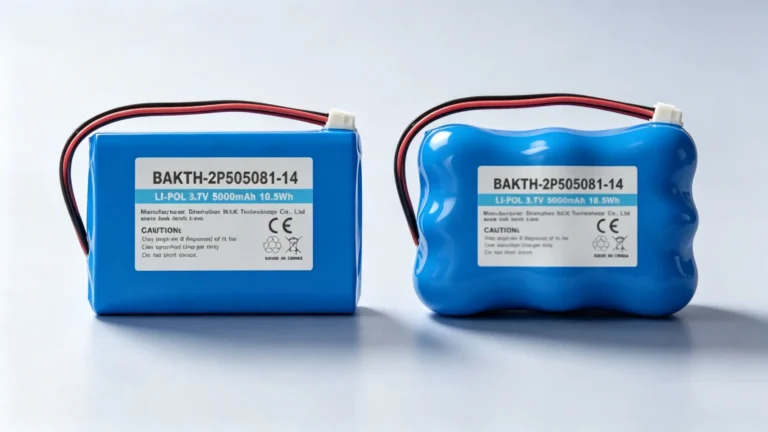
Pouch cells expand 8%-13% in volume after long-term cycling due to internal electrolyte decomposition gas generation. Manufacturers need to maintain 3-8 psi constant stack pressure via spring and pneumatic fixtures.
Too low pressure leads to severe swelling; too high pressure causes internal electrode damage. Additional pressure balancing components reduce pouch cells’ original space and weight advantages.
Soft film casing cannot resist impact, puncture and extrusion. Tiny metal impurities introduced during production easily trigger internal short circuits and thermal runaway above 130°C. Strict dust-free production workshops and full visual inspection are mandatory.
Volatile lithium and cobalt raw material prices, cross-border shipping delays and immature soft-pack battery recycling systems restrict further cost reduction of pouch cells. Unified pouch cell size standards are still lacking worldwide, increasing automated recycling difficulty.
A: Pouch cells suffer from inevitable cycling swelling, weak mechanical protection, shorter cycle life and higher manufacturing costs compared with hard-shell cells. Extra pressure and cooling structures are required during pack assembly.
A: Internal electrolyte decomposes and generates accumulated gas during cycling. The soft aluminum-plastic film cannot constrain gas expansion. Constant stack pressure and optimized formation processes can effectively relieve swelling issues.
A: Pouch cells will only swell instead of exploding under thermal runaway risks, bringing higher passive safety. But they are vulnerable to puncture and impact damage, while cylindrical hard-shell cells have better mechanical safety.
A: Standard commercial pouch cells achieve around 500 full charge-discharge cycles. New silicon-carbon coated pouch cells can reach nearly 600 cycles with upgraded material design.
A: No. Three cell formats will coexist long-term. Pouch cells dominate lightweight and customized scenarios, while prismatic and cylindrical cells maintain advantages in long-life, high-vibration and large-scale energy storage fields.
2026 lithium-ion pouch cells achieve great progress in fast charging, energy density and intrinsic safety via material and structural optimization. Their lightweight advantage, flexible customization and high space utilization are irreplaceable for portable electronics and new energy passenger vehicles.
Nevertheless, swelling defects, poor mechanical durability and high manufacturing costs still limit their wider industrial application. With ongoing upgrades in stack pressure control technology, anode material innovation and unified industry sizing standards, pouch cells will gain larger global market share from 2026 to 2027.
When selecting lithium battery cells, engineers must balance weight, energy density, service life and working environment rather than blindly pursuing high energy density pouch cells.