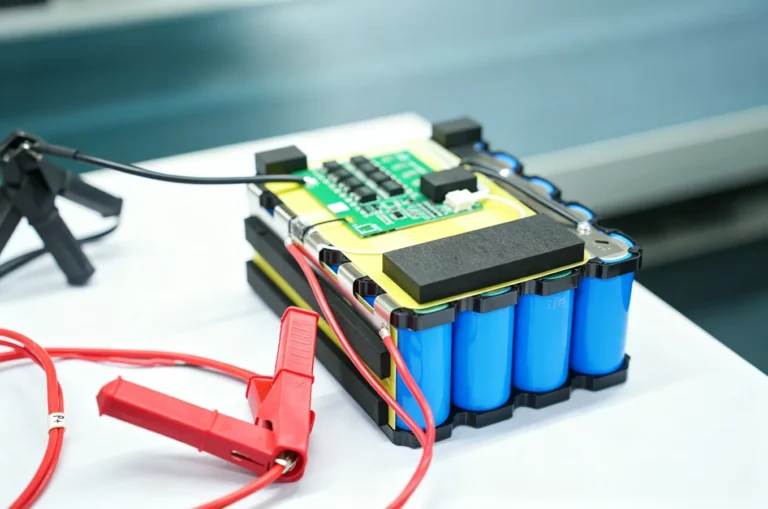
Let's Shape The Future Of Your Investments!
Natoque iaculis cursus augue urna commodo aptent morbi tortor porttitor quis ornare.
![Lithium-ion Battery Manufacturer | BAKTH Battery [Official]](https://bakth-battery.com/wp-content/uploads/2026/05/hideLogo.png)
![Lithium-ion Battery Manufacturer | BAKTH Battery [Official]](https://bakth-battery.com/wp-content/uploads/2026/05/logo.png)
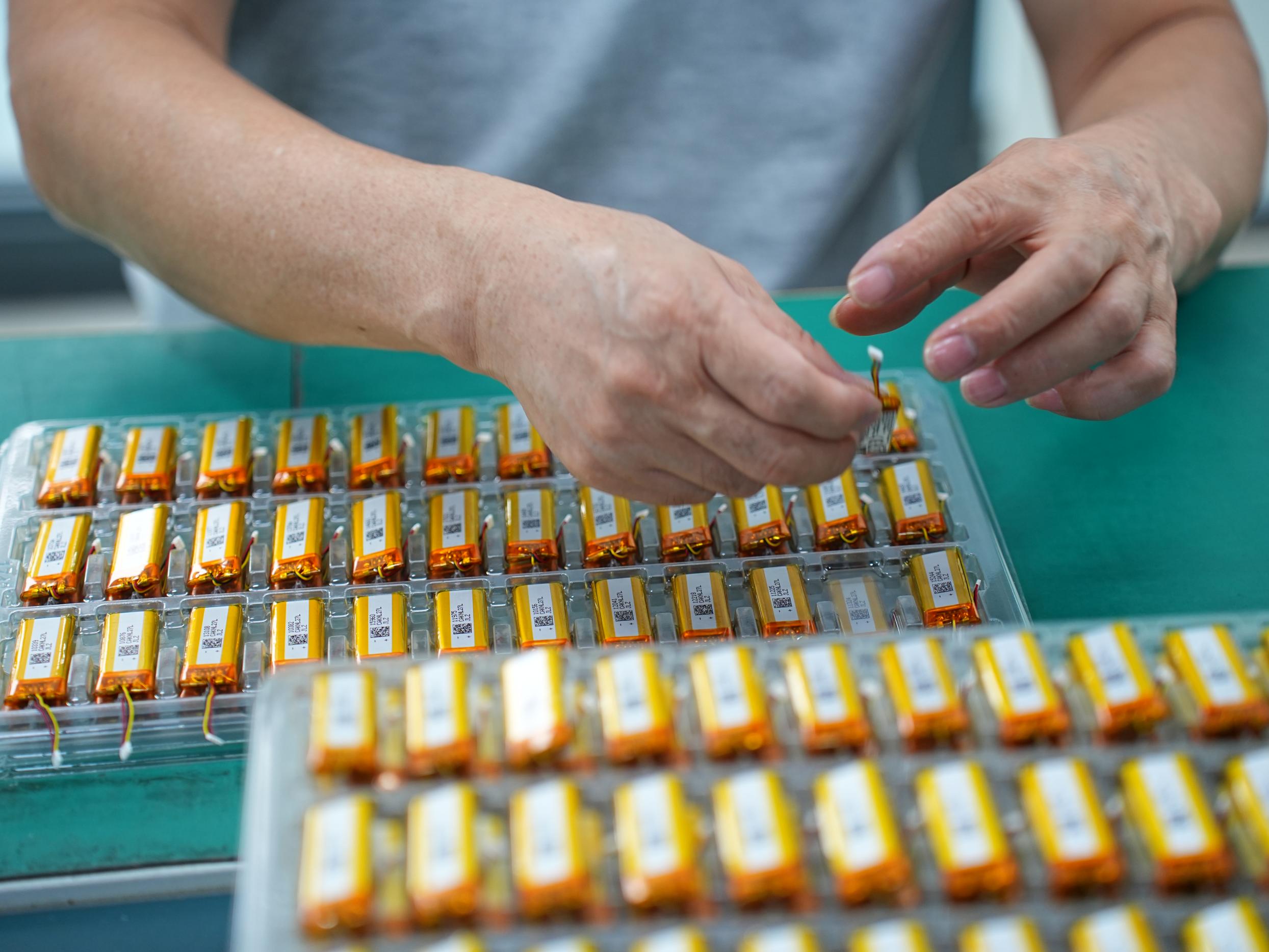
Battery selection directly affects the thickness, weight, runtime, safety and BOM cost of portable electronic products for OEM designers and procurement teams. Lithium polymer (LiPo) batteries adopt gel polymer electrolyte and soft aluminum-plastic pouch packaging, enabling flexible shaping unavailable for rigid cylindrical or prismatic cells. Widely used in wearables, medical instruments, GPS trackers and compact smart devices, LiPo carries unique strengths and unavoidable engineering constraints.
This guide analyzes LiPo’s pros and cons, provides comparative benchmarks, clarifies suitable application scenarios, and delivers standardized design checklists for OEM custom battery projects.
A lithium polymer battery is a rechargeable lithium cell built with soft aluminum-plastic laminated film packaging instead of steel or aluminum hard shells. Instead of pure liquid electrolyte, it uses gel-state polymer electrolyte to support lithium ion transport between cathode and graphite anode.
This structural innovation removes the dimensional constraints of cylindrical and prismatic cells. Manufacturers can tune thickness, length and width flexibly to fit irregular internal housing spaces. For OEM projects pursuing slim, lightweight industrial and consumer hardware, LiPo opens up more freedom in industrial design compared to conventional lithium-ion cells.
LiPo’s biggest competitive advantage is dimensional flexibility. Cells can be produced flat, ultra-slim, curved, stepped or irregular shapes to fill unused internal space. This capability is impossible for fixed-diameter cylindrical cells and standardized prismatic cells, critical for ultra-thin wearables and compact handheld equipment.
Without heavy rigid metal casings, aluminum-plastic composite packaging reduces overall battery weight. Weight optimization is highly valued for wearables, small UAVs and portable measuring instruments where every gram affects user experience and flight endurance.
Single LiPo cell nominal voltage reaches 3.7V (4.2V full charge), far higher than nickel-based alternatives (1.2V per cell). This reduces the number of series cells required, simplifying power circuit design and lowering overall assembly complexity.
Within limited thickness constraints, LiPo delivers competitive volumetric energy density, enabling longer runtime inside slim device shells. This makes it the mainstream choice for thin consumer electronics that cannot accommodate large-diameter cylindrical cells.
LiPo features a low monthly self-discharge rate. When stored at the recommended 40%–60% state of charge, it retains most capacity during long standby periods, ideal for intermittently operated sensors and tracking devices.
Partial charge cycles do not cause permanent capacity loss. Engineers do not need to design mandatory full-discharge logic, matching the frequent, irregular charging habits of portable electronic products.
BAKTH supports one-stop pack assembly: integrating customized PCM/BMS overcharge/overdischarge protection, NTC temperature probes, specified wire gauges, custom connectors and printed labels according to OEM drawings, shortening product development cycles.
Important note: LiPo performs reliably only under matched charging, operating and storage specifications. Improper design or operation will trigger swelling, overheating and safety hazards.
LiPo cells have strict safe voltage operating windows. Overcharging triggers electrolyte decomposition and internal gas generation; deep overdischarge causes irreversible degradation of anode materials. A dedicated protection circuit module (PCM/BMS) is non-negotiable for every finished pack.
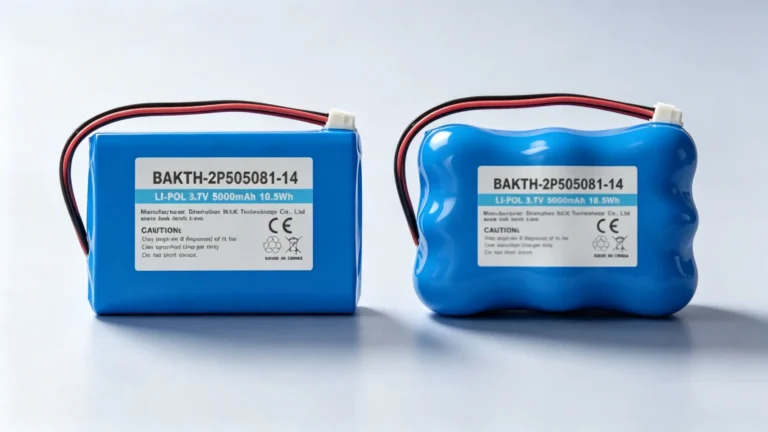
Overcharging, deep discharge, continuous high-temperature operation, physical extrusion/puncture, long-term aging or low-grade raw materials lead to gas accumulation inside the sealed pouch. Swollen LiPo cells must be immediately retired; never squeeze, pierce or continue using bulged packs.
Standard-size mass-produced LiPo cells offer competitive pricing. However, custom thickness, unique outlines, special connectors and full certification support require customized molds and production adjustment, leading to higher costs compared to universal off-the-shelf 18650/21700 cylindrical cells.
The soft pouch has no built-in anti-extrusion and anti-puncture capability. Product designers must add buffer structures and reinforced housing to avoid cell deformation caused by impact, vibration or squeezing during daily use and transportation.
For heavy-load equipment such as large power tools and high-power e-bikes, cylindrical lithium cells deliver superior stability under sustained high-current output. The gel electrolyte inside LiPo generates higher polarization under extreme discharge rates, limiting its application in ultra-high-power scenarios.
| Evaluation Item | Lithium Polymer (LiPo) | Cylindrical Lithium Ion Cells |
|---|---|---|
| Ultra-slim & curved product design | Outstanding | Limited by fixed outer diameter |
| Custom irregular cavity adaptation | Fully customizable | Only standard dimensions available |
| Continuous high-current heavy load | Suitable for medium current | Superior for sustained high discharge |
| Mechanical shock resistance | Requires external protective housing | Integrated metal shell provides toughness |
| Weight optimization for slim devices | Excellent | Bulky for thin form factors |
| Unit cost for standard specifications | Medium | Low |
| Ideal applications | Wearables, medical handheld devices, GPS trackers, compact sensors | Power tools, e-bikes, energy storage, high-power equipment |
Improper seasonal winter storage accelerates permanent cell degradation and widens batch capacity inconsistency across fleet inventories:
Select LiPo if your product meets any of these requirements:
Choose other battery technologies if you have demands for:
| Application Category | Core LiPo Advantages | Critical Design Specifications |
|---|---|---|
| Wearable electronics | Ultra-thin, lightweight, shape adaptability | Control cell thickness, add NTC temperature sensor, optimize charging protection logic |
| GPS trackers & wireless sensors | Small volume, low standby self-discharge | Improve wide-temperature performance, stabilize low-current output |
| Portable medical instruments | Lightweight for handheld operation | Strict capacity consistency, complete safety certification traceability |
| Smart home compact gadgets | Flexible shape to fit narrow internal cavities | Optimize long-cycle standby performance, reinforce connector structure |
| Small consumer electronics & mini UAVs | Maximize runtime within limited shell space | Prevent swelling risk, match dedicated LiPo chargers |
Confirm all parameters before launching customized pack projects:
A: The flexible, ultra-thin customizable soft pouch form factor and lightweight packaging, perfectly matching slim wearables, GPS trackers, handheld medical devices and compact electronics with constrained internal space.
A: LiPo cells are sensitive to improper charging and physical damage. The soft pouch structure carries swelling risks without rigid protection, requiring complete BMS circuits and mechanical reinforcement in product design.
A: Yes, when equipped with matched protection circuits, dedicated LiPo chargers and proper structural housing. Stop usage immediately if swelling, leakage or abnormal heat occurs.
A: Primary triggers include overcharging, deep overdischarge, continuous high-temperature operation, physical puncture/extrusion, natural aging or inferior raw cell materials. Swollen packs cannot be repaired and require certified hazardous waste disposal.
A: Not universally. LiPo excels for slim, custom-shaped lightweight hardware. Standard cylindrical cells offer better cost performance and high-current stability for power equipment with sufficient internal space. The selection depends on product design priorities.
A: Yes. BAKTH supports full customization of cell dimensions, capacity, wiring, connectors, integrated BMS/NTC, labeling and complete export certification documents for bulk OEM orders.
Lithium polymer (LiPo) batteries remain the optimal power choice for equipment requiring ultra-thin, lightweight, tailor-made rechargeable power sources. Its core strengths lie in flexible molding capability and space-efficient energy storage for compact hardware. The main limitations include higher customized costs, swelling risks and reliance on comprehensive electrical and mechanical protection systems.
For OEM and industrial product development teams, evaluating cell specifications, protection circuits and supplier capabilities in the early design phase can effectively improve battery safety, stable performance and overall service life.
If you are developing compact portable electronics and looking for reliable custom LiPo pack solutions, contact the BAKTH battery engineering team to discuss your project parameters, sample testing and bulk OEM cooperation.