Let's Shape The Future Of Your Investments!
Natoque iaculis cursus augue urna commodo aptent morbi tortor porttitor quis ornare.
![Lithium-ion Battery Manufacturer | BAKTH Battery [Official]](https://bakth-battery.com/wp-content/uploads/2026/05/hideLogo.png)
![Lithium-ion Battery Manufacturer | BAKTH Battery [Official]](https://bakth-battery.com/wp-content/uploads/2026/05/logo.png)
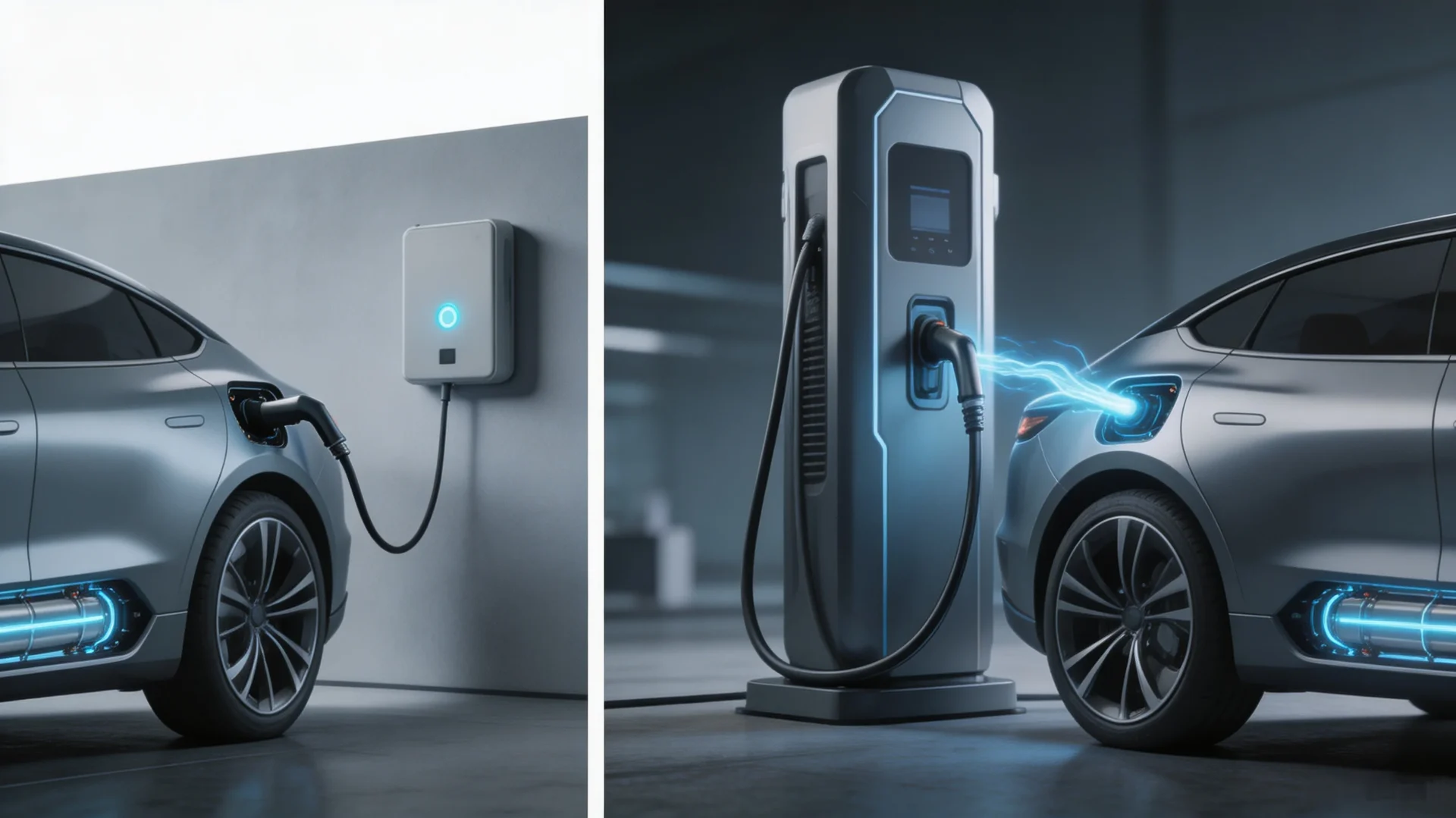
EV ownership continues to grow, and accessible fast charging removes many barriers for daily drivers and long-distance travellers. Still, countless electric vehicle owners wonder if repeated fast charging wears down their battery pack prematurely. This guide breaks down the difference between AC fast charging and DC rapid charging, explains their distinct effects on lithium-ion cells, and shares simple strategies to balance convenience with long-term battery health.
Standard AC fast charging between 7kW and 22kW creates negligible long-term battery wear when paired with sensible driving habits. By contrast, relying heavily on high-power DC rapid charging on a daily basis leads to mild but measurable capacity fade. The optimal routine: use home or workplace AC charging for regular top-ups, and reserve public DC rapid chargers for emergency or road trip stops.
Confusion often arises because many drivers lump all speedy charging options under one “fast charging” label. These two systems operate in fundamentally different ways.
AC fast chargers (7kW – 22kW) are the most common solution for residential and workplace installations. Electric vehicle batteries store direct current, so each EV uses an onboard converter to turn incoming alternating current into DC power before feeding it to the battery pack. This conversion process caps maximum charging speed.
Public DC rapid chargers skip the vehicle’s built-in converter and deliver high-voltage DC power directly to the battery, enabling far faster energy transfer.
DC rapid charging usually carries higher per-kilowatt-hour pricing. For cost savings and battery preservation, structure your routine around AC charging whenever possible.
With responsible usage patterns, consistent 7–22kW AC fast charging creates no measurable degradation for modern EV lithium-ion packs. Fundamental battery maintenance rules still apply: aim to keep your state of charge between 20% and 80%, and avoid prolonged charging or vehicle storage during extreme hot or cold weather.
Frequent, regular use of high-power DC rapid charging delivers a different outcome. Intense voltage and current levels trigger extra electrochemical strain within battery cells, accelerating gradual capacity loss over hundreds of charge cycles. Independent testing with production electric vehicles demonstrated that relying solely on DC rapid charging increased long-term capacity fade by around 16%, compared to vehicles charged exclusively via AC fast chargers.
As the battery slowly degrades over years, drivers will notice a gradual reduction in maximum real-world driving range.
Road trips and unexpected journeys often require public rapid charging. You can limit unnecessary battery stress by following these straightforward recommendations:
High internal temperatures are one of lithium-ion batteries’ biggest threats. Rapid charging draws large currents which generate heat. Your vehicle’s BMS will actively regulate thermal conditions in most cases, but keep an eye on temperature metrics and avoid rapid charging immediately after aggressive driving in hot weather.
Make overnight home charging or workplace charging your primary power source. Reducing how often you depend on DC rapid stations adds years of healthy service life to your battery pack.
Cease DC charging once you reach approximately 80% state of charge. Above this threshold, charging power drops significantly, erasing most time-saving benefits. Maintaining cells at sustained high voltage beyond 80% also speeds chemical aging inside the battery.
Fast charging technology makes electric mobility viable for millions of drivers, but understanding the trade-offs between AC and DC power helps protect your vehicle’s most valuable component. Occasional rapid charging on road trips poses minimal risk, while making AC fast charging your daily standard delivers the best balance of convenience and long-term battery performance.
A: Regular use of 7kW–22kW AC fast charging does not cause meaningful battery degradation, provided you follow basic battery care guidelines around temperature and charge levels.
A: Occasional use for travel is fine. Avoid making DC rapid charging your primary daily charging method, as repeated high-current sessions gradually accelerate capacity loss.
A: Charging speeds slow drastically past 80%, so you gain minimal extra range for significant waiting time. High-voltage conditions above 80% also increase long-term cell aging.