Let's Shape The Future Of Your Investments!
Natoque iaculis cursus augue urna commodo aptent morbi tortor porttitor quis ornare.
![Lithium-ion Battery Manufacturer | BAKTH Battery [Official]](https://bakth-battery.com/wp-content/uploads/2026/05/hideLogo.png)
![Lithium-ion Battery Manufacturer | BAKTH Battery [Official]](https://bakth-battery.com/wp-content/uploads/2026/05/logo.png)
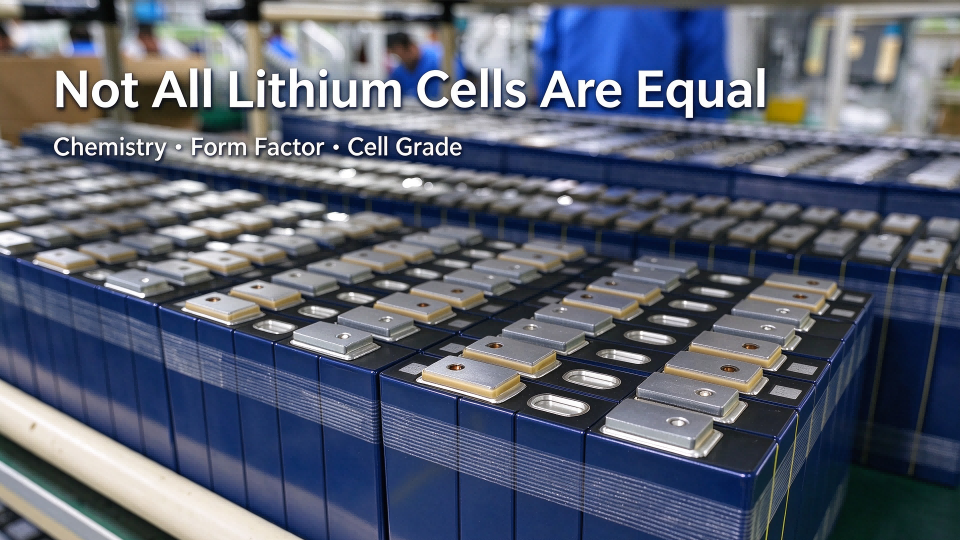
Many bulk buyers assume that all lithium batteries deliver similar performance. In reality, significant differences in battery chemistry, cell format, manufacturing quality, and cell consistency can have a major impact on durability, safety, performance, and total cost.
Poor cell selection can lead to premature capacity loss, inconsistent performance, warranty claims, and potential safety issues. For battery distributors, OEMs, equipment manufacturers, and industrial buyers, understanding these differences is essential when sourcing a reliable battery pack.
This procurement-focused guide explains the key differences between lithium cells and provides practical guidance for selecting cells that match your application requirements.
Like other rechargeable batteries, lithium-ion batteries store and release energy through electrochemical reactions involving the cathode, anode, and electrolyte.
Compared with traditional sealed lead-acid (SLA) batteries, lithium-ion cells generally offer higher energy density and lower weight. Depending on the chemistry and pack design, they can also support higher usable capacity, faster charging, and longer cycle life.
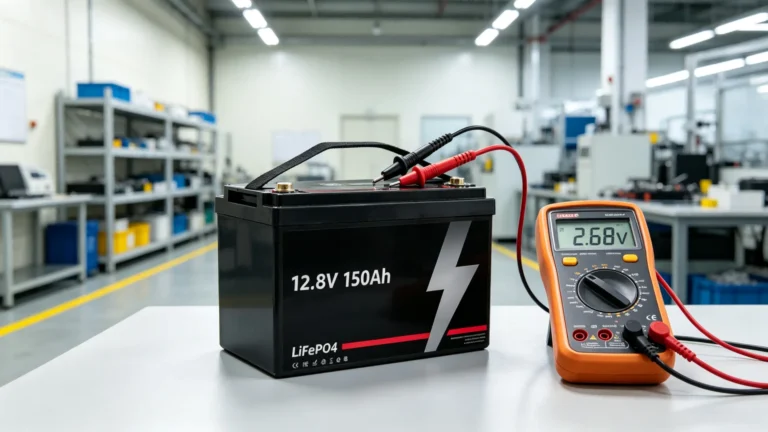
LiFePO4 (Lithium Iron Phosphate) is widely used in industrial, energy storage, mobility, and backup applications because of its strong thermal stability, long cycle life, and relatively stable discharge characteristics.
LiFePO4 cells typically use a graphite anode and a lithium iron phosphate cathode. Their main tradeoff is lower energy density compared with some NMC-based cells, meaning a LiFePO4 pack may require more physical volume to achieve the same nominal energy.
For many industrial applications, however, this tradeoff is acceptable because safety, cycle life, and long-term reliability are often more important than maximum energy density.
LiFePO4 battery packs can also be designed as replacements for certain SLA systems, but voltage, charging requirements, dimensions, BMS configuration, and system compatibility must be verified before replacement. A lithium battery should not be assumed to be a direct drop-in replacement simply because its nominal voltage is similar to an SLA battery.
Lithium batteries can provide significant advantages over SLA batteries in many applications, but SLA technology still has a place in specific use cases.
| Factor | Lithium Battery | Sealed Lead-Acid (SLA) |
|---|---|---|
| Energy density | Generally higher | Lower |
| Weight | Generally lighter | Heavier |
| Cycle life | Often significantly longer, depending on chemistry and usage | Generally shorter |
| Charging efficiency | Generally higher | Lower |
| High-rate performance | Depends on cell chemistry and design | Can perform well in certain applications |
| Upfront cost | Usually higher | Usually lower |
| Best suited for | Mobility, energy storage, industrial equipment, portable systems | Budget-sensitive backup and certain high-current applications |
The best choice depends on the application rather than battery chemistry alone. Buyers should evaluate operating temperature, discharge requirements, expected service life, maintenance needs, available space, and total cost of ownership.
Different cathode materials give lithium cells different characteristics, including energy density, thermal stability, cycle life, power capability, and operating temperature range.
There is no single lithium chemistry that is ideal for every application.
LiFePO4 offers excellent thermal stability, long cycle life, and reliable charge and discharge performance.
Its main limitation is relatively lower energy density compared with NMC and some other lithium chemistries. It is widely used in:
For applications where safety, durability, and long service life are priorities, LiFePO4 is often a strong choice.
NMC cells provide a strong balance between energy density, power output, and cycle performance.
Because they can deliver more energy from a relatively compact and lightweight package, NMC is commonly used in:
The specific performance characteristics depend on the NMC formulation and cell design.
Lithium cobalt oxide (LCO) offers high energy density and has historically been widely used in compact consumer electronics such as smartphones, tablets, and digital cameras.
However, compared with LiFePO4, LCO generally has lower thermal stability and is therefore more dependent on appropriate charging control, thermal management, and protection circuitry.
Other commercially important lithium chemistries include Lithium Manganese Oxide (LMO) and Lithium Titanate (LTO).
LTO is particularly notable for excellent cycle life, high power capability, and strong low-temperature performance, but its lower energy density and higher cost can limit its use in applications where size and cost are critical.
Cell format is another important procurement consideration. The physical structure of a cell affects space utilization, mechanical protection, thermal management, assembly complexity, and pack design.
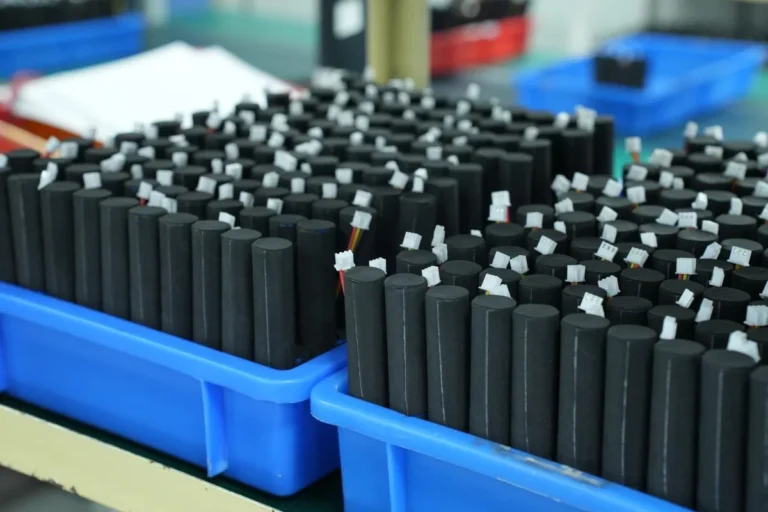
Cylindrical cells use rolled electrode materials enclosed in a rigid metal can.
Their standardized dimensions and mature manufacturing processes make them widely available and cost-effective. They also provide good mechanical strength and are suitable for automated assembly.
The main disadvantage is space utilization. Multiple cylindrical cells are normally required to build a battery pack, which increases the number of electrical connections and cell-monitoring points.
Common applications include:
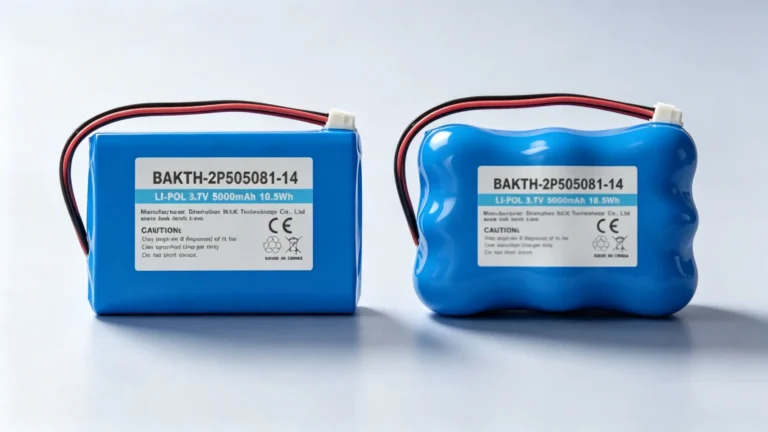
Pouch cells use flexible aluminum-laminated packaging instead of a rigid metal can.
Their flexible structure allows manufacturers to create customized dimensions and achieve excellent space utilization. This makes them particularly useful for slim or irregularly shaped battery packs.
However, pouch cells require careful mechanical support and pack design. Gas generation or cell swelling can occur under certain aging, abuse, or fault conditions, so the enclosure should provide appropriate space and mechanical protection.
Pouch cells are commonly used in:
Prismatic cells use rigid metal or polymer housings and are available in relatively large capacities.
Because a single prismatic cell can provide substantial capacity, fewer cells may be required to achieve the desired pack voltage and energy. This can simplify certain aspects of pack assembly and reduce the number of interconnections.
Prismatic cells are widely used in:
| Cell Format | Key Advantages | Key Considerations | Typical Applications |
|---|---|---|---|
| Cylindrical | Mature production, strong mechanical structure, widely available | More cells and connections required | Power tools, e-bikes, portable equipment |
| Pouch | Excellent space utilization, flexible dimensions, lightweight | Requires careful mechanical support and swelling management | Drones, medical devices, slim electronics |
| Prismatic | High capacity per cell, rigid structure, fewer cells needed | Larger cell size can limit design flexibility | ESS, EVs, industrial and RV batteries |
The best cell format depends on the available enclosure, required capacity, mechanical environment, thermal conditions, production volume, and target cost.
Cell grading is another area where buyers need to be careful.
In professional battery manufacturing, cells are evaluated according to parameters such as capacity, internal resistance, voltage consistency, appearance, and manufacturing specifications. However, the terms “A-grade” and “B-grade” are not always standardized across suppliers.
Therefore, buyers should not rely on the grade label alone. Instead, they should request supporting documentation and verify actual cell specifications.
A-grade cells generally meet the manufacturer’s intended production specifications and quality requirements.
For battery pack assembly, consistency between cells is particularly important. Cells with similar capacity and internal resistance are easier to match and balance, helping the pack deliver more consistent performance.
However, A-grade does not automatically mean that a battery pack will last a specific number of years. Actual service life depends on cell chemistry, operating conditions, charging and discharging behavior, temperature, BMS settings, and overall pack design.
B-grade cells may have greater variation in parameters or may not meet the manufacturer’s primary production specifications.
They can still be suitable for certain cost-sensitive applications when their specifications are clearly documented and validated. However, greater variation between cells can make pack matching and long-term performance more challenging.
Buyers should ask suppliers exactly why the cells are classified as B-grade rather than assuming that all B-grade cells have the same characteristics.
Used cells are recovered from previously assembled battery packs or other applications.
Their remaining capacity, internal resistance, cycle history, and state of health can vary significantly. This makes them much more difficult to control in a new battery pack.
For professional OEM and industrial applications, used cells generally present higher uncertainty in terms of reliability, traceability, and service life.
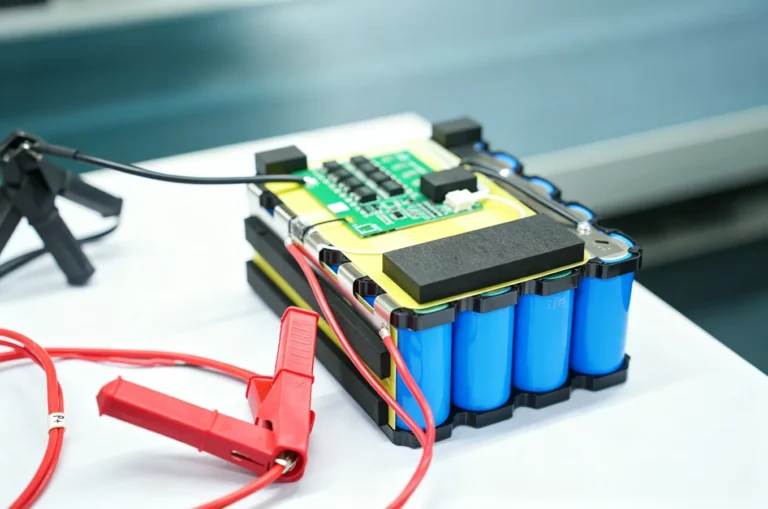
A battery pack is only as consistent as its individual cells and its overall assembly quality.
If one cell has significantly lower capacity or higher internal resistance than the others, it may reach its voltage limits earlier during charging or discharging. This can cause the BMS to intervene more frequently and reduce the usable performance of the entire pack.
For this reason, cell matching, BMS configuration, and pack-level testing are critical parts of battery manufacturing.
When comparing lithium battery suppliers, do not judge quality based on price, nominal capacity, or cell grade alone.
Start by defining your actual application requirements:
Then evaluate the three major cell-selection factors:
Choose the chemistry based on the application’s priorities. For example, LiFePO4 may be suitable when cycle life and thermal stability are important, while NMC may be preferred when high energy density and lower weight are major priorities.
Choose cylindrical, pouch, or prismatic cells according to the enclosure, available space, mechanical requirements, thermal design, and production process.
Ask suppliers for more than a simple “A-grade” or “B-grade” label. Where appropriate, request:
A professional supplier should be able to explain how cells are inspected, matched, and tested before they are assembled into battery packs.
Before placing a bulk order, buyers should confirm that the proposed cells are suitable for the actual application.
| Procurement Check | What Buyers Should Verify |
|---|---|
| Cell chemistry | LiFePO4, NMC, LCO, LMO, LTO, etc. |
| Cell format | Cylindrical, pouch, or prismatic |
| Cell model | Manufacturer, model number, and specification |
| Capacity | Rated capacity and test conditions |
| Internal resistance | Expected range and matching requirements |
| Cell consistency | Capacity, voltage, and resistance matching |
| BMS | Voltage, current, temperature protection, balancing, and communication |
| Testing | Sample validation, cycle testing, safety testing, and pack-level inspection |
| Traceability | Batch information and production records where applicable |
| Compliance | Required standards and certifications for the target market |
For larger-volume projects, it is also worth defining acceptance criteria before production begins. This can help reduce disputes over capacity, cell quality, appearance, BMS behavior, and finished-pack performance.
Choosing the right lithium cell is not simply a matter of finding the highest capacity at the lowest price.
A reliable battery solution requires the chemistry, cell format, cell quality, BMS, mechanical structure, thermal design, and charging system to work together.
Even two battery packs with the same voltage and nominal capacity can perform very differently if they use different cells, different BMS configurations, or different manufacturing processes.
For B2B buyers, the most reliable approach is to define the application requirements first, validate samples before mass production, and work with a supplier that can provide clear cell specifications, traceability, testing data, and pack-level quality control.
The right cell is not necessarily the most expensive cell. It is the cell that provides the right combination of performance, safety, reliability, availability, and total cost of ownership for your application.
A: No. LiFePO4 generally offers excellent thermal stability and cycle life, while NMC typically provides higher energy density and can reduce battery size and weight. The better chemistry depends on the application.
A: No. Prismatic cells provide a rigid structure and can offer high capacity per cell, while pouch cells provide excellent space efficiency and design flexibility. The right choice depends on the enclosure, mechanical requirements, thermal design, and target application.
A: It is generally not recommended. Cells with significantly different capacity or internal resistance can create imbalance and reduce pack performance and service life. Battery packs should use properly matched cells that meet the manufacturer’s specifications.
A: Not necessarily. A-grade describes cell quality relative to the manufacturer’s specifications, but pack lifespan also depends on operating temperature, charging and discharging conditions, BMS configuration, cell matching, mechanical design, and overall manufacturing quality.
A: Ask for the cell manufacturer and model, chemistry, capacity specifications, internal resistance data, cell matching information, BMS specifications, test reports, applicable compliance documents, and sample validation results. For large projects, clearly define acceptance criteria before mass production.
A: There is no universal answer. LiFePO4 is often a strong option for applications prioritizing cycle life and thermal stability, while NMC can be more suitable when high energy density and lower weight are critical. The cell format and BMS should also be selected according to the equipment and operating conditions.