Let's Shape The Future Of Your Investments!
Natoque iaculis cursus augue urna commodo aptent morbi tortor porttitor quis ornare.
![Lithium-ion Battery Manufacturer | BAKTH Battery [Official]](https://bakth-battery.com/wp-content/uploads/2026/05/hideLogo.png)
![Lithium-ion Battery Manufacturer | BAKTH Battery [Official]](https://bakth-battery.com/wp-content/uploads/2026/05/logo.png)
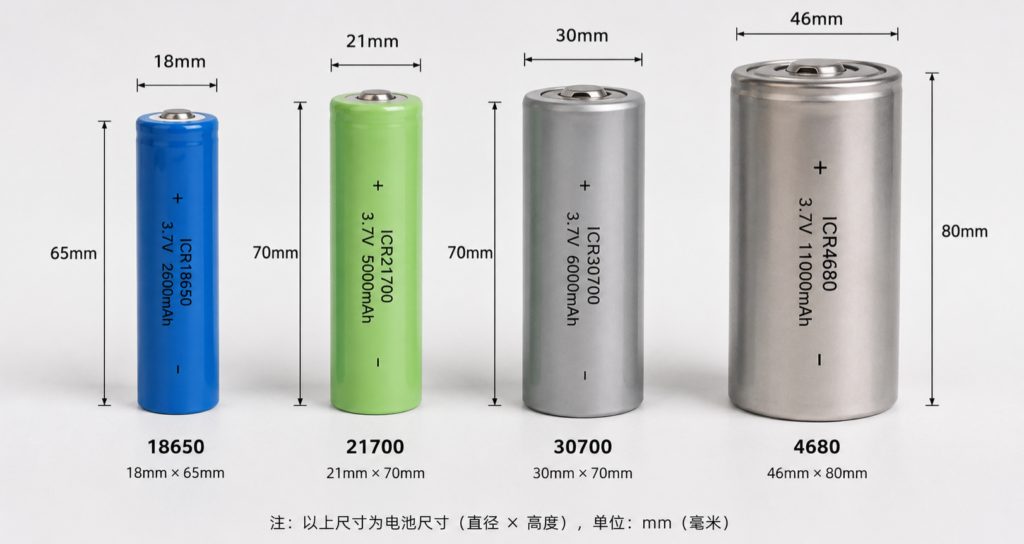
Cylindrical lithium-ion cells dominate consumer electronics, power tools, electric vehicles (EVs), solar storage and industrial equipment. With a wide range of form factors including 14500, 18650, 21700, 26650, 30700 and the new 4680, selecting the right cell directly impacts pack performance, cost, lifespan and safety. This comprehensive guide breaks down cylindrical lithium cell types, built-in protection systems, internal construction, key performance differences and real-world applications. It is tailored for B2B wholesalers, pack assemblers, OEM engineers and equipment designers across North America, Europe and other English-speaking regions.
Cylindrical lithium cells are split into two main categories based on integrated safety components: protected cells and unprotected cells. The choice depends entirely on your application and existing circuit design.
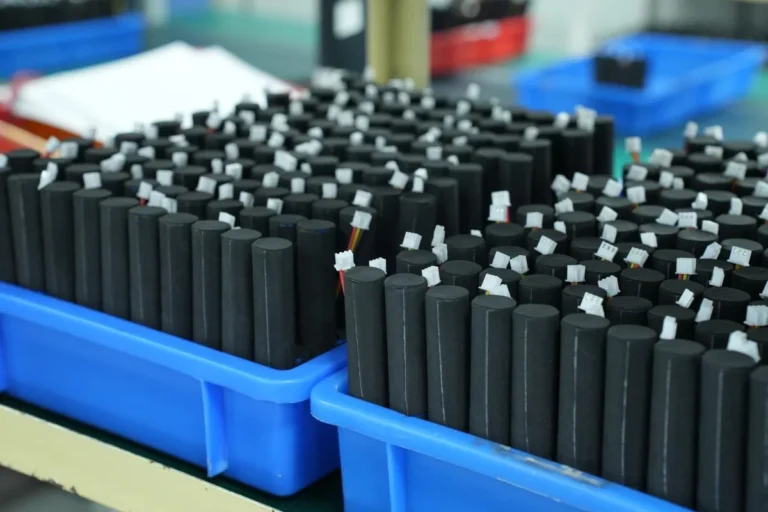
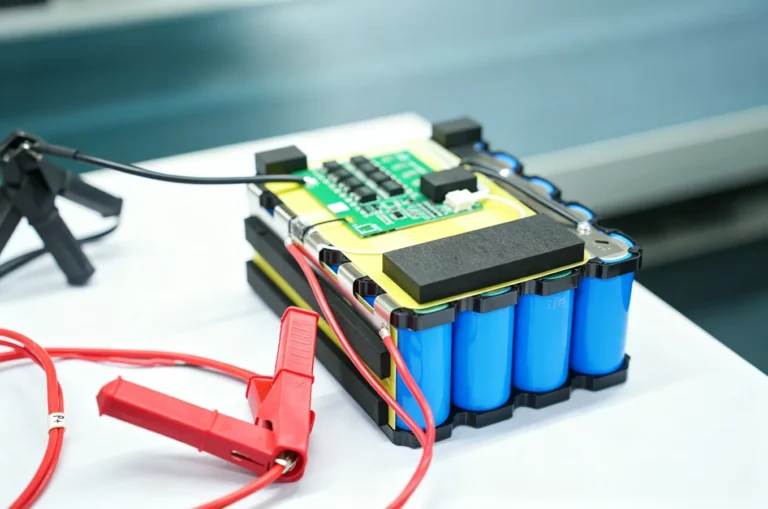
Protected cells come with a built-in printed circuit board (PCB) and auxiliary safety parts, including PTC thermistors, current interrupt devices (CID) and fusible links. These components defend against overcharge, over-discharge, over-current and excessive internal pressure.
Unprotected cells are bare cylindrical units without on-board protection circuits. All safety management is handled by the external Battery Management System (BMS) inside the device or battery pack.
Most commercial and industrial projects use unprotected cells with centralized BMS, while simple consumer products rely on protected cells for out-of-the-box safety.
Cylindrical cell naming follows a standard rule: the first two numbers represent diameter (mm), and the last two stand for length (mm). All mainstream models below use 3.6V / 3.7V nominal voltage, the universal standard for lithium-ion chemistry.
| Cell Model | Dimensions | Typical Capacity | Primary Applications |
|---|---|---|---|
| 14500 | 14mm × 50mm | Under 1000 mAh | Small toys, mini flashlights, portable sensors |
| 16340 | 16mm × 34mm | 700 – 800 mAh | Compact tactical lights, small portable devices |
| 18650 | 18mm × 65mm | 2300 – 3600 mAh | Laptops, power tools, traditional battery packs |
| 21700 | 21mm × 70mm | 4000 – 5000 mAh | Modern power tools, EV packs, high-capacity storage |
| 26650 | 26mm × 65mm | Up to 10000 mAh | High-rate flashlights, industrial equipment |
| 30700 | 30mm × 70mm | Large capacity | Stationary energy storage, heavy-duty gear |
The 18650 is the most mature and widely used format worldwide. The 21700 was developed as a high-capacity upgrade, while larger cells like 26650 and 30700 target high-power and large-scale storage use cases.
Nearly all cylindrical lithium cells adopt a jelly roll (winding) internal structure. Cathode, separator and anode materials are tightly wound into a spiral Archimedean shape, which enables fast mass production and stable electrical performance.
A core technical parameter called dascs defines the total thickness of double-sided electrodes plus two layers of separators. This value directly correlates with cell internal resistance and heat generation during discharge. A higher dascs rating leads to greater temperature rise under heavy loads.
Thanks to more active material inside, larger cylindrical cells deliver obvious capacity gains:
Larger cells optimize the ratio of active energy materials to non-active structural parts, improving overall energy density.
The 18650 and 21700 are the two dominant cylindrical cells for commercial and industrial use. Their performance differences are critical for B2B buyers and pack designers.
For high-power devices and long-duration operation, the 21700 is a superior upgrade over the classic 18650.
Switching from smaller cylindrical cells to larger formats brings clear advantages in pack assembly, BMS design and total cost.
Taking 18650 and 21700 as an example: To reach the same total energy output, a 21700 pack requires 33% fewer cells. Fewer individual cells mean:
One tradeoff: 21700 packs are at least 5mm taller than equivalent 18650 packs, which makes direct retrofitting difficult for existing equipment enclosures. For new project design, larger cells deliver better overall value.
The 4680 cell (46mm × 80mm) represents the next evolution of cylindrical lithium technology, most famously developed for modern EV platforms. It is not just a bigger cell — it features an innovative tabless electrode design.
Traditional cylindrical cells use small metal tabs to conduct current, which causes uneven heat distribution at the cell core as size increases. The tabless structure transfers heat axially through aluminum and copper current collectors to the cell bottom, achieving uniform temperature across the entire unit.
The 4680 is currently focused on premium EVs and large-scale energy storage, and it will gradually expand into more industrial scenarios in the coming years.
Choose cylindrical lithium cells based on your device’s power demand, size limits and cost budget:
Cylindrical lithium-ion cells continue evolving from the classic 18650 to the high-performance 21700 and revolutionary 4680 models. Protected cells serve simple consumer devices, while unprotected cells with external BMS remain the standard for commercial, industrial and EV battery packs.
Internal jelly roll structure and dascs values determine basic thermal and resistance performance. Larger cells offer higher capacity, simplified pack design and lower long-term system costs, with minor changes to overall dimensions. The tabless 4680 technology pushes cylindrical cell performance to new heights, especially for electric mobility and grid storage.
For B2B battery buyers, pack engineers and OEM partners: Match cell size, protection type and performance parameters to your specific application. Balance upfront cost, runtime requirements and long-term lifespan to maximize product competitiveness and reduce after-sales issues.