Let's Shape The Future Of Your Investments!
Natoque iaculis cursus augue urna commodo aptent morbi tortor porttitor quis ornare.
![Lithium-ion Battery Manufacturer | BAKTH Battery [Official]](https://bakth-battery.com/wp-content/uploads/2026/05/hideLogo.png)
![Lithium-ion Battery Manufacturer | BAKTH Battery [Official]](https://bakth-battery.com/wp-content/uploads/2026/05/logo.png)
Shopping or designing battery‑powered devices often brings confusion between two common metrics: mAh and mWh. Many buyers mistakenly treat these units as interchangeable when comparing battery performance. While milliampere‑hour measures electric charge, milliwatt‑hour calculates total stored energy. Understanding their differences, conversion formulas and ideal use cases helps OEM engineers, equipment operators and bulk purchasers avoid misleading comparisons and make accurate battery selection decisions for consumer electronics, power tools, drones and custom lithium battery packs.
mAh stands for milliampere‑hour, the standard unit to measure charge capacity. It defines how long a battery can deliver a consistent electric current.
A simple analogy: mAh equals the volume of water inside a tank. Larger volume means more electric charge stored inside the cell.
Basic formula:
Q = I × t
Practical example:
A 2000mAh cell can continuously supply 2000mA current for one hour.
mWh represents the total usable energy stored within a battery. Voltage naturally fluctuates during discharge; energy is the most reliable indicator of how much actual work a battery can deliver.
Analogy: mWh = tank volume (mAh) × water pressure (voltage). This combination reflects complete available power output.
Basic formula:
W = U × Q
Calculation example:
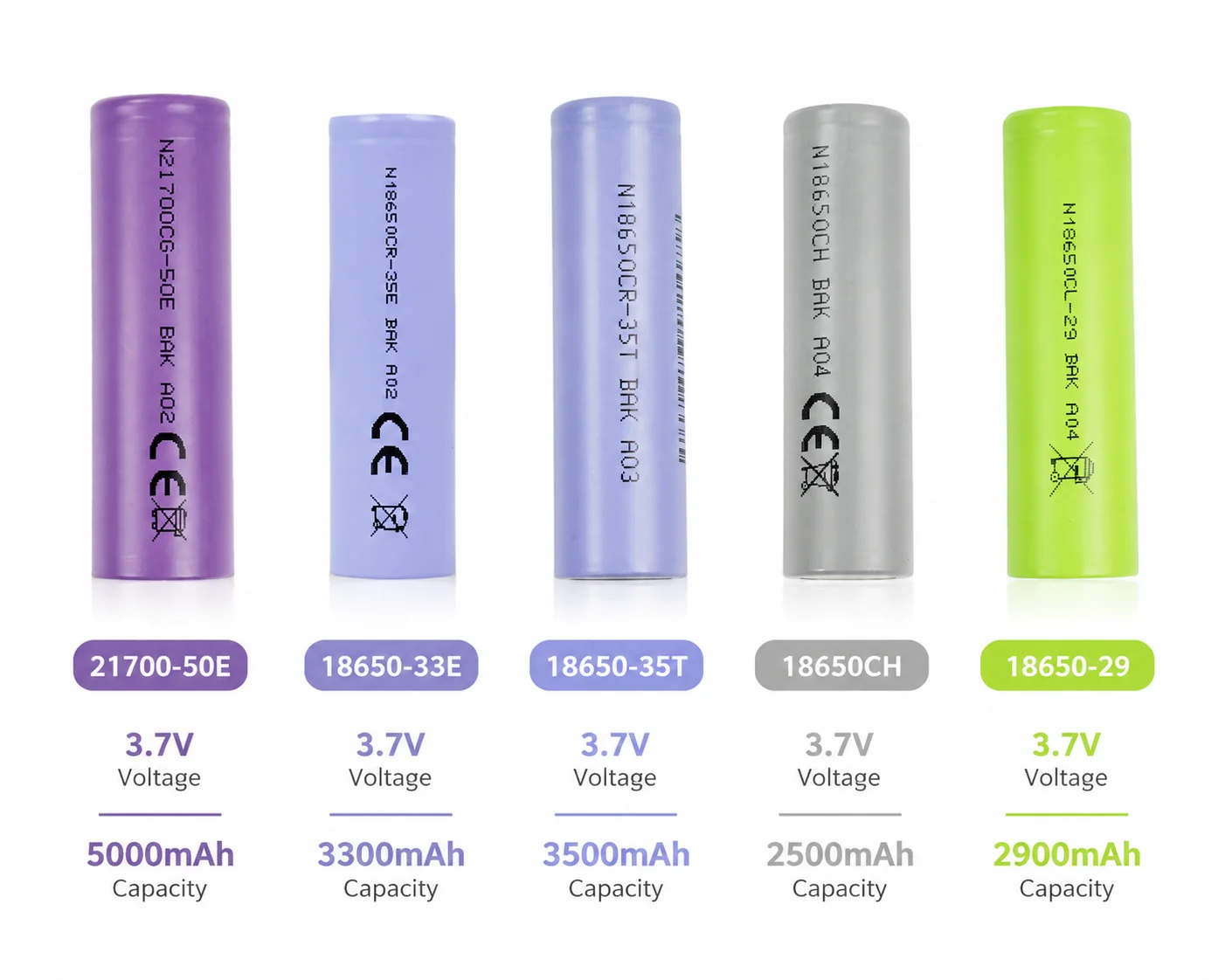
3.7V, 2000mAh lithium‑ion cell
2000 × 3.7 = 7400 mWh (7.4 Wh)
The universal conversion formula:
mWh = mAh × Nominal Voltage (V)
This calculation carries huge practical value, especially for air transport compliance. Global aviation authorities regulate lithium batteries by watt‑hour (Wh), with a widely accepted limit of 100Wh for carry‑on batteries without special approval. If a power bank only prints mAh, you must complete this conversion to meet travel safety standards.
Most portable electronics including smartphones and power banks display mAh for two primary reasons:
mAh only works reliably when comparing batteries running at the same voltage. It cannot deliver fair comparisons across cells with different nominal voltages.
Comparison Example:
Both carry identical mAh ratings, yet the total stored energy differs significantly. Only mWh reveals the true performance gap. Relying purely on mAh can lead to poor purchasing choices.
E‑bikes, power tools, drones and electric vehicles operate with variable working voltage. Total stored energy (mWh) directly determines real runtime.
Series‑parallel battery assemblies for laptops, agricultural drones and AGV robots have combined system voltage. mWh accurately reflects the overall energy of the complete pack.
Constant‑current systems can reference mAh easily. Equipment built with boost or buck regulators runs on fixed power output; mWh provides precise energy measurement.
Stable low constant current load, single fixed‑cell voltage. mAh works well for evaluation.
Sample calculation:
3000mAh, 1.5V AA battery powering a 2mW clock
Total runtime = (3000 × 1.5) ÷ 2 = 2250 hours
Unstable power draw and fluctuating operating voltage. Reputable manufacturers list mWh for transparent energy reference.
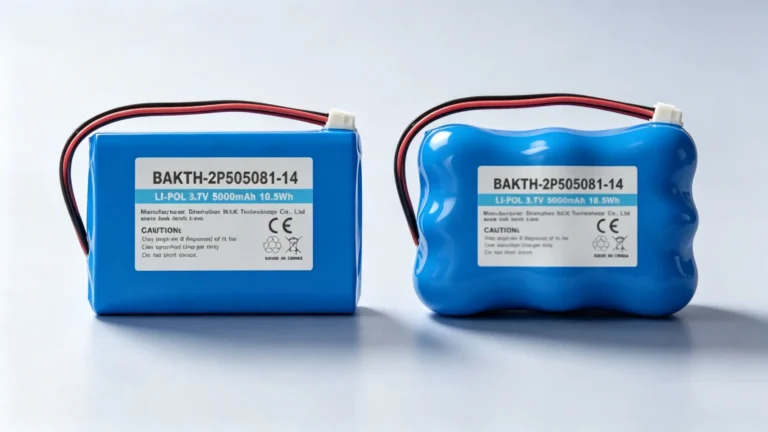
Top battery manufacturers such as BAKTH print both mAh and mWh on cells and finished packs. Dual labeling helps OEM designers complete product development and compliance verification efficiently.
A: No. Comparison is valid only if both batteries share the same nominal voltage. Different voltages mean identical mAh values do not equal equivalent endurance.
A: Use the formula: Wh = (mAh × V) ÷ 1000. All international lithium battery transport regulations use Wh as the official standard.
A: Yes. Dual specification eliminates ambiguity during product design, testing and customs clearance, reducing communication errors between manufacturers and buyers.
A: mWh is prioritized. Drone battery packs consist of multi‑cell series combinations, and total energy directly determines flight duration.