Let's Shape The Future Of Your Investments!
Natoque iaculis cursus augue urna commodo aptent morbi tortor porttitor quis ornare.
![Lithium-ion Battery Manufacturer | BAKTH Battery [Official]](https://bakth-battery.com/wp-content/uploads/2026/05/hideLogo.png)
![Lithium-ion Battery Manufacturer | BAKTH Battery [Official]](https://bakth-battery.com/wp-content/uploads/2026/05/logo.png)
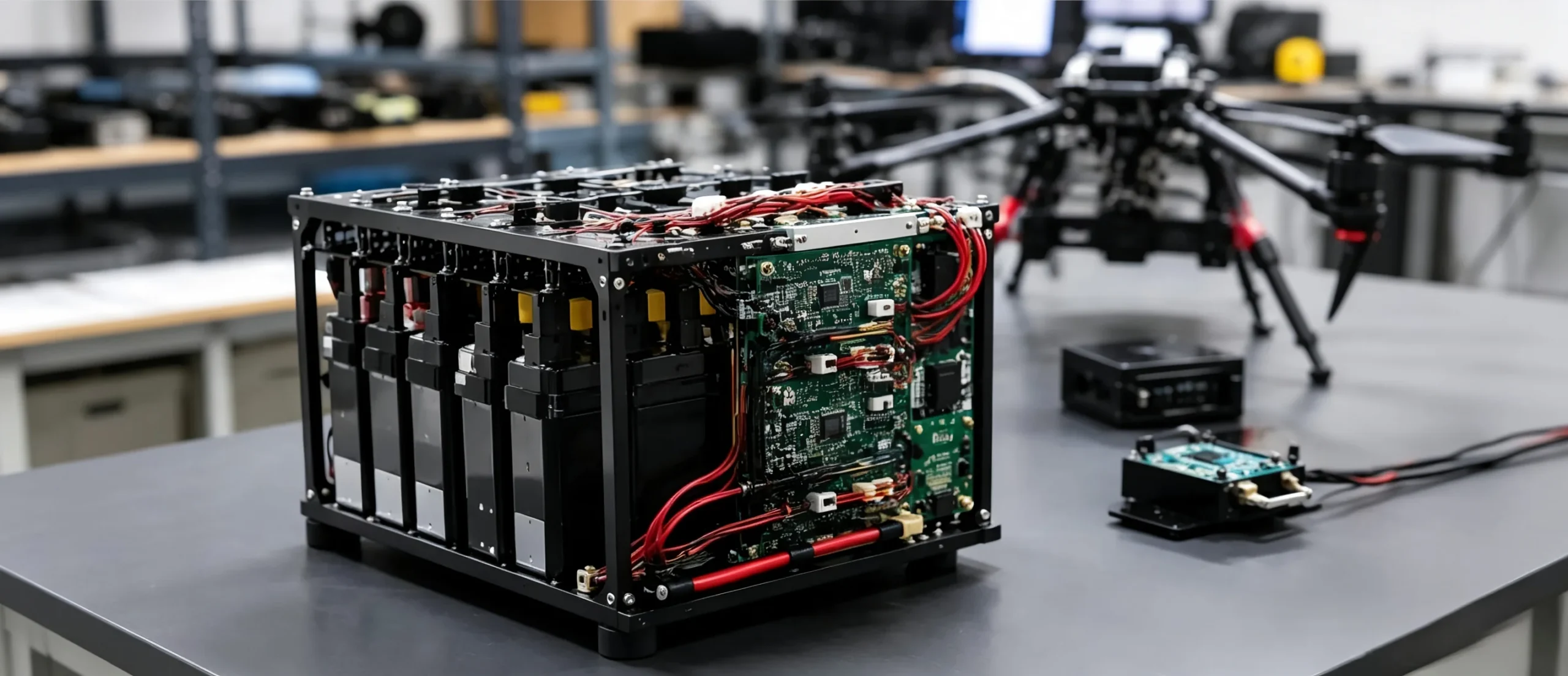
All commercial and industrial drones rely on lithium polymer (LiPo) and lithium-ion power packs to support aerial missions, favored for ultra-light weight and high energy density. For drone OEM manufacturers, fleet operators and agricultural spray teams, battery cycle count is the core metric to judge battery service life, mission stability and long-term operational cost.
Most pilots and procurement staff misunderstand battery cycle calculation rules, failing to realize that daily flight, charging and storage habits directly determine how many full cycles a pack can sustain before performance collapses. This BAKTH industrial guide clarifies the complete definition of drone battery cycles, analyzes all root causes of cycle capacity attenuation, shares field-proven maintenance workflows, explains battery recalibration steps, and covers swelling hazard troubleshooting, while highlighting our factory’s technical strengths in manufacturing long-cycle UAV battery packs.
LiPo and Li-ion are the dominant power chemistries for multi-rotor UAVs, driven by reversible lithium ion chemical reactions:
Compared with nickel-based or lead-acid alternatives, lithium drone batteries feature higher energy density, lower monthly self-discharge, flat stable voltage output during heavy load discharge — critical for maintaining steady hover and precise industrial mission control.
We select high-purity high-rate industrial cells for UAV packs, with precisely matched electrolyte formulas to slow SEI film thickening during repeated cycles, laying the foundation for longer cycle life than generic market cells.
A battery cycle refers to one full round of discharging a battery to its safe cut-off voltage and fully recharging back to 100% nominal capacity. The most critical detail for commercial fleets: cycles are calculated by cumulative discharge volume, not single takeoff-land flight sessions.
If a 16000mAh agricultural drone battery drains 8000mAh (50% capacity) during the first flight, recharges fully, then consumes another 8000mAh on the second flight, the two partial flights combine to count as one complete cycle. Partial discharge never resets the cycle counter.
With every finished cycle, internal electrode materials suffer slight irreversible wear, gradually lowering the pack’s maximum deliverable capacity. Industry standard retirement threshold: once capacity falls below 80% of factory rated value, the battery no longer meets reliable commercial mission standards.
Lifting liquid pesticide tanks, delivery cargo, large survey sensors creates sustained high-current discharge, amplifying internal heat and accelerating cell aging per cycle. Unbalanced cell resistance between series-parallel groups also widens voltage gaps after repeated heavy-load cycles.
The battery itself adds takeoff mass; larger-capacity generic packs without optimized lightweight design raise motor power draw, increasing discharge stress and consuming cycle life faster.
Long-duration maximum throttle flight and repeated deep discharge below 20% capacity trigger severe lithium plating on anodes, forming dendrites that damage separators and permanently cut total cycle count.
Every completed cycle builds thicker unstable SEI layers on anode surfaces, locking away usable lithium ions and raising internal resistance over time.
Industrial drone batteries adopt multi-series cell combinations. If individual cells show gaps in capacity, internal resistance or voltage, the weakest cell restricts overall pack performance and ages far faster than matched balanced cells.
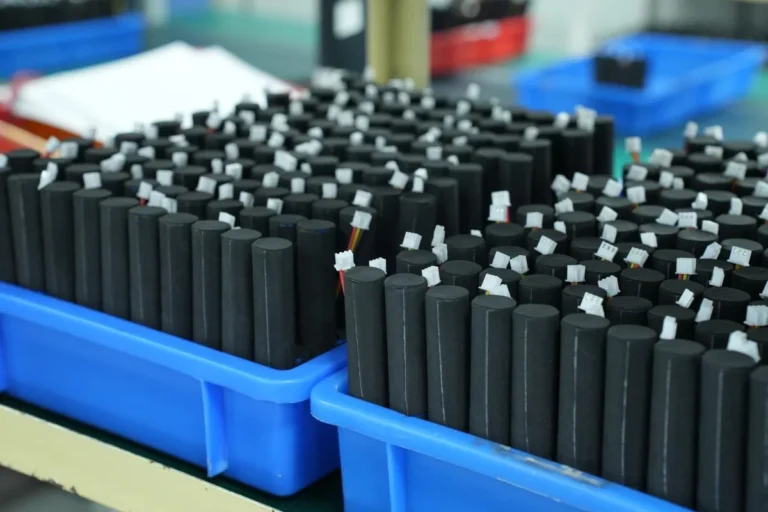
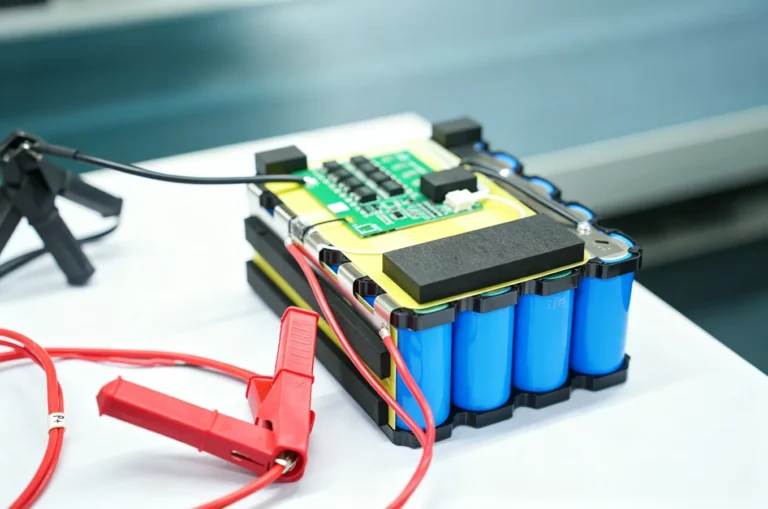
Every finished drone battery undergoes 48-hour batch aging and automatic cell balance screening before shipment, controlling single-cell voltage difference within 0.02V to eliminate uneven cycle aging across pack cells.
Overcharging, charging hot post-flight batteries, long-term storage at full 100% SOC and mismatched uncertified chargers all generate extra thermal stress, doubling cycle aging speed.
Sharp climbs, rapid acceleration, high-speed diving and constant headwind hovering force motors to draw peak current, creating instantaneous thermal spikes that damage cell structures cycle after cycle.
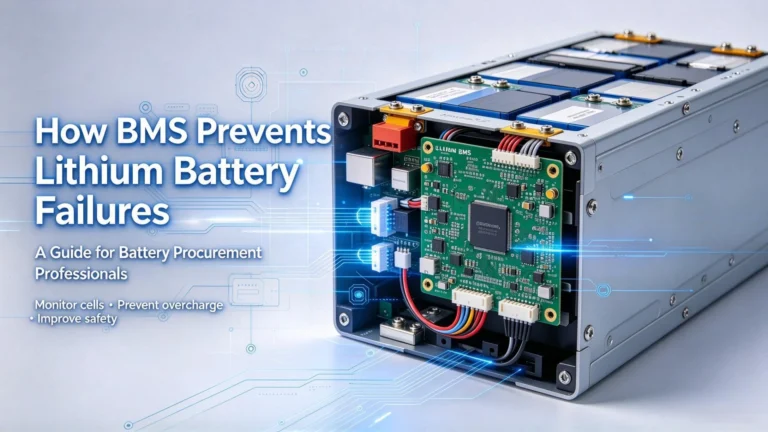
Our UAV exclusive intelligent BMS integrates multi-point temperature sensors, automatically adjusting charge/discharge current thresholds under extreme temperatures to reduce cycle loss caused by harsh field environments; low-temperature resistant electrolyte options available for cold-region survey drone custom orders.
Smart drone BMS tracks remaining power based on cumulative charge-discharge data; frequent partial flights create calculation drift, leading to inaccurate percentage displays. Complete recalibration every 20–30 cycles:
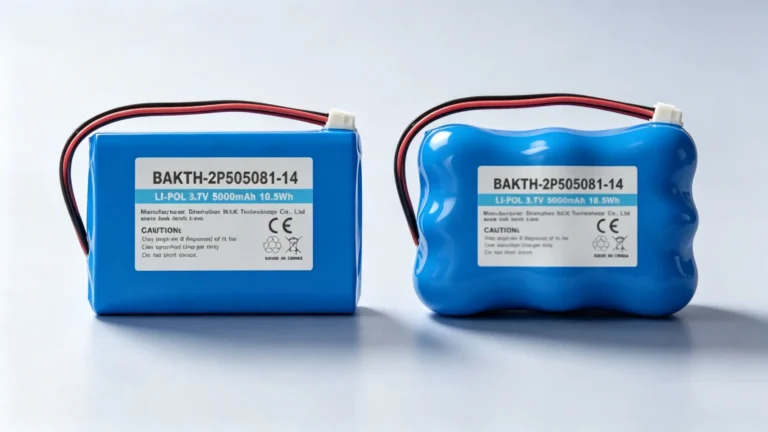
Battery bulging originates from trapped flammable internal gas produced by electrolyte decomposition, a severe safety hazard linked to shortened cycle life and thermal runaway risk.
Strict raw material incoming inspection, full-cycle aging testing and high-stability electrolyte formulas minimize premature swelling incidents; all our drone packs pass thermal abuse safety certification before delivery.
Drone battery cycle count is the core metric measuring UAV power pack service life and fleet operational costs. A full cycle counts cumulative discharge volume rather than single flights, and every cycle brings minor irreversible chemical degradation to internal lithium cells.
Heavy payloads, extreme weather, rough flight operations, mismatched charging equipment and unregulated storage all drastically reduce total usable cycle life. By implementing standardized charging, storage and inspection workflows, commercial operators can effectively slow capacity fading and extend battery cycle lifespan.
As a professional full-process lithium battery manufacturer focusing on industrial UAV custom solutions, BAKTH leverages high-purity cell raw materials, self-developed intelligent temperature-control BMS, full batch aging balance testing and flexible OEM/ODM customization to deliver long-cycle, high-stability drone battery packs for agricultural spraying, aerial mapping, infrastructure inspection and heavy-lift delivery projects. Our products hold UN38.3, CE, UL global safety certifications, supporting cross-border bulk procurement for global drone brands and fleet operators.
Contact our UAV engineering team for customized cycle-life optimized drone battery solutions tailored to your mission scenarios and operating climates.
A: Generic off-the-shelf drone batteries only maintain 80% capacity for 300–500 cycles. BAKTH factory customized industrial UAV packs reach 800–1200 stable full cycles under standard operating conditions, cutting long-term battery replacement costs by over 40%.
A: Yes, partial discharge slows cycle wear, but cumulative discharge volume still counts toward full cycle totals. Regularly landing with 20%+ residual capacity significantly extends overall cycle life.
A: Not recommended. Hot cells post-flight carry residual thermal stress; instant charging accelerates electrolyte decomposition and cuts total cycle count. Always wait for full cooling to room temperature before charging.
A: 40%–60% state of charge is the most stable storage voltage range, minimizing self-discharge and parasitic chemical reactions that eat away cycle life. All BAKTH finished drone batteries are pre-set to mid-charge before warehouse delivery.
A: Severely. Unbalanced individual cells age much faster, limiting the whole pack’s discharge performance and total cycle count. BAKTH implements automatic balance screening for all finished packs to eliminate this issue at the factory stage.