



When an application requires sudden bursts of high power, a standard lithium battery may not be able to deliver the required current without excessive voltage drop or heat generation. High-rate discharge batteries are specifically designed to deliver higher currents under demanding operating conditions.
This guide explains C-rates, the key design differences between high-rate and standard lithium batteries, their performance trade-offs, and how to choose the right battery for drones, RC models, power tools, jump starters, and other high-power applications.
1. What Is a High-Rate Discharge Battery?
A high-rate discharge battery is designed to deliver a relatively large current compared with its rated capacity. This capability is expressed as the C-rate, which describes the charging or discharging current relative to a battery’s capacity.
For example, a 1,200mAh battery has the following current values:
- 0.2C: 240mA
- 1C: 1,200mA
- 5C: 6,000mA
The actual current a battery can safely deliver depends on its specifications, cell design, temperature, and operating conditions.
Many standard lithium batteries are designed for moderate discharge rates, while high-rate cells may support substantially higher continuous and short-duration pulse currents. However, discharge and charging capabilities are not interchangeable. A battery rated for high-rate discharge is not necessarily suitable for equally fast charging. Its maximum safe charging rate must be verified separately.
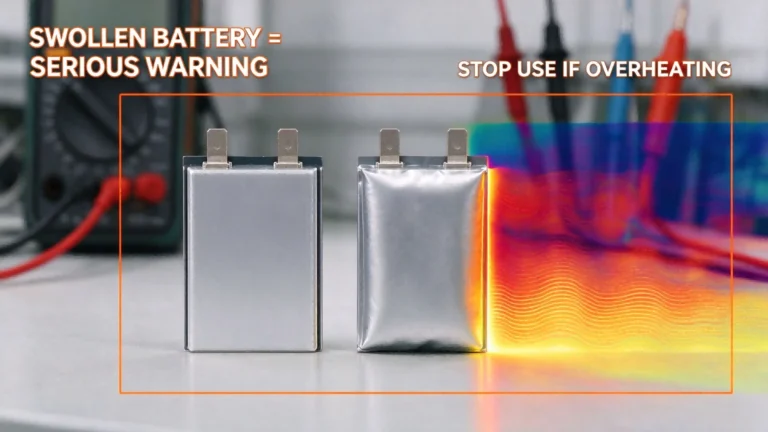
Operating a battery beyond its rated limits can cause excessive heat, accelerated degradation, and potentially dangerous internal damage. Under certain conditions, improper charging can also contribute to lithium plating on the anode, increasing the risk of internal short circuits.
2. Key Design Features of High-Rate Discharge Batteries
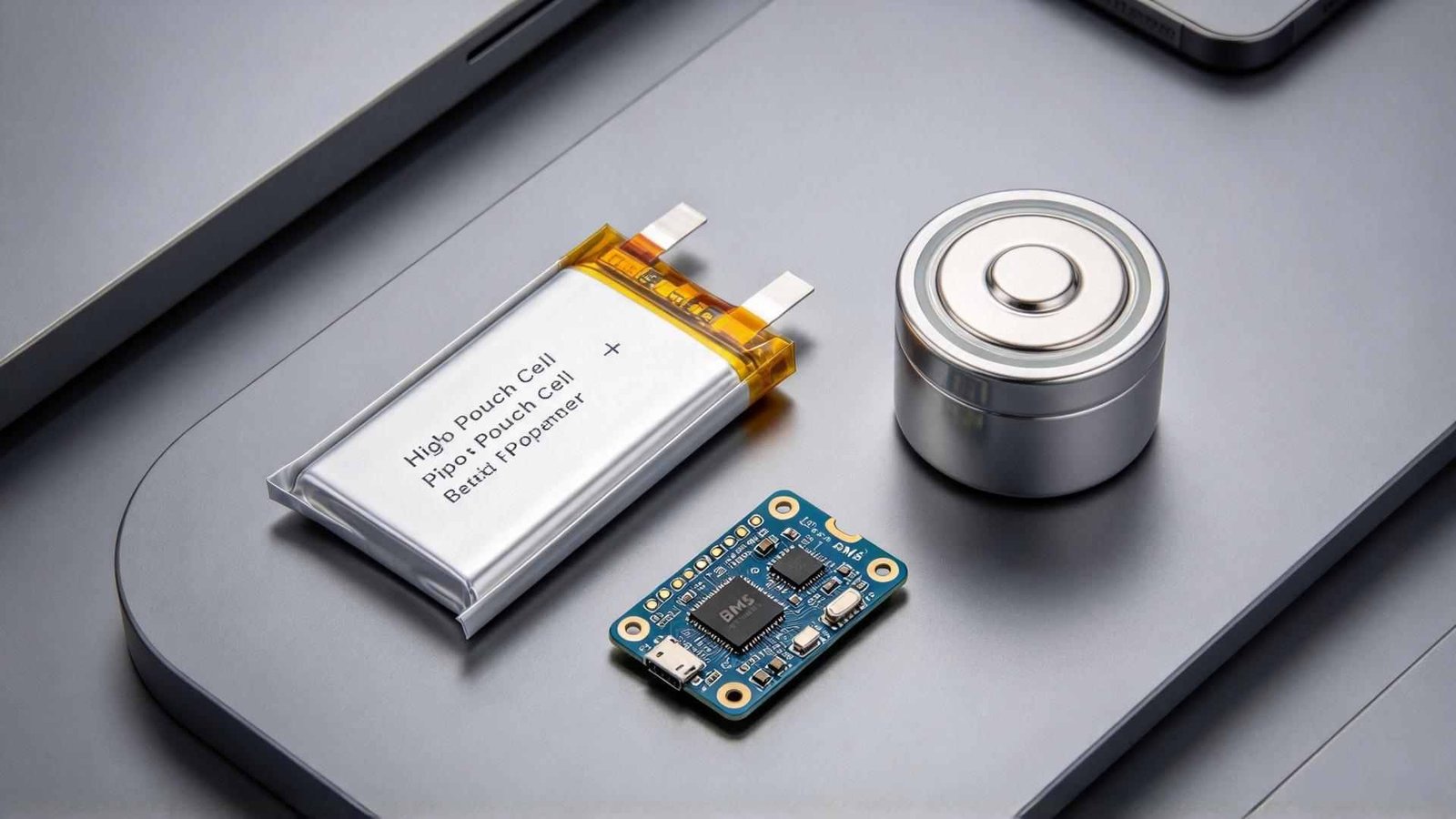
High-rate lithium polymer (LiPo) cells are engineered to deliver high current while managing internal resistance and heat generation. Depending on the cell design, manufacturers may optimize electrode materials, electrode thickness, conductive additives, current collectors, and internal connections.
These design choices help reduce resistance and improve the cell’s ability to supply current under heavy loads.
Key characteristics may include:
- High discharge capability: Some specialized cells support continuous discharge rates of tens of C and pulse ratings that can reach 100C or more. Actual limits depend on the specific model and test conditions.
- Reduced voltage sag: Lower internal resistance can help the battery maintain a more stable voltage during high-current operation.
- Thermal management requirements: High-rate cells are designed for demanding loads, but heat generation still increases with current. Appropriate cooling and operating limits remain essential.
- Flexible pouch construction: LiPo pouch cells can support compact, lightweight, and space-efficient designs. Available dimensions and minimum thickness depend on the manufacturer’s product range.
- Application-specific cycle life: Capacity retention depends on discharge rate, temperature, depth of discharge, charging conditions, and the cell’s construction.
3. How Do High-Rate Batteries Perform Under Heavy Loads?
Under high-current discharge, a battery with lower internal resistance generally experiences less voltage drop than a comparable battery with higher resistance. This can help maintain equipment performance when motors accelerate, propellers change speed, or other loads demand sudden increases in current.
Pulse discharge tests can evaluate a cell’s response to brief current peaks, while continuous discharge tests assess its ability to sustain a load over a longer period. Results at 40C, 50C, or 100C should always be interpreted alongside the test duration, temperature limits, cutoff voltage, and the manufacturer’s specifications.
High discharge rates also involve trade-offs. Greater current generates more heat, which can accelerate capacity degradation if the battery operates outside its recommended conditions. Cycle-life results must therefore be evaluated using the actual test profile rather than assuming that one set of results applies to every high-rate cell.
4. High-Rate Discharge and Fast Charging Are Different Capabilities
High-rate discharge performance does not automatically mean a battery can be charged at a similarly high rate.
For example, charging a compatible battery at 3C would theoretically take around 20 minutes to transfer its rated capacity under ideal constant-current conditions. Actual charging time is usually longer because lithium-ion charging typically includes a constant-voltage phase, and the charging rate may be reduced as the battery approaches full charge.
Whether a cell can safely support 3C charging depends on its specifications, temperature, charging profile, and battery management system where applicable. Always follow the manufacturer’s approved charging limits.
5. High-Rate Battery vs. Standard Lithium Battery: A Side-by-Side Comparison
| Factor | High-Rate Discharge Battery | Standard Lithium Battery |
|---|---|---|
| Primary design goal | High current output and dynamic loads | Energy storage and general-purpose operation |
| Internal resistance | Typically optimized for lower resistance | Varies by cell design and intended use |
| Continuous discharge | May support several tens of C in specialized designs | Often lower, depending on the model |
| Pulse discharge | May support very high short-duration currents within specified limits | Depends on the cell’s pulse rating |
| Voltage under heavy load | Designed to reduce voltage sag | May experience greater voltage sag at high current |
| Charging capability | Must be checked separately from discharge capability | Must follow the specified charging rate |
| Typical applications | Drones, RC models, selected power tools, and other high-power equipment | Consumer electronics, sensors, and general-purpose devices |
| Main trade-offs | Potentially higher cost, heat generation, and accelerated aging under demanding use | May not meet high peak-current requirements |
Note: These are general design tendencies, not universal specifications. Always compare the datasheets of the actual battery models being considered.
6. Common Applications of High-Rate Discharge Batteries
High-rate batteries are useful in applications where power demand changes rapidly or where a high current is required for a short period. The appropriate battery depends on peak current, continuous load, operating time, weight, size, and thermal conditions.
6.1 FPV and Agricultural Drones
FPV racing drones often need rapid bursts of power for acceleration and maneuvering. Agricultural spray drones may also require substantial current to power propulsion systems and auxiliary equipment.
High-rate LiPo batteries can be suitable for these applications when their voltage, capacity, discharge ratings, and thermal performance meet the system requirements.
6.2 RC Aircraft and Racing Models
RC planes, helicopters, cars, and boats can experience rapid changes in motor load. A suitable high-rate battery helps deliver the required current while limiting voltage sag during acceleration or other demanding maneuvers.
Battery weight and dimensions are also important, particularly in aircraft where additional weight can affect flight time and handling.
6.3 Portable Jump Starters
Portable jump starters require a high current output for a short duration. Battery selection must account for peak current, pulse duration, temperature, protection design, and the requirements of the target vehicle.
Not every high-rate LiPo cell is suitable for jump-starting applications. The complete battery system must be engineered and validated for the intended use.
6.4 Power Tools and Other High-Power Equipment
Cordless drills, impact drivers, electric skateboards, and other motor-driven equipment may draw high current during startup, acceleration, or heavy operation.
A high-rate battery can help meet these power demands, provided the cell configuration, interconnections, protection circuitry, and thermal design are appropriate for the application.
6.5 Specialized Electric Racing Applications
Student formula racing vehicles and electric racing motorcycles may require batteries designed for high power output. In these systems, engineers must evaluate current demand alongside voltage, energy capacity, cooling, pack structure, safety requirements, and applicable regulations.
By contrast, devices such as security sensors and many low-power consumer electronics may be better served by standard cells designed around their energy, size, cost, and service-life requirements.
7. How to Choose Between High-Rate and Standard Lithium Batteries
The best starting point is your device’s continuous and peak current demand, not simply its average power consumption.
A battery may be able to support a brief current spike but still be unsuitable for sustained high-current operation. Conversely, a battery designed for long operating times may not deliver the peak current required by a powerful motor.
Consider the following factors when selecting a battery:
- Continuous and peak current: Identify the maximum current, how long it lasts, and how frequently it occurs.
- Voltage requirements: Confirm the battery’s nominal and operating voltage ranges are compatible with the equipment.
- Capacity and runtime: Select a suitable capacity without exceeding the application’s weight or space constraints.
- Thermal performance: Evaluate heat generation, ambient temperature, cooling, and the manufacturer’s operating limits.
- Charging requirements: Confirm the approved charging rate and use a compatible charger.
- Protection and system design: For battery packs, assess the BMS or other protection circuitry, wiring, connectors, and current paths as applicable.
- Validation testing: Test representative samples under realistic operating conditions before committing to mass production.
For OEM and ODM projects, working with an experienced battery pack manufacturer can help align cell selection, pack configuration, protection design, mechanical structure, and thermal management with the application’s requirements.
Custom pouch-cell solutions may also be worth evaluating when the product requires specific dimensions, a low-profile design, or weight optimization. The final choice should be based on verified cell specifications and complete-pack testing rather than the C-rate alone.
8. Frequently Asked Questions
A: C-rate expresses charging or discharging current relative to a battery’s rated capacity. For a 1,200mAh battery, 1C corresponds to 1,200mA, while 5C corresponds to 6,000mA. The permitted rate depends on the battery’s specifications and operating conditions.
A: Only if the battery is specifically rated for the intended charging rate and the charging conditions meet its requirements. Charging too quickly can cause excessive heat, accelerated degradation, and, under certain conditions, lithium plating. Always follow the manufacturer’s charging specifications.
A: No. High-rate batteries are designed for applications with demanding current requirements and may involve higher costs or different energy-density trade-offs. For low-power devices with steady loads, a standard lithium battery may offer better overall value.
A: Voltage sag is the drop in terminal voltage when a battery supplies current. Internal resistance is one contributing factor. Excessive voltage sag can reduce motor performance, trigger low-voltage protection, or cause equipment to shut down unexpectedly.
A: Continuous discharge refers to current supplied over a sustained period within the battery’s rated limits. Pulse discharge refers to a higher current delivered for a limited duration. The permitted pulse current depends on factors such as pulse length, rest periods, temperature, and cutoff voltage.
A: No. A higher C-rate indicates a greater current capability relative to capacity under specified test conditions. It does not automatically mean better energy density, longer cycle life, or improved performance in every application. Compare the full datasheet and validate the battery under realistic loads.
9. Final Takeaway
High-rate discharge batteries are designed for applications that demand high current, rapid load changes, or short bursts of power. Standard lithium batteries remain suitable for many applications where energy capacity, cost, and moderate current output are the main priorities.
For drones, RC models, power tools, jump starters, and other demanding equipment, evaluate continuous and peak current requirements alongside voltage sag, heat generation, charging limits, and expected service life. For OEM and ODM battery pack projects, selecting the right cell and validating the complete pack are essential steps toward reliable performance and safe operation.