Let's Shape The Future Of Your Investments!
Natoque iaculis cursus augue urna commodo aptent morbi tortor porttitor quis ornare.
![Lithium-ion Battery Manufacturer | BAKTH Battery [Official]](https://bakth-battery.com/wp-content/uploads/2026/05/hideLogo.png)
![Lithium-ion Battery Manufacturer | BAKTH Battery [Official]](https://bakth-battery.com/wp-content/uploads/2026/05/logo.png)
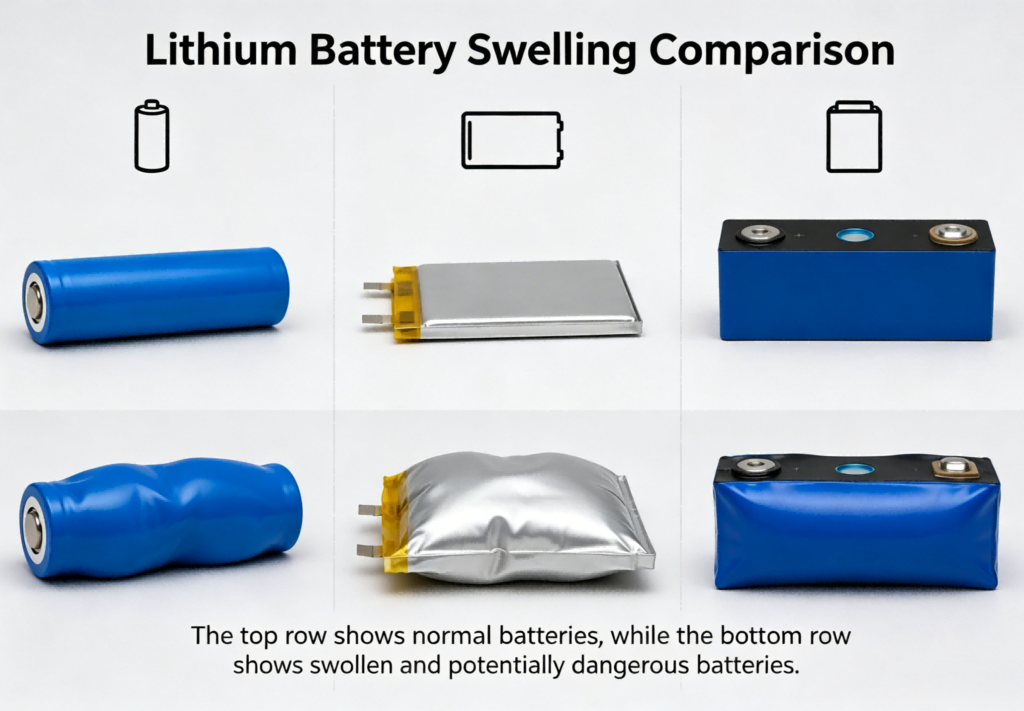
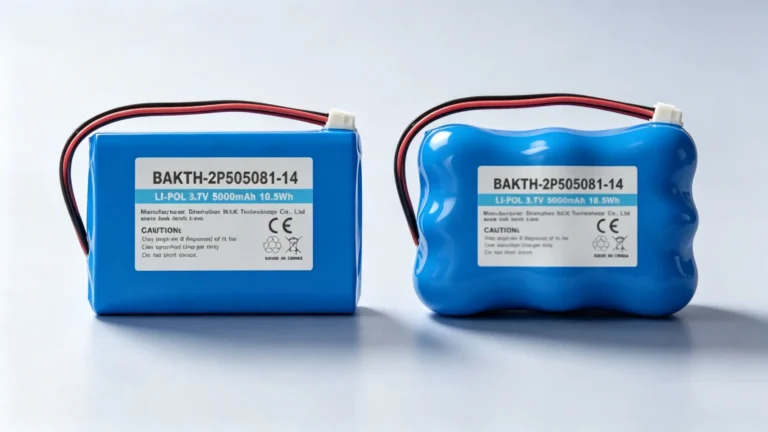
Swelling (also called puffing or bulging) is one of the most common failure modes for lithium-ion, LiPo, LiFePO4 (LFP) and lithium titanate (LTO) batteries. Whether you’re a DIY hobbyist, OEM engineer, warehouse manager, or commercial energy storage operator, understanding the internal chemical and physical mechanisms behind swollen cells helps you avoid safety hazards, premature battery failure, and costly inventory losses.
This guide breaks down the two fundamental root causes of lithium battery swelling, compares swelling behavior across major lithium chemistries, explains how manufacturing flaws accelerate bloating, and shares proven prevention strategies aligned with North American and European battery industry standards.
All lithium battery swelling falls into two distinct, interconnected categories: irreversible electrode expansion and trapped gas from broken-down electrolyte. Both mechanisms happen inside sealed cell casings (soft pouch or hard metal cans), and they often occur at the same time to worsen bulging.
Lithium cells expand physically during charge-discharge cycles and high-temperature storage because lithium ions embed into electrode crystal structures and alter internal dimensions.
When charging, lithium ions penetrate graphite lattices to form compounds like LiC₂₄ and LiC₆. This stretches the graphite crystal structure and creates persistent internal mechanical stress. Over repeated cycles, this stress leads to permanent thickness growth of the electrode sheet.
Two manufacturing factors control how much graphite expands:
The second major swelling driver is trapped gas produced when liquid electrolyte breaks down inside the sealed cell. Every lithium cell generates small volumes of gas during its initial factory formation cycle, but abnormal conditions trigger massive gas buildup that deforms casings.
Two main triggers for electrolyte breakdown:
Moisture intrusion is the most common contamination source for new cells: poor vacuum sealing during production, torn pouch laminate edges, or cracked metal casings let humidity seep inside and create gas non-stop while batteries sit unused in warehouses.
The Solid Electrolyte Interphase (SEI) is a nanometer-thin protective layer that naturally forms on graphite anodes during a battery’s first factory charge. A stable, intact SEI layer blocks electrons from touching raw electrolyte and suppresses constant gas production.
When swelling, heat or overcharging damages the SEI film, three dangerous cycles begin:
This self-reinforcing loop explains why minor early puffing rapidly turns into severe bulging if ignored, even with light device use. LTO (lithium titanate) anodes cannot form a stable SEI film at all, so these cells generate far more gas under identical operating conditions.
Not all lithium batteries swell at the same rate. Their anode and cathode materials create unique puffing risks for storage and cycling applications:
Many swollen batteries come straight from the factory before a single charge cycle, caused by production shortcuts:
Split guidance for manufacturers, bulk warehouse operators, and end users to minimize puffing risk at every stage of the battery lifecycle:
A: Minor dimensional growth (6–10%) during the first 100 cycles is standard for graphite cells. Visible bulging, warped casings or strange chemical odors signal abnormal dangerous swelling requiring replacement.
A: No. Electrode lattice stretching and trapped gas create permanent deformation. There is no safe way to reverse swelling, and puncturing the cell to release gas creates fire and toxic vapor hazards.
A: LFP cathodes have low expansion rates, but graphite anodes still drive puffing risk. Low-cost uncertified LFP cells with poor sealing swell just as easily as budget NMC variants.
A: Cold temperatures slow electrolyte decomposition and gas generation temporarily, but they cannot fix existing manufacturing defects. Swelling will resume once cells warm back to room temperature.
A: Fully draining cells below 2.0V triggers severe SEI damage and accelerates gas production, drastically increasing swelling risk long-term. Maintain 40–60% SOC for idle storage.
Lithium battery swelling stems from two irreversible internal processes: graphite anode lattice expansion and electrolyte breakdown with trapped gas. The stability of the SEI protective layer acts as the critical buffer against excessive puffing, and different lithium chemistries carry vastly different bloating risks.
Manufacturing shortcuts, hot storage, improper charging and deep discharge all amplify swelling, even on brand-new unused cells. Following standardized production, warehousing and user operating rules drastically reduces bulging failures and thermal runaway safety risks.
If you spot any bulging, warping or chemical odors from lithium cells, cease all charging and operation immediately, then dispose of the unit via certified lithium battery hazardous waste recycling facilities.