Let's Shape The Future Of Your Investments!
Natoque iaculis cursus augue urna commodo aptent morbi tortor porttitor quis ornare.
![Lithium-ion Battery Manufacturer | BAKTH Battery [Official]](https://bakth-battery.com/wp-content/uploads/2026/05/hideLogo.png)
![Lithium-ion Battery Manufacturer | BAKTH Battery [Official]](https://bakth-battery.com/wp-content/uploads/2026/05/logo.png)
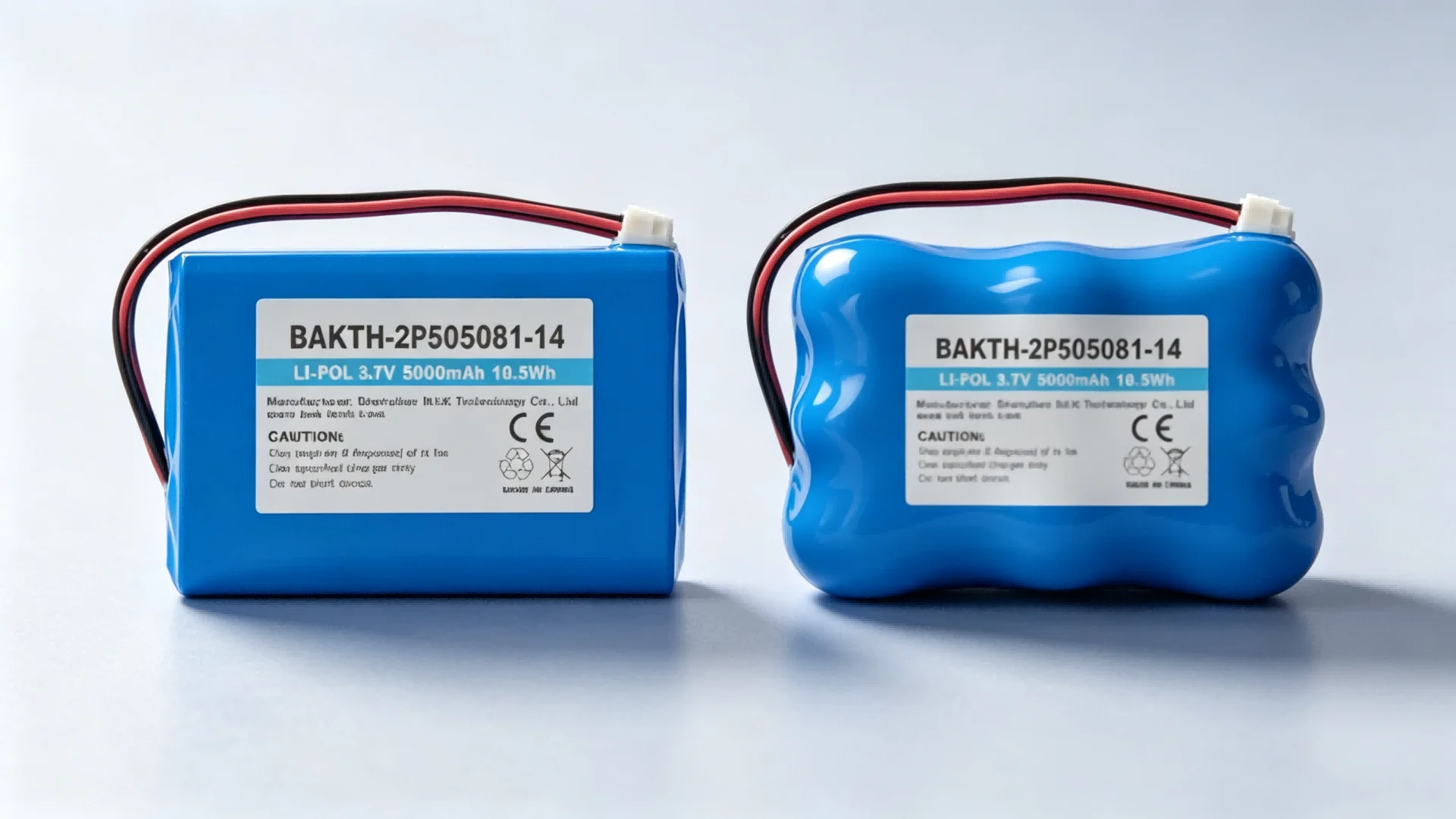
Lithium battery packs power e‑bikes, portable power stations, AGVs, and many industrial devices. However, battery swelling—also known as battery puffing—can indicate internal damage and potential safety risks.
Swelling does not always appear suddenly. In some cases, changes in battery performance, temperature, or physical appearance may occur before visible bulging becomes noticeable.
This article explains the early warning signs of lithium battery swelling, its common causes, and practical strategies for preventing battery puffing and improving battery safety.
Gas generation inside a lithium‑ion cell may begin before visible swelling occurs. However, not every battery shows obvious warning signs, and these symptoms can also result from other electrical or mechanical problems.
The following conditions should be treated as potential warning signs.
A battery may show a normal open‑circuit voltage but provide significantly less runtime during operation.
As battery cells age or experience internal damage, their usable capacity may decrease and internal resistance may increase. This can lead to faster voltage drops under load and reduced operating time.
A noticeable decline in runtime should be investigated, particularly when it occurs alongside overheating or charging abnormalities.
If a battery pack becomes noticeably hotter than it previously did under similar operating conditions, it may indicate increased internal resistance, cell imbalance, excessive current, or another internal problem.
Higher internal resistance can increase heat generation during charging and discharging. However, temperature changes should be evaluated in relation to the ambient temperature, load, charging rate, and battery design.
If the battery becomes excessively hot, stop using it and arrange for a professional inspection.
Physical deformation, uneven surfaces, or a casing that appears to be expanding may indicate internal pressure or cell swelling.
Do not press, squeeze, or repeatedly handle a suspected swollen battery to check its condition. Physical pressure can damage the cell and increase safety risks.
Instead, inspect the battery visually for:
Unusual chemical odors, hissing, or popping sounds may indicate electrolyte leakage, gas release, internal damage, or another battery fault.
These symptoms should not be ignored. If you notice an unusual odor, smoke, hissing, or popping, stop using the battery immediately if it is safe to do so. Keep away from the battery and seek professional assistance.
Do not intentionally approach or open a battery to check for a smell or sound.
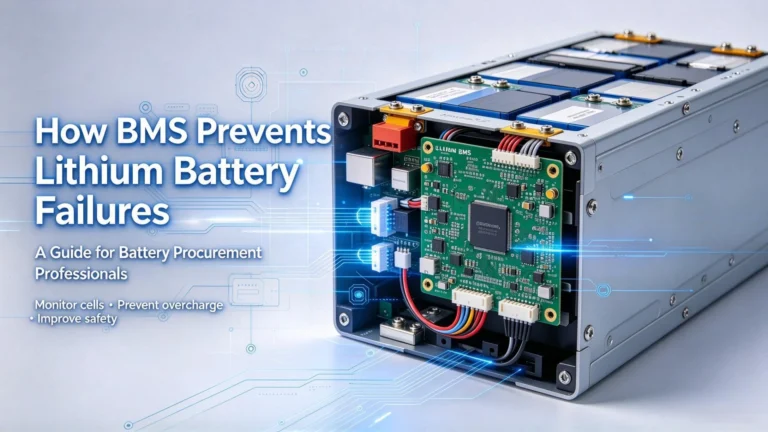
The battery management system (BMS) may repeatedly interrupt charging or discharging when it detects abnormal voltage, current, temperature, or cell conditions.
Frequent cut‑offs can be caused by:
A BMS cut‑off does not automatically mean that the battery is swelling. However, repeated protection events should be investigated before the pack is returned to service.
Lithium battery swelling generally occurs when gas accumulates inside a sealed cell as a result of unwanted chemical reactions.
The underlying causes vary according to the battery chemistry, cell design, manufacturing quality, operating conditions, and level of damage.
Overcharging can cause electrolyte decomposition and gas generation inside a lithium‑ion cell. It may also increase heat production and accelerate internal degradation.
A properly designed BMS and compatible charging system should help prevent overvoltage conditions. However, a defective BMS, unsuitable charger, damaged wiring, or incorrect charging parameters can increase the risk.
Battery packs should always be used with a charging system that matches the cell chemistry, voltage specifications, and manufacturer’s requirements.
Discharging a lithium‑ion cell below its specified voltage range can cause irreversible damage.
Severe over‑discharge may damage the electrodes and, in certain circumstances, cause copper from the current collector to dissolve and redeposit. This can increase the risk of internal short circuits during subsequent charging.
The specific failure mechanism depends on the cell design and the depth and duration of over‑discharge. Therefore, an over‑discharged battery should not automatically be considered safe simply because it appears normal.
Use a properly configured BMS and avoid operating battery packs below their specified voltage limits.
Temperature has a significant effect on lithium‑ion battery performance, aging, and safety.
High‑Temperature Conditions
Prolonged exposure to high temperatures can accelerate electrolyte degradation, increase gas generation, and reduce battery lifespan.
The actual risk depends on the cell chemistry, temperature, exposure duration, and operating conditions. Temperatures above the manufacturer’s recommended range should be avoided.
Charging at Low Temperatures
Charging lithium‑ion batteries at temperatures below the permitted range can cause lithium plating on the negative electrode, particularly under high charging currents.
Lithium plating may reduce battery capacity, increase internal resistance, and potentially create safety risks. Battery packs should include appropriate low‑temperature charging protection where required.
Do not charge a lithium battery that is below its specified charging temperature range.
Drops, impacts, excessive vibration, crushing, or improper mounting can damage battery cells and their internal structures.
For example, excessive mounting pressure or incorrectly positioned fasteners may deform the cell casing or place stress on the battery.
These risks are especially relevant to battery packs used in:
Battery packs should be designed with appropriate mechanical protection, secure mounting, vibration resistance, and sufficient clearance around the cells.
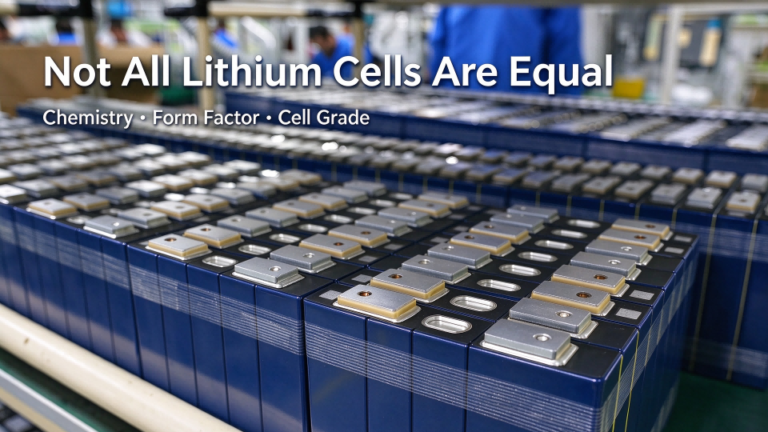
Cell quality and manufacturing consistency have a major influence on battery safety and service life.
Potential manufacturing problems include:
However, swelling is not caused only by low‑quality cells. Even well‑manufactured batteries can swell when exposed to overcharging, excessive heat, mechanical damage, or other abnormal conditions.
A reliable battery manufacturer should implement cell screening, welding inspections, BMS testing, and appropriate quality‑control procedures.
Lithium‑ion batteries gradually degrade through repeated cycling and calendar aging.
Over time, side reactions can consume active lithium, increase internal resistance, and reduce available capacity. Electrolyte decomposition and other chemical changes may also contribute to gas generation in certain conditions.
Aging does not mean that every battery will swell. However, an older battery with reduced capacity, increasing heat generation, or physical deformation requires additional attention.
Take the following steps when a battery shows signs of swelling, overheating, or other serious damage:
Do not attempt to repair or reuse a swollen battery. Cooling the battery or allowing it to return to its normal shape does not make it safe.
Although not all swelling incidents can be prevented, proper battery design, charging practices, and maintenance can reduce the risk.
Use a charger that matches the battery’s chemistry, voltage, charging current, and charging protocol.
Avoid unverified chargers or power supplies that lack appropriate voltage and current protection.
Do not leave a battery connected to an unsuitable charger or charging system for extended periods.
Modern charging systems generally include charging control and protection features, but users should still follow the battery manufacturer’s instructions and investigate any abnormal charging behavior.
For long‑term storage:
A storage state of charge around 30–50% may be appropriate for some lithium‑ion battery packs, but the correct range depends on the battery chemistry, design, and manufacturer’s recommendations.
Do not regularly operate the battery until it reaches a critically low voltage.
Recharge the battery according to the manufacturer’s recommended operating range. For many consumer applications, recharging before the battery becomes fully depleted can help reduce stress, but the appropriate threshold varies by battery system.
Use suitable protective housings, mounting structures, insulation, and vibration‑resistant components.
Battery packs installed in e‑bikes, AGVs, robots, and industrial equipment should be designed for their specific operating environment.
For industrial and mobility battery packs, establish a regular inspection schedule based on usage, operating conditions, and risk level.
Inspections may include:
The inspection interval should be determined by the battery manufacturer or qualified technical team. High‑use or safety‑critical applications may require more frequent monitoring.
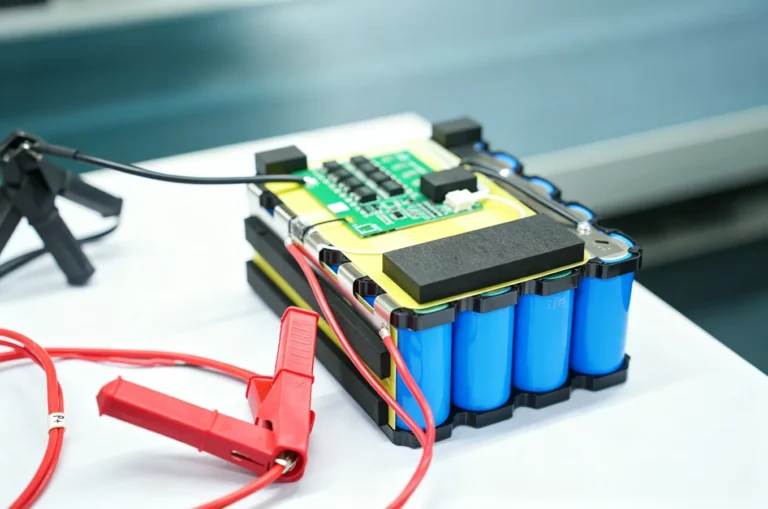
A well‑designed battery pack should use suitable cells, a properly configured BMS, reliable connections, and appropriate protection mechanisms.
The BMS should be selected according to the battery chemistry, series and parallel configuration, charging requirements, current levels, temperature range, and application.
A BMS is an important safety component, but it cannot eliminate every risk associated with manufacturing defects, mechanical damage, or extreme operating conditions.
A: No. Cooling a swollen battery does not reverse the internal damage or remove accumulated gas. A swollen battery should be considered potentially unsafe. Stop using or charging it, avoid handling it unnecessarily, and contact a qualified professional for evaluation and disposal.
A: There is no fixed timeline. Swelling may develop quickly under severe abnormal conditions, while other forms of degradation may take weeks, months, or longer to become visible. The timing depends on factors such as cell chemistry and design, severity of the damage, charging and discharging conditions, operating temperature, battery age, manufacturing quality. The absence of visible swelling does not prove that a battery is safe.
A: No. A properly designed BMS can help protect against overcharging, over‑discharge, excessive current, and abnormal temperatures, depending on its features and configuration. However, a BMS cannot completely prevent swelling caused by internal defects, physical damage, aging, extreme environmental conditions, or other failure mechanisms. Battery safety requires a combination of reliable cells, suitable mechanical design, effective protection circuits, proper manufacturing, and appropriate operating practices.
A: Yes. Swollen lithium‑ion cells may indicate internal damage and can present risks such as electrolyte leakage, fire, rupture, or thermal runaway. Not every swollen battery will catch fire, but any swollen battery should be treated as potentially hazardous. Do not continue charging, using, opening, or repairing it yourself.
Lithium battery puffing can sometimes be preceded by changes in battery runtime, temperature, physical shape, or charging behavior. However, warning signs are not always visible, and a battery may develop internal damage without obvious external symptoms.
To reduce the risk of lithium battery swelling:
Reliable cell quality, appropriate battery design, and effective BMS protection are essential for building safer and longer‑lasting lithium battery packs.