Let's Shape The Future Of Your Investments!
Natoque iaculis cursus augue urna commodo aptent morbi tortor porttitor quis ornare.
![Lithium-ion Battery Manufacturer | BAKTH Battery [Official]](https://bakth-battery.com/wp-content/uploads/2026/05/hideLogo.png)
![Lithium-ion Battery Manufacturer | BAKTH Battery [Official]](https://bakth-battery.com/wp-content/uploads/2026/05/logo.png)
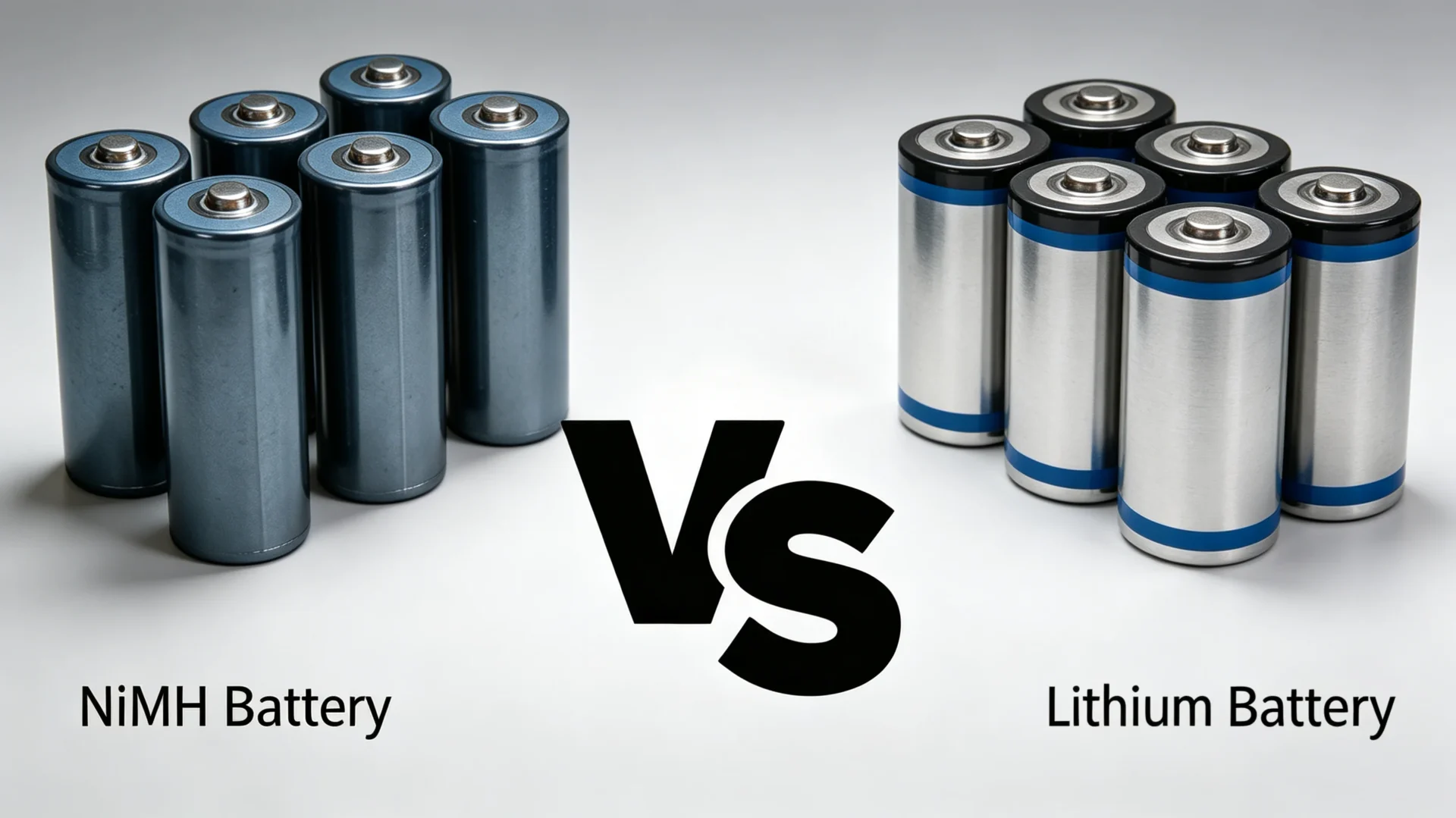
Battery service life and operational performance heavily influence industrial equipment uptime, maintenance expenditure and corporate sustainability roadmaps. As industrial electrification accelerates worldwide, facility operators face a core decision between NiMH and lithium-ion chemistries. This guide contrasts their durability, technical traits and real-world industrial suitability to simplify your battery selection.
Global electrification policies are reshaping demand for rechargeable industrial power storage. Market projections indicate the automotive battery sector will expand from USD 94.5 billion in 2024 to USD 237.28 billion by 2029. Regulatory frameworks including the EU’s 2030 55% emissions reduction target push manufacturers to evaluate power storage efficiency and long-term carbon footprint.
Nickel-metal hydride (NiMH) and lithium-ion batteries remain two widely adopted solutions for industrial power systems. NiMH provides consistent low-risk power output with affordable upfront investment, while lithium-ion offers superior energy density, faster charging and extended usable life. The optimal choice hinges on your facility’s load profile, operating environment and long-term operational targets.
Single cell nominal voltage: 1.25 V
Common Industrial Deployments: Hybrid electric vehicles (HEVs), small off-grid power systems, stationary backup power units.
Single cell nominal voltage: 3.7 V
Common Industrial Deployments: AGVs, industrial drones, portable medical devices, renewable energy storage systems, electric commercial vehicles.
| Feature | NiMH Battery | Lithium-Ion Battery |
|---|---|---|
| Single Cell Nominal Voltage | 1.25 V | 3.7 V |
| Primary Industrial Applications | HEVs, small backup storage | AGVs, medical equipment, drones, EVs, solar storage |
| Standout Advantage | Effective brake energy recovery, low fire hazard risk | High energy density, lightweight construction, fast charging |
| Sustainability Profile | Low-toxic raw materials, mature recycling workflows | Enables integration with renewable energy assets |
NiMH delivers gravimetric energy density between 55–110 Wh/kg and power density ranging from 100–500 W/kg. It performs steadily during prolonged low-current discharge, making it suitable for stationary power applications without strict size constraints.
Lithium-ion achieves 100–300 Wh/kg gravimetric energy density and power density up to 5000 W/kg. Its compact footprint is highly valuable for portable industrial machinery, inspection robotics and medical hardware where weight and space are limited.
Testing conducted at 80% depth of discharge (DOD):
Extended cycle longevity directly reduces battery replacement frequency for continuously operating industrial assets. NiMH offers acceptable durability under stable, mild factory load conditions, while lithium lowers long-term downtime and component replacement costs for multi-year deployments.
| Metric | NiMH | Lithium-Ion |
|---|---|---|
| Typical Full Charging Duration | 4–6 hours | Reaches 80% capacity within 1 hour |
| Monthly Self-Discharge Rate | ~20% capacity loss | 5–10% capacity loss |
Fast-charging lithium batteries minimises production line downtime for shift-based factory operations. Higher self-discharge in NiMH requires regular top-up charging if backup systems remain idle for extended periods.
NiMH maintains stable operation across -20°C to 60°C, with only mild capacity reduction in cold environments. It requires no auxiliary heating and suits unheated outdoor industrial installations.
Lithium-ion works best between 10°C and 40°C. Capacity falls sharply below -10°C unless integrated heating hardware is fitted. Facilities operating in cold workshops or exposed outdoor locations must budget for thermal management systems when selecting lithium.
NiMH carries lower initial purchase costs, making it attractive for short-term industrial projects with constrained capital budgets.
Lithium-ion commands a higher upfront price tag. However, fewer replacements, faster charging productivity gains and reduced maintenance deliver better TCO for equipment scheduled to operate continuously over multiple years.
Lithium-ion holds over 60% market share within portable industrial and clinical medical power systems. Patient monitors and infusion pumps rely on its high energy density and long cycle performance while meeting ANSI/AAMI ES 60601 safety standards. NiMH is mostly limited to low-priority stationary backup power to control expenditure.
Large-scale solar and wind storage facilities almost exclusively adopt lithium-ion to store surplus power and stabilise grid load variations. Limited energy density restricts NiMH to compact off-grid residential and small commercial backup setups.
Automated guided vehicles, robotic manipulators and construction machinery depend on lithium-ion’s high instantaneous power output and lightweight design. NiMH remains viable for stationary industrial power supplies running on constant low-current loads.
NiMH contains no lead or cadmium. Mature recycling processes recover nickel and rare earth materials, limiting landfill contamination risks.
Lithium-ion mining for lithium and cobalt creates ecological challenges, though modern closed-loop recycling recovers most valuable metals. Lithium storage systems are critical infrastructure for factories targeting carbon neutrality powered by renewable generation.
NiMH presents very low risk of thermal runaway under abuse. Overcharging generates small volumes of hydrogen and oxygen gas, so vented enclosures are required, yet violent combustion events are extremely uncommon.
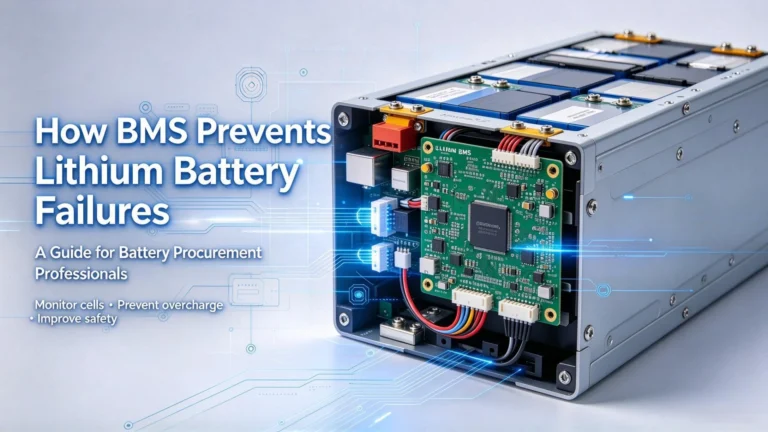
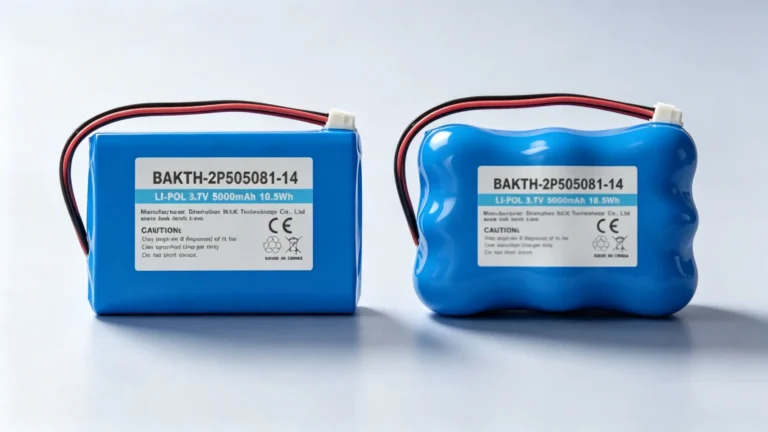
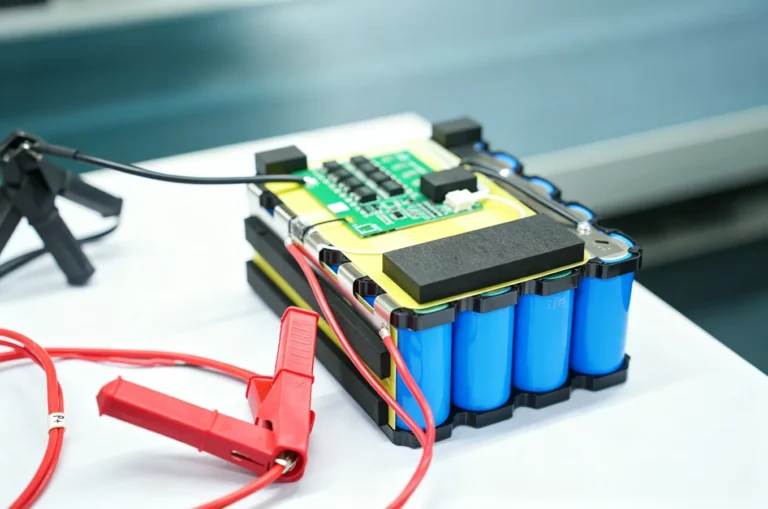
Lithium-ion faces hazards including swelling, thermal runaway and fire when punctured, overcharged or overheated. A fully featured BMS is non-negotiable, delivering overvoltage, undervoltage, overcurrent and thermal cut-off protection.
Use these six evaluation criteria to select the correct battery chemistry:
A: NiMH features lower upfront cost, stable constant power delivery and low fire risk, but suffers slow charging and higher self-discharge. Lithium-ion provides higher energy density, rapid charging and longer cycle life, yet costs more and requires mandatory BMS safety hardware.
A: NiMH operates reliably from -20°C up to 60°C without auxiliary heating. Lithium-ion experiences significant capacity loss below freezing unless heating elements are installed.
A: Recycling recovers nickel, lithium, cobalt and other metals to reduce raw mineral extraction and cut operational carbon emissions. NiMH recycling workflows are simpler and widely available; lithium recycling infrastructure continues rapid global expansion.
There is no universal “best” industrial battery chemistry. NiMH excels for cost-focused stationary power systems operating in variable ambient temperatures. Lithium-ion delivers unmatched flexibility for portable automation, energy storage and long-life production equipment. By evaluating runtime demands, climate conditions, budget cycles and safety rules, industrial operators can minimise downtime and optimise long-term power storage performance.