



Introduction
Shopping or designing battery‑powered devices often brings confusion between two common metrics: mAh and mWh. Many buyers mistakenly treat these units as interchangeable when comparing battery performance. While milliampere‑hour measures electric charge, milliwatt‑hour calculates total stored energy. Understanding their differences, conversion formulas and ideal use cases helps OEM engineers, equipment operators and bulk purchasers avoid misleading comparisons and make accurate battery selection decisions for consumer electronics, power tools, drones and custom lithium battery packs.
1. What Is mAh (Milliampere‑Hour)?
mAh stands for milliampere‑hour, the standard unit to measure charge capacity. It defines how long a battery can deliver a consistent electric current.
A simple analogy: mAh equals the volume of water inside a tank. Larger volume means more electric charge stored inside the cell.
Basic formula:
Q = I × t
- Q = Charge capacity (mAh)
- I = Discharge current (mA)
- t = Discharge duration (hours)
Practical example:
A 2000mAh cell can continuously supply 2000mA current for one hour.
2. What Is mWh (Milliwatt‑Hour)?
mWh represents the total usable energy stored within a battery. Voltage naturally fluctuates during discharge; energy is the most reliable indicator of how much actual work a battery can deliver.
Analogy: mWh = tank volume (mAh) × water pressure (voltage). This combination reflects complete available power output.
Basic formula:
W = U × Q
- W = Energy capacity (mWh)
- U = Nominal voltage (V)
- Q = Charge capacity (mAh)
Calculation example:
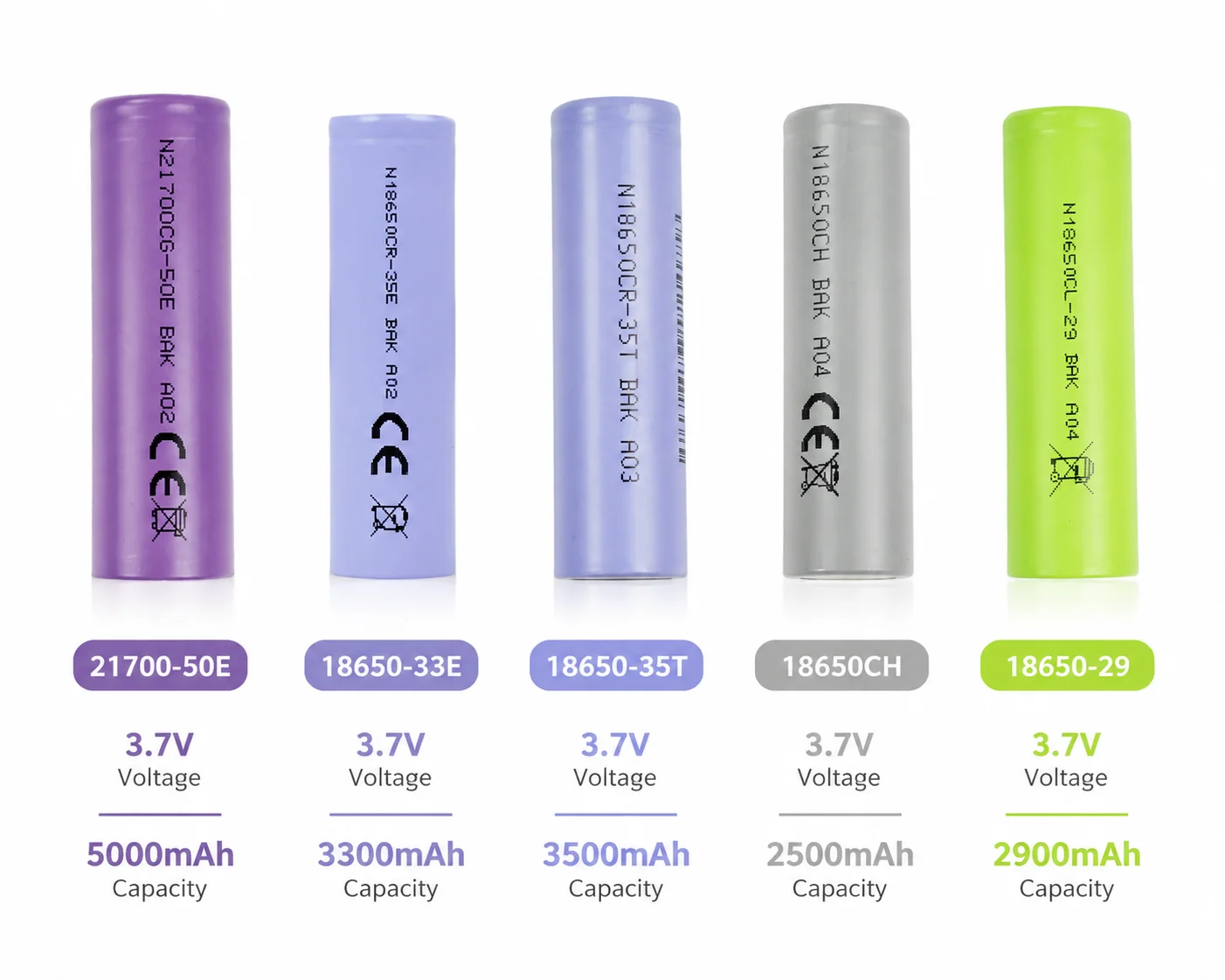
3.7V, 2000mAh lithium‑ion cell
2000 × 3.7 = 7400 mWh (7.4 Wh)
3. Simple Conversion Between mAh and mWh
The universal conversion formula:
mWh = mAh × Nominal Voltage (V)
This calculation carries huge practical value, especially for air transport compliance. Global aviation authorities regulate lithium batteries by watt‑hour (Wh), with a widely accepted limit of 100Wh for carry‑on batteries without special approval. If a power bank only prints mAh, you must complete this conversion to meet travel safety standards.
4. Why Consumer Products Primarily Display mAh
Most portable electronics including smartphones and power banks display mAh for two primary reasons:
- Easy runtime estimation for devices sharing identical voltage. Users can roughly calculate charging cycles without complex math.
Example: A 20000mAh power bank can fully recharge a 5000mAh phone roughly four times. - The unit aligns with ordinary consumer habits, requiring no extra voltage calculation.
5. Critical Limitation of Using Only mAh
mAh only works reliably when comparing batteries running at the same voltage. It cannot deliver fair comparisons across cells with different nominal voltages.
Comparison Example:
- 1.5V, 2500mAh rechargeable battery: 3750 mWh
- 1.2V, 2500mAh NiMH battery: 3000 mWh
Both carry identical mAh ratings, yet the total stored energy differs significantly. Only mWh reveals the true performance gap. Relying purely on mAh can lead to poor purchasing choices.
6. When You Must Use mWh Instead of mAh
Scenario 1: High‑power mobile equipment
E‑bikes, power tools, drones and electric vehicles operate with variable working voltage. Total stored energy (mWh) directly determines real runtime.
Scenario 2: Multi‑cell custom battery packs
Series‑parallel battery assemblies for laptops, agricultural drones and AGV robots have combined system voltage. mWh accurately reflects the overall energy of the complete pack.
Scenario 3: Devices with voltage conversion circuits
Constant‑current systems can reference mAh easily. Equipment built with boost or buck regulators runs on fixed power output; mWh provides precise energy measurement.
7. Real‑World Application Comparison
Low‑power household equipment (remote controls, wall clocks)
Stable low constant current load, single fixed‑cell voltage. mAh works well for evaluation.
Sample calculation:
3000mAh, 1.5V AA battery powering a 2mW clock
Total runtime = (3000 × 1.5) ÷ 2 = 2250 hours
Medium & high‑power portable gear (RC vehicles, wireless audio, VR hardware)
Unstable power draw and fluctuating operating voltage. Reputable manufacturers list mWh for transparent energy reference.
Top battery manufacturers such as BAKTH print both mAh and mWh on cells and finished packs. Dual labeling helps OEM designers complete product development and compliance verification efficiently.
8. Key Takeaways for OEM & Wholesale Battery Buyers
- mAh measures charge volume, ideal for quick comparisons among batteries with matching voltage.
- mWh measures total energy storage, the only unbiased metric for comparing batteries with different voltages.
- Always confirm both parameters during custom battery pack development, especially for export products requiring aviation transport certification.
- Partner with professional manufacturers offering complete datasheets with dual mAh/mWh specifications to avoid capacity misunderstanding.
Frequently Asked Questions
A: No. Comparison is valid only if both batteries share the same nominal voltage. Different voltages mean identical mAh values do not equal equivalent endurance.
A: Use the formula: Wh = (mAh × V) ÷ 1000. All international lithium battery transport regulations use Wh as the official standard.
A: Yes. Dual specification eliminates ambiguity during product design, testing and customs clearance, reducing communication errors between manufacturers and buyers.
A: mWh is prioritized. Drone battery packs consist of multi‑cell series combinations, and total energy directly determines flight duration.